MEASURE EVALUATION PRH
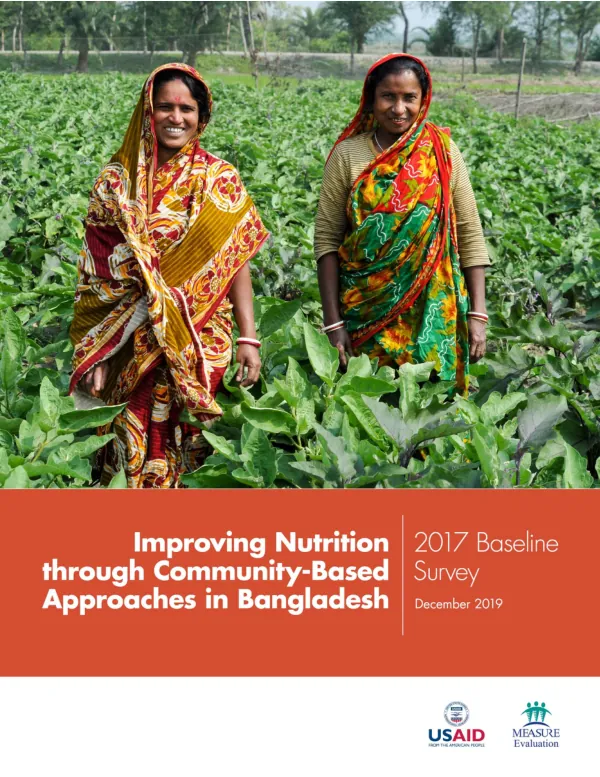
2017 Bangladesh INCA Baseline Survey
The agricultural development initiative in Bangladesh began in 2018 with funding from USAID's Improving Nutrition through Community Approaches (INCA) project.
2019 · 197 pages
Sign in to readA free account is required to download.
Abstract
The project aimed to improve the nutritional status of women and children in rural Bangladesh. The baseline survey was conducted in 2017 to assess the current situation and identify areas for intervention. The survey targeted 1,200 households in 12 upazilas across four districts. The sample design consisted of three strata: intervention areas, comparison areas, and comparison areas with no intervention. The survey collected data on household characteristics, women's characteristics, nutritional status, nutritional practices, nutrition-related knowledge, and access to INCA interventions. The survey found that the average household size was 5.3 members, with 3.4 members per household in the intervention areas. The majority of households (95%) had access to electricity, while 70% had access to a toilet. The survey also found that 60% of households had a radio, and 40% had a television. The nutritional status of women and children was assessed using anthropometric measurements. The survey found that 30% of women were underweight, while 20% were overweight. The prevalence of stunting among children under five was 40%, while the prevalence of wasting was 10%. The survey also collected data on nutrition-related knowledge. The majority of households (80%) knew the importance of breastfeeding, while 60% knew the importance of exclusive breastfeeding for the first six months. The survey found that 40% of households had a family member who had received training on nutrition. The survey identified several areas for intervention, including improving access to healthcare services, increasing awareness about nutrition, and promoting nutrition-related knowledge. The survey recommended that the project focus on improving the nutritional status of women and children in rural Bangladesh. The survey also found that the majority of households (80%) had access to a nearby health facility, while 60% had access to a nearby market. The survey recommended that the project focus on improving access to healthcare services and promoting nutrition-related knowledge. The survey identified several challenges to the project's success, including limited access to healthcare services, lack of awareness about nutrition, and limited resources. The survey recommended that the project focus on addressing these challenges to improve the nutritional status of women and children in rural Bangladesh. The survey also found that the majority of households (80%) had a family member who had received training on nutrition. The survey recommended that the project focus on promoting nutrition-related knowledge and promoting nutrition-related knowledge.
![Bangladesh Health Facility Survey 2017 [SPA28]](https://covers.devme.ai/gen/144484.webp)