USAID
2018 Mali DHS: Child Health
The 2018 Mali DHS, also known as EDSM-VI, was designed to provide data for monitoring the population and health situation in Mali.
2018 · 1 pages
Sign in to readA free account is required to download.
Abstract
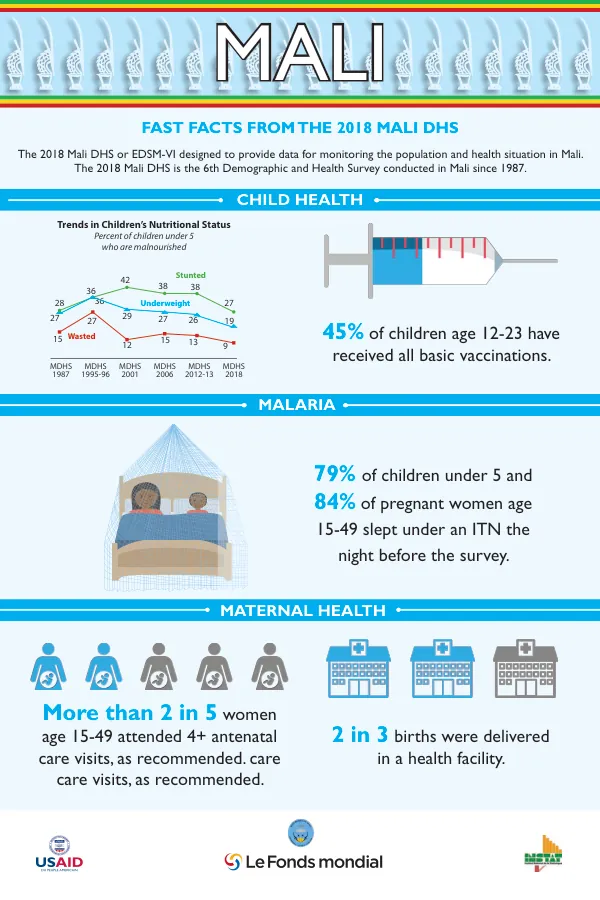
Conducted in 2018, this survey marks the 6th Demographic and Health Survey conducted in Mali since 1987. The survey aimed to gather information on various health indicators, including malaria, maternal health, and child health. Malaria prevalence in Mali is a significant concern. According to the survey, 79% of children under 5 and 84% of pregnant women aged 15-49 slept under an insecticide-treated net (ITN) the night before the survey. This indicates a high level of awareness and adoption of malaria prevention measures among the target population. Maternal health outcomes in Mali have shown improvement over the years. The survey reports that 2 in 3 births were delivered in a health facility, indicating a significant increase in institutional deliveries. Additionally, more than 2 in 5 women aged 15-49 attended 4+ antenatal care visits, as recommended. This suggests a positive trend in maternal health care seeking behavior. Child health outcomes in Mali also show areas of improvement. According to the survey, 45% of children aged 12-23 months have received all basic vaccinations. However, trends in children's nutritional status indicate a concerning increase in malnutrition. The percentage of children under 5 who are malnourished, stunted, underweight, and wasted has increased over the years, with the highest rates observed in 2012-13 and 2018. Specifically, the percentage of children under 5 who are stunted increased from 26% in 2001 to 36% in 2018, while the percentage who are wasted increased from 15% in 2001 to 27% in 2018.