USAID
Family Planning Needs during the First Two Years Postpartum in Liberia
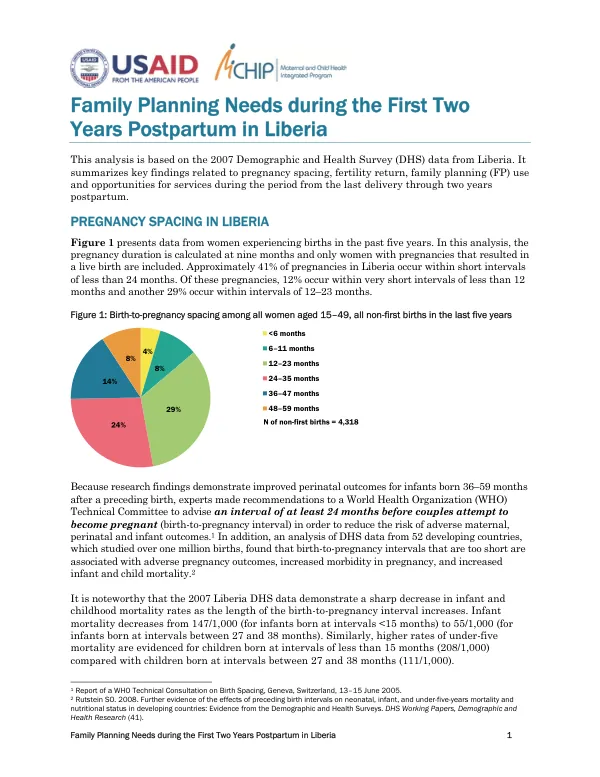
Pregnancy spacing in Liberia is a critical concern, with approximately 41% of pregnancies occurring within short intervals of less than 24 months.
2012 · 4 pages
Sign in to readA free account is required to download.
Abstract
Of these pregnancies, 12% occur within very short intervals of less than 12 months, and another 29% occur within intervals of 12-23 months. Research findings demonstrate improved perinatal outcomes for infants born 36-59 months after a preceding birth, and experts recommend an interval of at least 24 months before couples attempt to become pregnant to reduce the risk of adverse maternal, perinatal, and infant outcomes. The 2007 Demographic and Health Survey (DHS) data from Liberia demonstrate a sharp decrease in infant and childhood mortality rates as the length of the birth-to-pregnancy interval increases. Infant mortality decreases from 147/1,000 for infants born at intervals less than 15 months to 55/1,000 for infants born at intervals between 27 and 38 months. Similarly, higher rates of under-five mortality are evidenced for children born at intervals of less than 15 months compared with children born at intervals between 27 and 38 months. Unmet need among women within 0-24 months postpartum is a significant concern in Liberia. Data from 2,120 women within two years of a birth reveal that 82% have an unmet need for family planning (FP). Only 7% of these women are using any method of FP, yet only 9% of women during this 24-month postpartum period desire another birth within two years. The unmet need for spacing declines over time, while the unmet need to limit stays more or less stable. Return to fertility and the risk of pregnancy among women during the first two years postpartum are also critical factors. Less than 10% of women report that they are sexually active at six months postpartum, increasing to 30% at 6-12 months and to 72% at 12-24 months. While only 12% of women report menses return within the first six months after delivery, this percentage increases to 46% at 6-12 months and to 81% at 12-24 months. Uptake of family planning use among sexually active women is low, with only 14% using modern methods by the end of the second year, leaving 85% of sexually active women not using a modern method of FP. Contraceptive use by infant vaccination status reveals that mothers of children who received a DPT-3 vaccine are more likely to use a modern FP method in the postpartum period compared with mothers of children who did not receive a DPT-3 vaccine. The analysis highlights the need to ensure the availability of a wide range of FP methods and to integrate FP into existing programs that are reaching postpartum women. Immunization services are an excellent example of a possible integration platform, as women who have immunization contacts are much more likely to accept FP services. The provision of integrated postpartum family planning (PPFP) services is especially important for postpartum women choosing to limit, as permanent FP methods are provided only at the facility level.