JOHNS HOPKINS UNIVERSITY
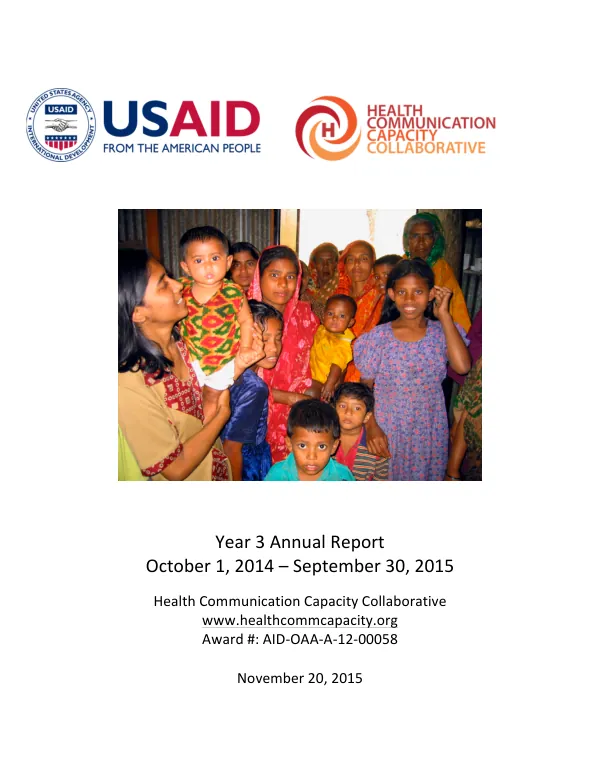
3rd Annual Report October 1, 2014 – September 30, 2015
The Health Communication Capacity Collaborative (HC3) is a project funded by the United States Agency for International Development (USAID).
2015 · 51 pages
Sign in to readA free account is required to download.
Abstract
The project aims to strengthen the capacity of local organizations to design, implement, and evaluate evidence-based health communication interventions. HC3 focuses on improving family planning and reproductive health outcomes, particularly among vulnerable populations. HC3 is implemented in several countries, including Rwanda, Tanzania, and Uganda. The project works with local organizations, governments, and other stakeholders to develop and implement health communication strategies. HC3 also provides technical assistance and capacity-building activities to strengthen the skills of local health workers and organizations. One of the key activities of HC3 is the implementation of the Springboard program, which aims to increase the capacity of local organizations to design and implement evidence-based health communication interventions. The program provides training and technical assistance to local organizations, as well as support for the development of health communication strategies. HC3 also focuses on improving family planning and reproductive health outcomes among young people. The project works with local organizations to develop and implement health communication strategies that address the needs of young people, including the promotion of healthy timing and spacing of pregnancy. In addition to its work in family planning and reproductive health, HC3 also focuses on malaria control and prevention. The project works with local organizations and governments to develop and implement health communication strategies that promote the use of bed nets and other malaria prevention measures. HC3 also provides technical assistance and capacity-building activities to strengthen the skills of local health workers and organizations. The project works with local organizations to develop and implement health communication strategies that address the needs of vulnerable populations, including women and children. The project has made significant progress in improving family planning and reproductive health outcomes, particularly among vulnerable populations. HC3 has also made significant contributions to the control and prevention of malaria, particularly among young people. HC3 works closely with local organizations, governments, and other stakeholders to develop and implement health communication strategies that address the needs of vulnerable populations. The project provides technical assistance and capacity-building activities to strengthen the skills of local health workers and organizations. HC3 has a strong focus on capacity-building and technical assistance. The project works with local organizations to develop and implement health communication strategies that address the needs of vulnerable populations. HC3 also provides training and technical assistance to local health workers and organizations to strengthen their skills and capacity. The project has a strong focus on evidence-based health communication. HC3 works with local organizations to develop and implement health communication strategies that are based on the best available evidence. The project also conducts research and evaluation to assess the effectiveness of health communication interventions and to identify areas for improvement. HC3 has a strong focus on collaboration and partnership. The project works closely with local organizations, governments, and other stakeholders to develop and implement health communication strategies that address the needs of vulnerable populations. HC3 also collaborates with other organizations and stakeholders to leverage resources and expertise. The project has a strong focus on sustainability. HC3 works with local organizations to develop and implement health communication strategies that are sustainable and can be maintained over time. The project also provides technical assistance and capacity-building activities to strengthen the skills of local health workers and organizations, so that they can continue to implement health communication interventions independently. HC3 has made significant contributions to the control and prevention of malaria, particularly among young people. The project has also improved family planning and reproductive health outcomes, particularly among vulnerable populations.
Related documents