USAID DEC
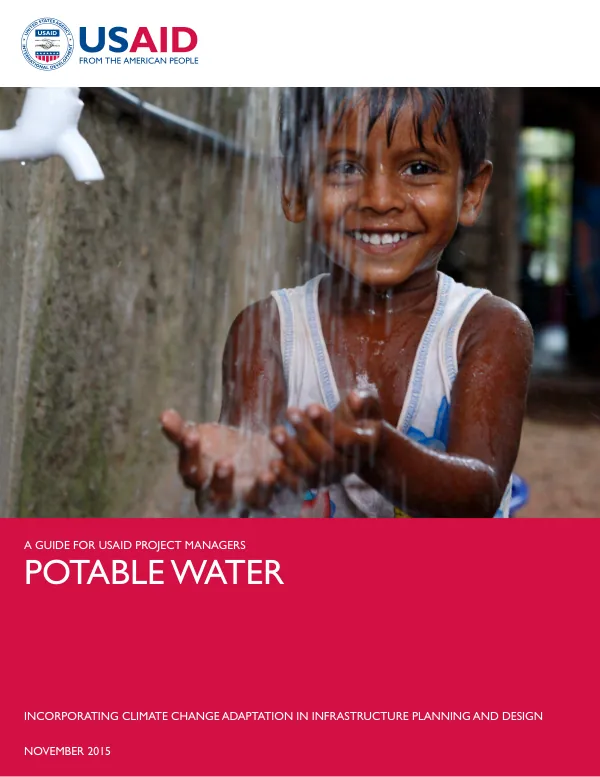
A GUIDE FOR USAID PROJECT MANAGERS INCORPORATING CLIMATE CHANGE ADAPTATION IN INFRASTRUCTURE PLANNING AND DESIGN
Sign inAECOM INTERNATIONAL
A GUIDE FOR USAID PROJECT MANAGERS INCORPORATING CLIMATE CHANGE ADAPTATION IN INFRASTRUCTURE PLANNING AND DESIGN
Potable water infrastructure is a critical component of global development, providing essential services to millions of people worldwide.
2015 · 77 pages
Sign in to readA free account is required to download.
Abstract
Climate change poses significant risks to these systems, including increased frequency and intensity of extreme weather events such as droughts, heat waves, and floods. These events can disrupt water supply, compromise infrastructure integrity, and exacerbate existing vulnerabilities. Climate change impacts on potable water infrastructure can be attributed to various factors, including rising temperatures, changing precipitation patterns, and increased frequency of extreme weather events. These changes can lead to reduced water availability, increased water demand, and compromised infrastructure performance. For instance, droughts can reduce water supply, while floods can damage infrastructure and contaminate water sources. To address these challenges, a climate-resilient infrastructure methodology has been developed to support the consideration of climate change risks and adaptation in USAID potable water infrastructure development activities. This methodology provides engineering and non-engineering development professionals with an overview of potential impacts on potable water activities and adaptation options. It also offers guidance for utilizing a risk assessment methodology to determine appropriate design measures. The climate-resilient infrastructure methodology involves a five-step process: establishing the context, vulnerability assessment, risk assessment, developing an adaptation strategy, and implementation. This process enables professionals to identify potential climate change impacts, assess vulnerabilities, and develop effective adaptation strategies to mitigate these risks. By incorporating climate change adaptation into infrastructure planning and design, professionals can create more resilient and sustainable potable water systems that can withstand the challenges posed by climate change. Incorporating climate change adaptation into potable water infrastructure development is essential for ensuring the long-term sustainability and resilience of these systems. By adopting a climate-resilient infrastructure methodology, professionals can reduce the risks associated with climate change and create more effective and efficient potable water systems. This approach also supports the achievement of Millennium Development Goals related to water and sanitation, and contributes to the overall goal of improving the health, well-being, and economic development of communities worldwide. The climate-resilient infrastructure methodology is particularly relevant to developing countries, where climate change presents a significant challenge to infrastructure development and maintenance. By providing guidance on climate change adaptation and risk assessment, this methodology enables professionals to make informed decisions about infrastructure design and development, and to create more resilient and sustainable potable water systems that can withstand the challenges posed by climate change. Incorporating climate change adaptation into potable water infrastructure development requires a comprehensive approach that considers the potential impacts of climate change on water supply, infrastructure integrity, and community vulnerability. By adopting a climate-resilient infrastructure methodology, professionals can create more effective and efficient potable water systems that can withstand the challenges posed by climate change, and contribute to the overall goal of improving the health, well-being, and economic development of communities worldwide.
Related documents