USAID DEC
A Healthier Malawi Begins Today: Youth-Friendly Health Services for a Healthier Malawi
Sign inGOVERNMENT OF MALAWI
A Healthier Malawi Begins Today: Youth-Friendly Health Services for a Healthier Malawi
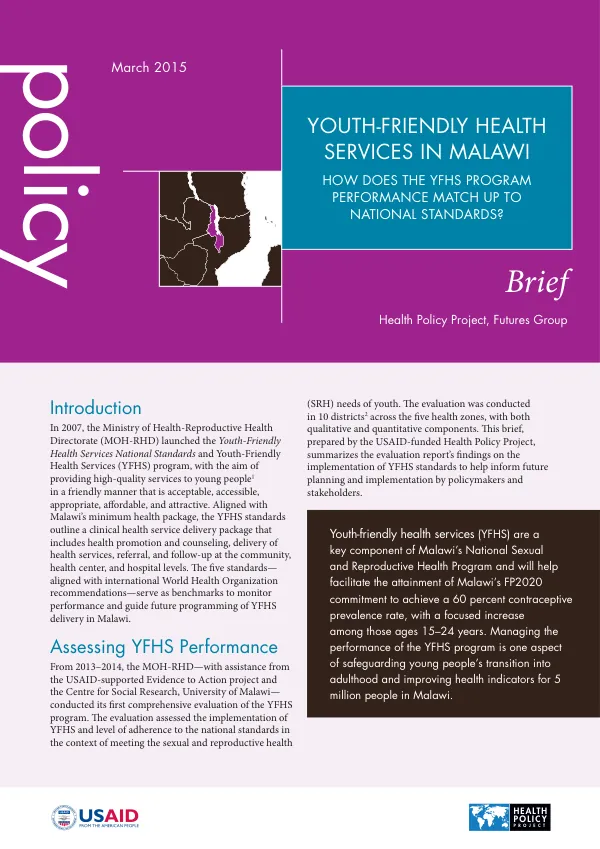
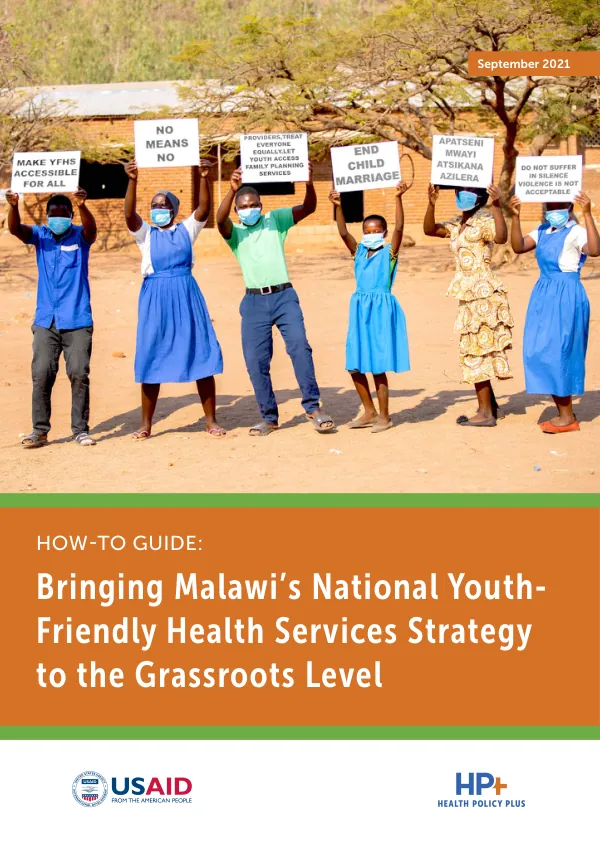
The Malawi Government's initiative, "A Healthier Malawi Begins Today," focuses on providing youth-friendly health services to the country's young population.
2018 · 1 pages
Sign in to readA free account is required to download.
Abstract
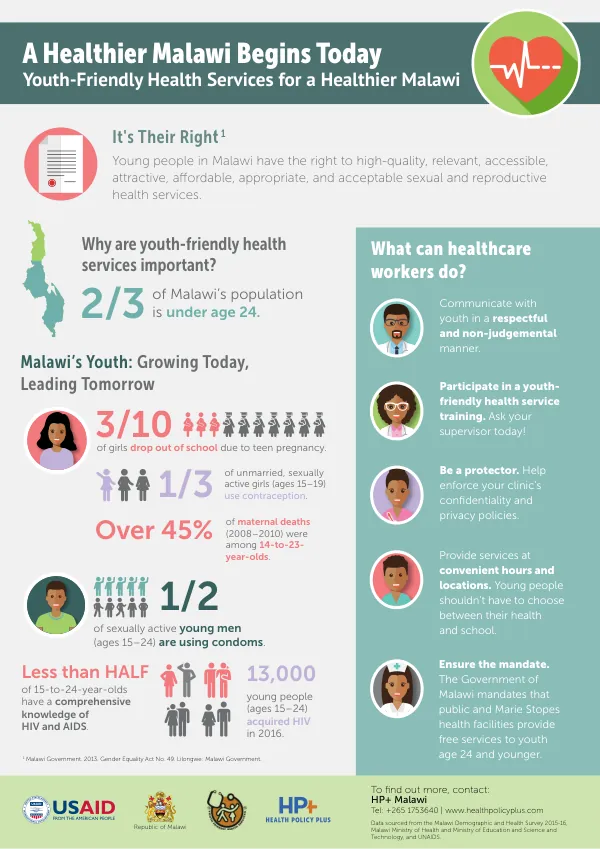
The majority of Malawi's population, approximately 2/3, is under the age of 24, highlighting the need for accessible and relevant health services tailored to their needs. Malawi's youth face significant challenges, including high rates of teen pregnancy, with 3/10 of girls dropping out of school due to pregnancy. Additionally, 1/3 of unmarried, sexually active girls aged 15-19 use contraception, and over 45% of maternal deaths between 2008 and 2010 were among 14-to-23-year-olds. Furthermore, less than half of 15-to-24-year-olds have a comprehensive knowledge of HIV and AIDS, and 13,000 young people aged 15-24 acquired HIV in 2016. Healthcare workers play a crucial role in providing youth-friendly health services. To achieve this, they should communicate with youth in a respectful and non-judgmental manner, participate in youth-friendly health service training, and enforce confidentiality and privacy policies. Healthcare workers should also provide services at convenient hours and locations, ensuring that young people do not have to choose between their health and education. The Government of Malawi has mandated that public and Marie Stopes health facilities provide free services to youth aged 24 and younger. This initiative aims to increase access to health services for Malawi's young population, addressing the significant health challenges they face. The data used to inform this initiative comes from the Malawi Demographic and Health Survey 2015-16, the Malawi Ministry of Health and Ministry of Education and Science and Technology, and UNAIDS. The implementation of youth-friendly health services is critical to improving the health outcomes of Malawi's young population. By providing accessible, relevant, and high-quality health services, the country can reduce the incidence of teen pregnancy, improve knowledge of HIV and AIDS, and increase the use of contraception among young people. This, in turn, can help to reduce maternal deaths and improve the overall health and well-being of Malawi's youth.