USAID DEC
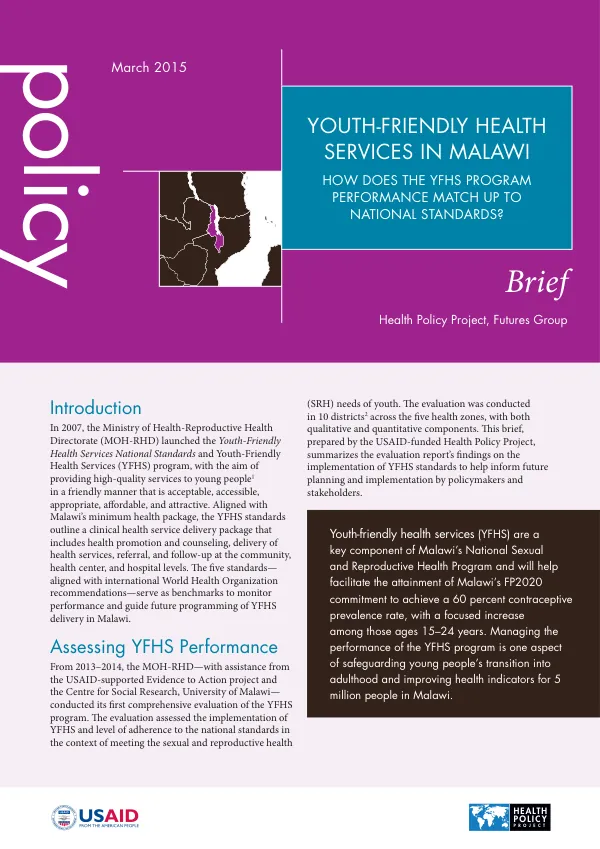
Youth-Friendly Health Services in Malawi: How Does the YFHS Program Performance Match Up to National Standards?
Sign inFUTURES GROUP INTERNATIONAL, LLC
Youth-Friendly Health Services in Malawi: How Does the YFHS Program Performance Match Up to National Standards?
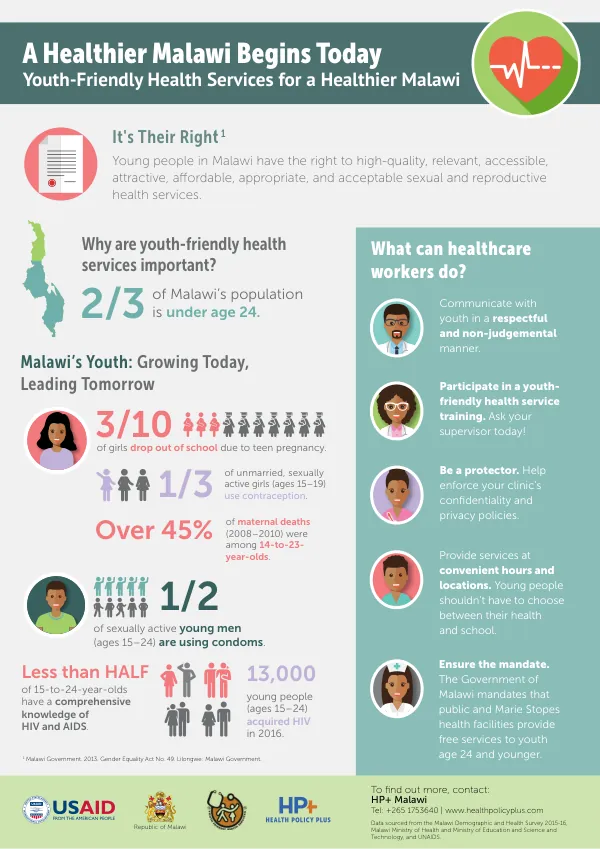
The Youth-Friendly Health Services (YFHS) program in Malawi was launched in 2007 by the Ministry of Health-Reproductive Health Directorate (MOH-RHD) to provide high-quality services to young people in a friendly manner.
2015 · 4 pages
Sign in to readA free account is required to download.
Abstract
The program is aligned with Malawi's minimum health package and the World Health Organization's recommendations. The five YFHS standards serve as benchmarks to monitor performance and guide future programming of YFHS delivery in Malawi. Implementation of the YFHS standards has varied significantly across health centers and hospitals in Malawi. Urban health facilities have complied better with the YFHS standards than rural-based health facilities, with additional variation across the five health zones. District support to YFHS is mostly channeled into provision of essential medicines and equipment, mobilization of resources for service delivery and trainings, and facilitation of linkages with organizations working in the district. However, there is little support for data utilization among non-clinical-based stakeholders or the provision of policies, guidelines, and job aids. The performance of the YFHS program was low to medium, with key elements performing poorly. For example, while many healthcare providers have been trained in delivering YFHS, few facilities clearly display YFHS hours of operation, have information, education, and communication (IEC) materials specific to YFHS, or conduct outreach services in the community specifically for youth. Furthermore, while the majority of health facilities have a way for young people to provide feedback on services, only about three-fifths of health facilities have YFHS clinical management guidelines for service providers, as per the recommended package. The evaluation also highlighted the need to strengthen data collection and use. Most facilities do not collect age-disaggregated data, and only one-third of service providers analyze and utilize data for planning purposes. This suggests that the YFHS program is not being versatile in addressing the diverse and evolving needs of its clients, nor is it influencing the prioritization of services at facilities through use of real-time data. The MOH-RHD evaluation data can inform policymakers and program managers to identify what key YFHS standards need more investment and in which geographic areas and facilities. However, addressing key challenges to improve the effectiveness and efficiency of YFHS standards implementation is crucial. These challenges include improving the implementation of YFHS standards, prioritizing YFHS in RH-integrated supportive supervision, and annually accrediting facilities in YFHS. Additionally, improving YFHS data collection and use, and strengthening youth voices in advocating for their health needs are essential. The YFHS standards implementation in Malawi is a complex issue, with varying levels of performance across different health centers and hospitals. The program's performance is hindered by poor implementation and quality assurance of the national YFHS standards. Addressing these challenges is crucial to improve the effectiveness and efficiency of the YFHS program and ensure that young people in Malawi have access to high-quality health services.
Related documents