USAID DEC
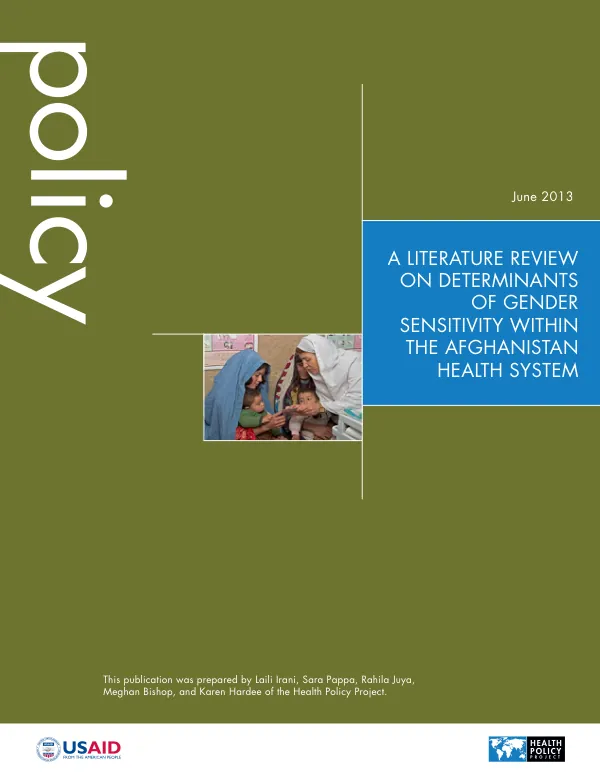
A Literature Review on Determinants of Gender Sensitivity within the Afghanistan Health System
Sign inFUTURES GROUP INTERNATIONAL, LLC
A Literature Review on Determinants of Gender Sensitivity within the Afghanistan Health System
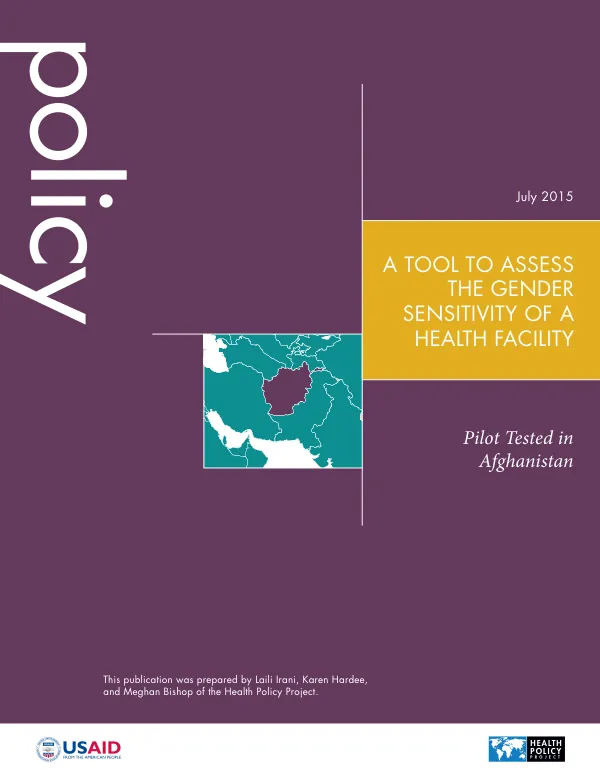
The Health Policy Project conducted a literature review on determinants of gender sensitivity within the Afghanistan health system in June 2013.
2013 · 48 pages
Sign in to readA free account is required to download.
Abstract
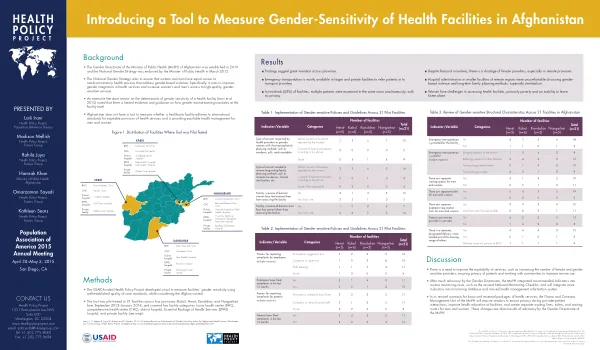
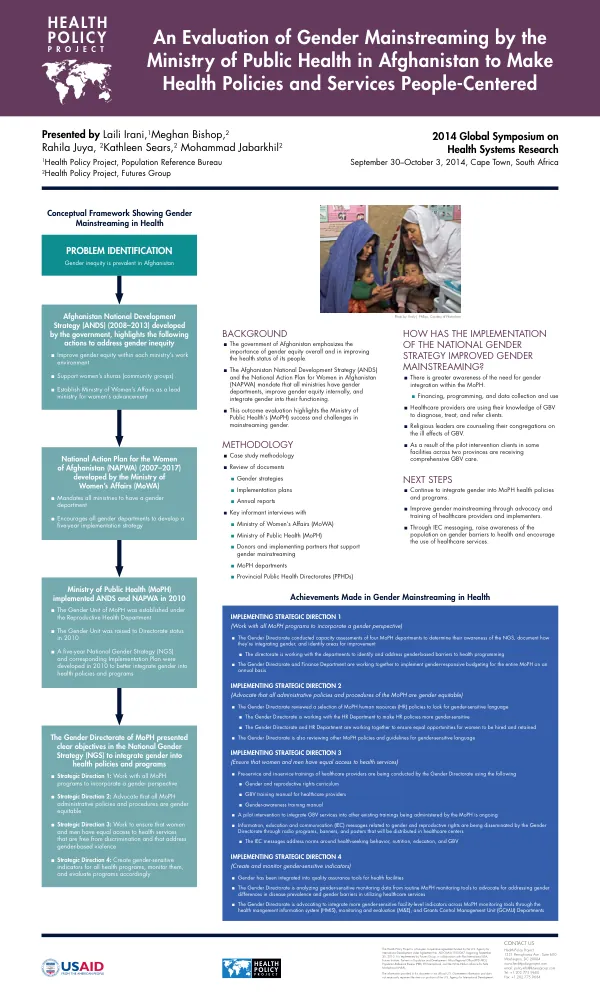
The review aimed to identify the characteristics of a gender-sensitive health facility and existing tools to measure gender integration within a health facility. The purpose of the review was to inform the Afghanistan Ministry of Public Health (MOPH) of existing best practices and successful gender mainstreaming activities being conducted in Afghanistan and abroad. The review found that limited evidence exists in the literature describing the gender sensitivity of health systems. However, the available evidence suggests that gender-sensitive health systems are more effective at serving women than healthcare systems that are not gender sensitive. At the facility level, gender sensitivity ensures that both male and female healthcare providers are aware of gender differences and pay special attention to gender norms when making clinical decisions. The review identified several determinants of gender sensitivity within health systems, including the availability of female healthcare providers, contributions of community health workers, gender-sensitive medical curricula, training of healthcare providers, provider-client interaction and communication, and structural constraints of health facilities. The review also highlighted existing tools that measure gender sensitivity within healthcare systems, including checklists and tools that assess the integration of gender within a health facility. In Afghanistan, the review found that interventions addressing gender inequity have been implemented, including the availability of female healthcare providers, contributions of community health workers, and gender-sensitive medical curricula. However, the review noted that structural constraints of health facilities, such as limited access to healthcare services for women, remain a significant challenge. The review recommended that the MOPH adapt existing tools and checklists to create a tool for monitoring gender integration in Afghanistan's public health facilities. The review also suggested that the MOPH prioritize the implementation of interventions that address gender inequity, including the training of healthcare providers and the development of gender-sensitive medical curricula. The review was conducted in three stages between October 2012 and May 2013, involving a search of peer-reviewed articles, relevant documents from the MOPH, and gray literature. The review was conducted by Laili Irani, Sara Pappa, Rahila Juya, Meghan Bishop, and Karen Hardee of the Health Policy Project.