USAID DEC
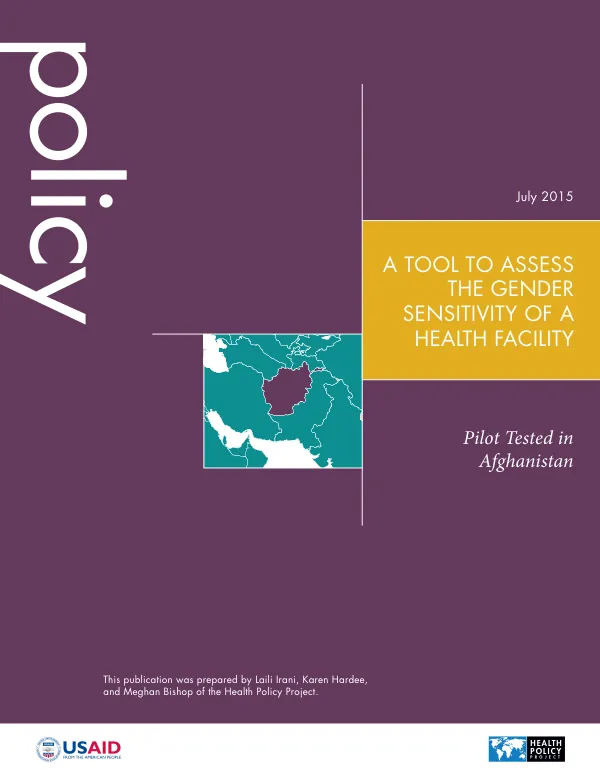
A Tool to Assess the Gender Sensitivity of a Health Facility: Pilot Tested in Afghanistan
Sign inAVENIR HEALTH
A Tool to Assess the Gender Sensitivity of a Health Facility: Pilot Tested in Afghanistan
The gender sensitivity of a health facility in Afghanistan is a critical issue that hinders equitable access to and use of the healthcare system.
2015 · 28 pages
Sign in to readA free account is required to download.
Abstract
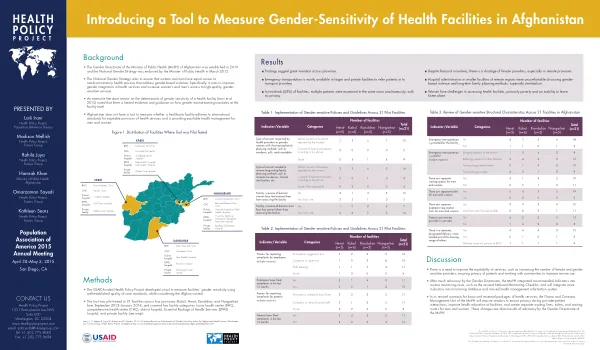
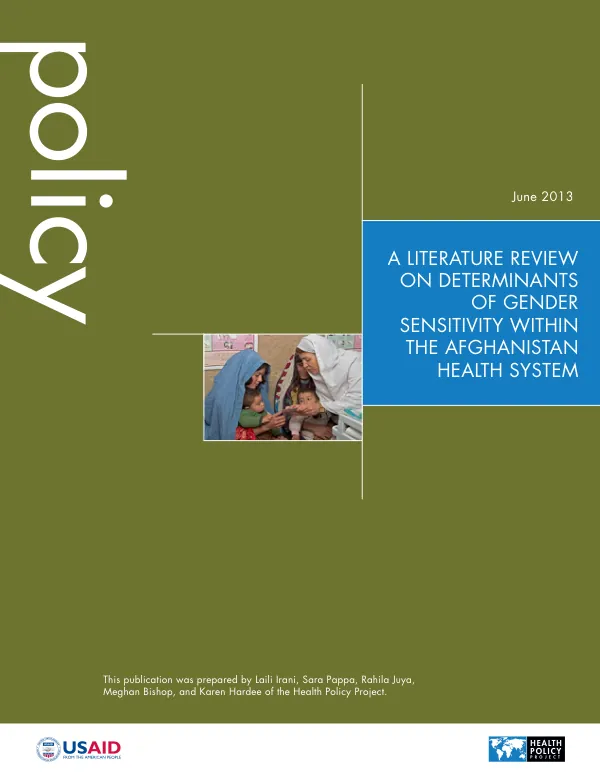
In 2010, the Gender Directorate of Afghanistan's Ministry of Public Health (MOPH) was established, and the National Gender Strategy was endorsed by the minister in March 2012. The strategic objectives outlined in the National Gender Strategy recognize the need to address gender sensitivity in the health system. Afghanistan does not have a tool to measure whether a healthcare facility conforms to prevalent gender norms and provides gender-sensitive healthcare to men and women. A literature review was conducted to determine if such a tool exists elsewhere, and examples and guidelines for making a health system more gender sensitive were identified. These include the presence of gender-sensitive policies, equitable distribution of health personnel, collection of sex-disaggregated data, and factors affecting access to healthcare. A new tool to measure gender sensitivity of health facilities in Afghanistan was developed by the USAID-funded Health Policy Project, in close collaboration with the Gender Directorate of the MOPH. The tool accounts for specific needs within the local context and includes categories based on gender-sensitive themes rooted in quality of care standards and the literature review. The categories include gender-sensitive policies and guidelines, structural characteristics of facilities, distribution of human resources, in-service training of providers, the quality of service provision, and the use of client data. The tool was pilot tested in a representative sample of health facilities, including one basic health center, one comprehensive health center, and one referral hospital. The pilot testing involved sharing the tool with several MOPH departments and implementing partners, including the Gender Task Force and its affiliate partners, such as the WHO, UNFPA, and UN Women. The tool was refined based on input from these stakeholders and was used to assess the gender sensitivity of the participating health facilities. The assessment tool includes questions divided into categories based on gender-sensitive themes. These categories include gender-sensitive policies and guidelines, structural characteristics of facilities, distribution of human resources, in-service training of providers, the quality of service provision, and the use of client data. The tool documents whether policies and guidelines exist to ensure gender equity within the workforce, and whether there is a system for addressing concerns. It highlights the structural characteristics that make the facility appropriate for both men and women to access, and notes the distribution of health workers by cadre and sex. The tool also examines the types and methods of service provision to clients, and documents how client data disaggregated by sex are used for health facility planning. The assessment tool is designed to identify the health policies and programs that must be developed and implemented to ensure better gender equity within the healthcare system. The pilot testing of the tool revealed that many existing gender-related barriers prevent equitable access to and use of the healthcare system, especially considering the allocation of human resources and facility infrastructure. The tool was found to be a useful tool for assessing the gender sensitivity of health facilities and identifying areas for improvement. The results of the pilot testing will inform policy and program interventions aimed at improving gender mainstreaming in the health system. The Health Policy Project, in collaboration with the MOPH, will continue to refine and improve the tool based on the results of the pilot testing and feedback from stakeholders. The tool will be used to assess the gender sensitivity of health facilities across Afghanistan, and to identify areas for improvement. The ultimate goal of the tool is to ensure that all health facilities in Afghanistan provide gender-sensitive healthcare to men and women, and to improve access to healthcare for all segments of the population.