USAID DEC
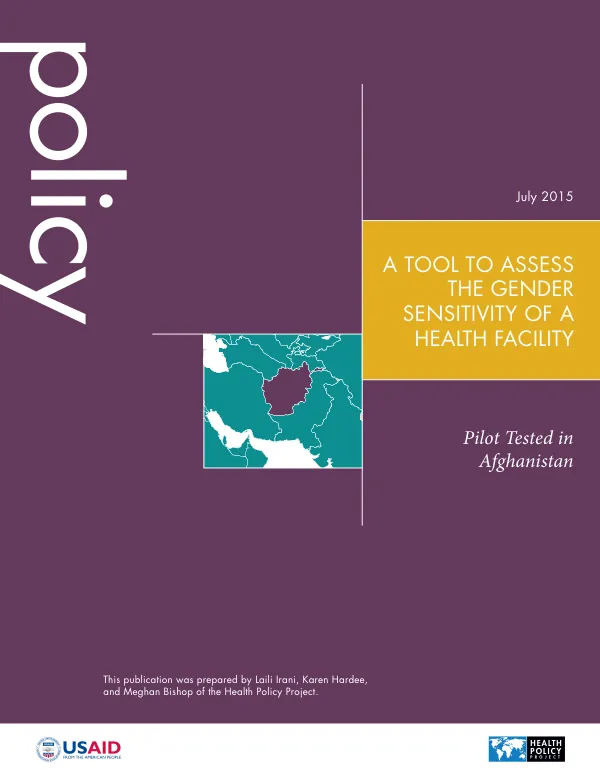
Introducing a Tool to Measure Gender-Sensitivity of Health Facilities in Afghanistan
Sign inAVENIR HEALTH
Introducing a Tool to Measure Gender-Sensitivity of Health Facilities in Afghanistan
The Gender Directorate of the Ministry of Public Health (MoPH) of Afghanistan was established in 2010, and the National Gender Strategy was endorsed by the Minister of Public Health in March 2012.
2015 · 1 pages
Sign in to readA free account is required to download.
Abstract
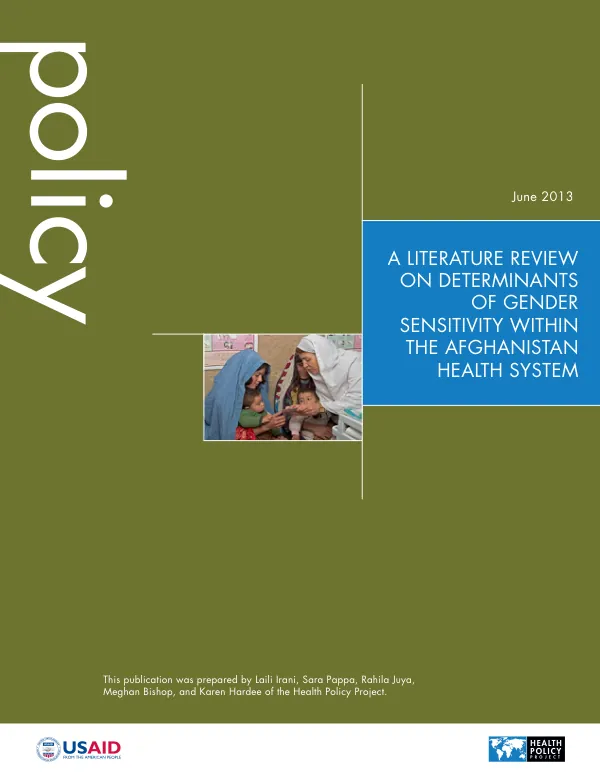
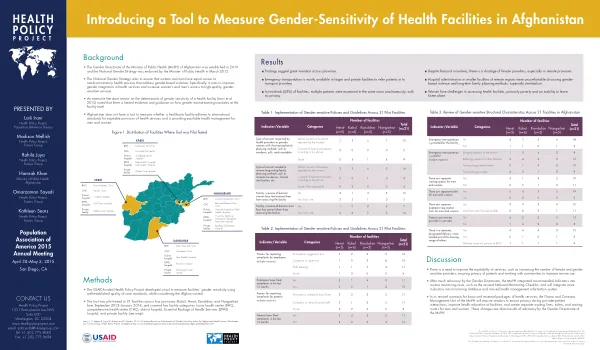
The National Gender Strategy aims to ensure that women and men have equal access to nondiscriminatory health services that address gender-based violence. Specifically, it aims to improve gender integration in health services and increase women's and men's access to high-quality, gender-sensitive services. An extensive literature review on the determinants of gender sensitivity of a health facility noted that there is limited evidence and guidance on how gender mainstreaming translates at the facility level. Afghanistan does not have a tool to measure whether a healthcare facility adheres to international standards for equitable provision of health services and is providing equitable health management for men and women. To address this gap, the USAID-funded Health Policy Project developed a tool to measure facilities' gender sensitivity using well-established quality of care standards, while considering the Afghan context. The tool was pilot tested in 21 facilities across four provinces (Kabul, Herat, Kandahar, and Nangarhar) from September 2013-January 2014, and covered five facility categories: basic health center (BHC), comprehensive health center (CHC), district hospital, Essential Package of Health Services (EPHS) hospital, and private facility. The pilot test revealed significant variation across provinces, with emergency transportation mostly available in larger and private facilities. In two-thirds of facilities, multiple patients were examined in the same room simultaneously, with no privacy. The results also highlighted a shortage of female providers, especially in remote provinces, and hospital administrators in smaller facilities of remote regions were uncomfortable discussing gender-based violence and long-term family planning methods. Women face challenges in accessing health facilities, primarily poverty and an inability to leave home alone. The findings suggest that there is a need to improve the equitability of services, such as increasing the number of female and gender-sensitive providers, ensuring privacy of patients, and working with communities to increase service use. The Health Policy Project collaborated with the MoPH to integrate recommended indicators into routine monitoring tools, such as the revised National Monitoring Checklist, and will integrate more indicators into its training database and revised health management information system. The Grants and Contracts Management Unit of the MoPH will require vendors to ensure privacy during provider-patient interactions, improve health education at facilities, and create separate waiting lines, toilets, and waiting rooms for men and women. These changes are direct results of advocacy by the Gender Directorate of the MoPH. The tool assesses various indicators, including the process for reporting complaints by employees and patients, emergency transportation, separate waiting spaces for men and women, separate toilets for men and women, and patients being seen by providers in private. The results of the pilot test provide valuable insights into the current state of gender sensitivity in health facilities in Afghanistan and highlight the need for further improvement. The tool is a crucial step towards ensuring that health facilities in Afghanistan provide equitable and gender-sensitive services to all patients.