AMERICAN RED CROSS
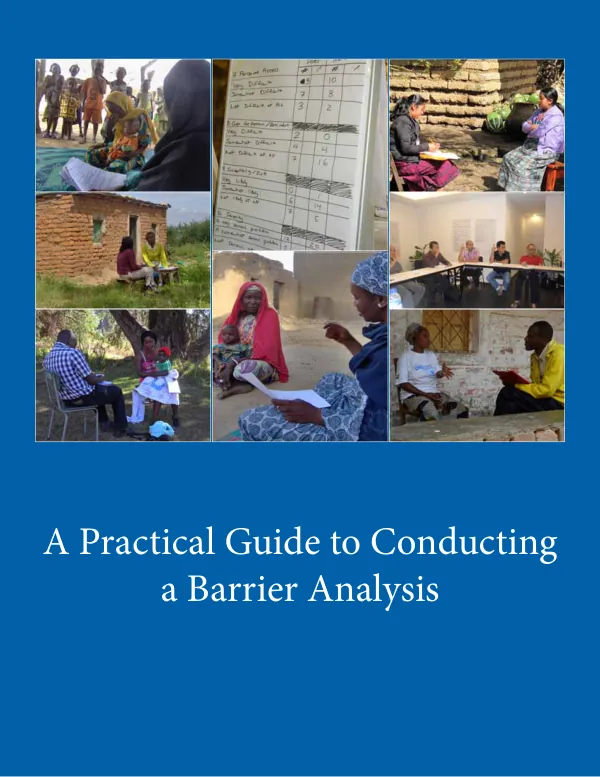
A Practical Guide to Conducting a Barrier Analysis
The Designing for Behavior Change (DBC) Framework is a comprehensive approach to understanding and addressing behavior change.
2013 · 186 pages
Sign in to readA free account is required to download.
Abstract
At the core of the DBC Framework is the concept of identifying and addressing barriers to behavior change. A Barrier Analysis is a critical component of the DBC Framework, which involves conducting a survey to gather data on the barriers to behavior change. The DBC Framework consists of five elements: the Doer/Non-Doer Study, the Barrier Analysis, the Designing for Behavior Change (DBC) Curriculum, the Quality Improvement Verification Checklist (QIVC), and the Indicator Performance Tracking Table (IPTT). The DBC Curriculum is a five and a half-day course that introduces participants to the DBC Framework, while the Practical Guide to Conducting a Barrier Analysis is a training curriculum that builds skills to plan and carry out a Barrier Analysis survey. A Barrier Analysis survey is a behavior change tool that helps identify the determinants of behavior change. The survey is conducted using a step-by-step approach, starting with the definition of the behavior to be studied and the development of the Barrier Analysis questionnaire. The survey involves sampling, interviewing techniques, coding, tabulation, and data analysis. The Practical Guide to Conducting a Barrier Analysis covers topics such as sampling, interviewing techniques, coding, tabulation, and data use. The guide includes a brief introduction to the DBC Framework, which provides the context for the formative research. The guide also includes a step-by-step approach to planning, implementing the study, and using the data related to the research. The guide was made possible by the generous support of the American people through the United States Agency for International Development (USAID), under the terms of a subgrant agreement to Helen Keller International. The guide does not necessarily reflect the views of USAID or the United States Government. The guide includes a comprehensive list of abbreviations and acronyms, which are commonly used in the field of social and behavior change. The guide also includes a list of references and acknowledgments, which recognize the contributions of various individuals and organizations. The guide is designed to be a practical resource for individuals and organizations that are interested in conducting a Barrier Analysis survey. The guide provides a step-by-step approach to planning and implementing the survey, as well as using the data related to the research. The guide is expected to be a valuable resource for individuals and organizations that are interested in developing a more effective behavior change strategy. The guide includes a comprehensive list of annexes, which provide additional information and resources for conducting a Barrier Analysis survey. The annexes include answer keys, learning needs and resources assessment, alternative Barrier Analysis questionnaire format, explanation for using the MS Excel Barrier Analysis tabulation sheet, possible review activities and review questions, Barrier Analysis review questions, daily evaluation form (flip chart), and option lesson: interpreting the data. The guide is expected to be a valuable resource for individuals and organizations that are interested in conducting a Barrier Analysis survey and developing a more effective behavior change strategy. The guide provides a comprehensive approach to understanding and addressing behavior change, and is expected to be a valuable resource for individuals and organizations that are interested in improving social and behavior change programming around the world.
Related documents