APEX ENVIRONMENTAL
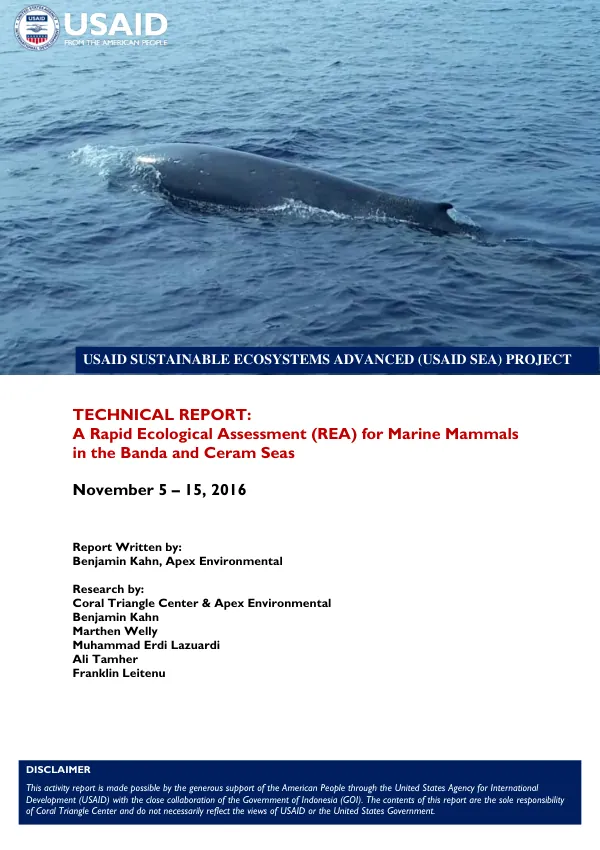
A Rapid Ecological Assessment for Marine Mammals in Banda and Ceram Seas
The Banda-Ceram Sea Marine Mammal Rapid Ecological Assessment (REA) was conducted from November 5-15, 2016, to address the regional data deficiency on marine mammal biodiversity in the area.
2016 · 49 pages
Sign in to readA free account is required to download.
Abstract
The REA aimed to compile a comprehensive species list for marine mammals inhabiting the Banda-Ceram Seas, identify preferred and critical deep-sea habitats for oceanic whales and dolphins, and provide valuable information for ongoing Marine Spatial Planning in Maluku Province. The assessment identified 16 species of marine mammals, including the blue whale (Balaenoptera musculus), which migrates from the Southern Ocean off Australia to Indonesian waters via the migratory passages of the Lesser Sundas and Timor-Leste. The REA also provided data on cetacean sighting and behavior around Fisheries Management Area (FMA) 715, which may relate to key important habitats and flagship species protection. Initial assessment of current and emerging threats to marine mammals in the region included unsustainable fisheries practices, net entanglements, plastic waste, ship strikes, underwater noise pollution from shipping lanes, seismic surveys, and operational activities from the oil and gas industry. The REA field activities provided capacity building and training opportunities for marine monitoring teams of various stakeholders, including species identification, cetacean ecology, blue whale ecology, and data recording. The REA participants gained an in-depth understanding of the dynamic oceanography of the Banda Sea and its productive pelagic ecosystem, experienced the importance of deep-sea habitats such as seamounts on ocean marine life, and became part of a specialist field team assessing current and emerging threats in the survey area. The Banda Sea Cetacean REA's goals and outcomes included conducting periodic visual and acoustic surveys on whale and dolphin species, identifying species-specific habitats, and assisting with the identification of migratory corridors and critical habitats. The assessment also highlighted the importance of marine debris as a major threat to marine mammals in the region. The REA participants reviewed ocean management options to assist with the sustainable use of the Banda Sea by various marine industries, including pelagic fisheries, marine tourism, oil and gas, and shipping. The REA provided a significant contribution to our scientific understanding of the "Deep Banda Sea" and will assist in the development of new Marine Protected Area (MPA) networks in Maluku Province.