FRED HOLLOWS FOUNDATION
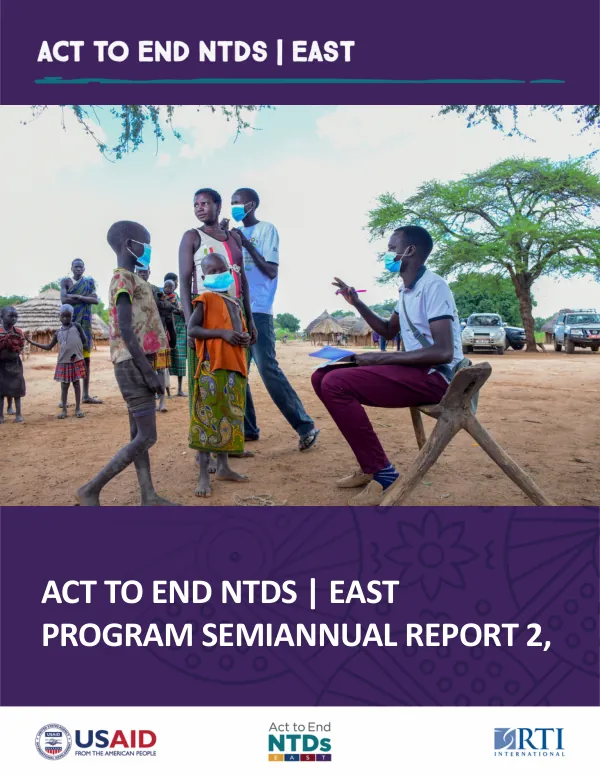
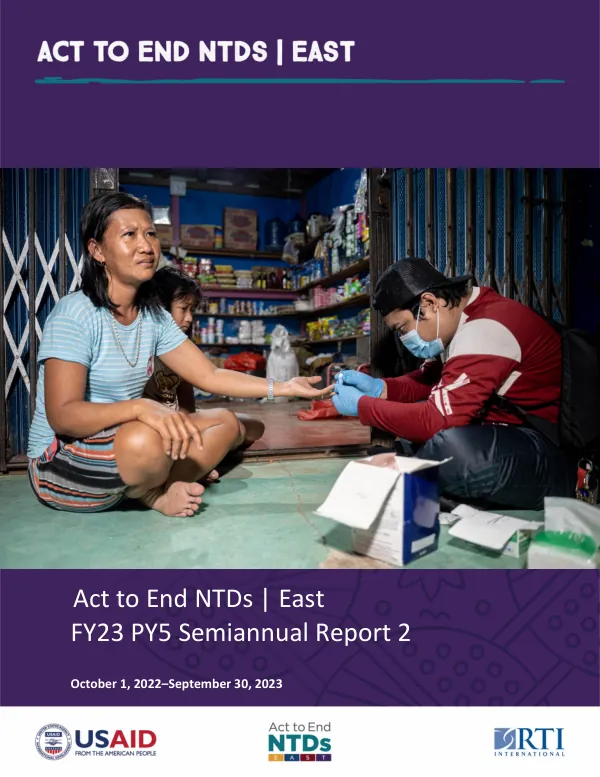
Act to End NTDs | East FY23 PY5 Semiannual Report 2
The Act to End Neglected Tropical Diseases (NTDs) | East Program supports governments in reaching World Health Organization goals for NTD control and elimination through cost-effective public health interventions.
2023 · 76 pages
Sign in to readA free account is required to download.
Abstract
The program is implemented by a consortium of partners, led by RTI International, and aims to establish sustainable platforms for NTD services within robust and resilient health systems. The program focuses on four key results: Elimination of Lymphatic Filariasis, Trachoma, and Onchocerciasis in the Americas and where feasible in Africa; Sustainable NTD programs; Continuous Capacity to Maintain and Operate MDA and Disease Surveillance; and Influencing the Global Agenda. The program also emphasizes the importance of effective communication, learning, and learning adaptation, as well as program management and partnership management. In FY23, the program achieved significant progress in eliminating lymphatic filariasis, trachoma, and onchocerciasis. The program also supported governments in optimizing NTD-related resources in their health and education systems, and established disease-specific action plans with targeted interventions. Furthermore, the program contributed to global policy decisions through participation in WHO global forums and supported leadership and management of NTD global medicines. The program also facilitated learning and adaptation through evidence-based programmatic adaptation, and ensured effective and efficient staffing at the HQ and country levels. Additionally, the program maintained continuous communication with USAID on all matters affecting program implementation, and effectively coordinated with the Act to End NTDs | West program. The program also provided MERLA assistance for the USAID NTD portfolio, and supported international travel for program staff. The program's achievements were presented at global conferences and published in various publications. The program's staff contributed to global working groups and country-specific NTD working groups, and participated in WHO working groups and meetings. The program's results were also presented in various tables and figures, including the Act | East Around the World, Act | East's Results Framework, and the USAID NTD Sustainability Framework. The program's achievements were also reported in various tables, including the FY23 tetracycline eye ointment procurement, Activities to strengthen MDA in FY23, and FY23 DSA outcome by country. The program's staff also contributed to various global working groups, including the American Society of Tropical Medicine and Hygiene, the Coalition for Operational Research on NTDs, and the District Health Information System-2. The program's staff also participated in various global conferences, including the WHO global forums and the American Society of Tropical Medicine and Hygiene conferences. The program's achievements were also reported in various publications, including the Act | East's FY23 publications and the Act | East's FY23 presentations at global conferences. The program's staff also contributed to various global working groups, including the WHO working groups and the country-specific NTD working groups. The program's results were also presented in various tables and figures, including the Act | East Around the World, Act | East's Results Framework, and the
Related documents