JHPIEGO
Active Management of Third Stage of Labor and Other Obstetric Emergencies Training
Active Management of Third Stage of Labor (AMTSL) is a crucial step in preventing postpartum hemorrhage.
16 pages
Sign in to readA free account is required to download.
Abstract
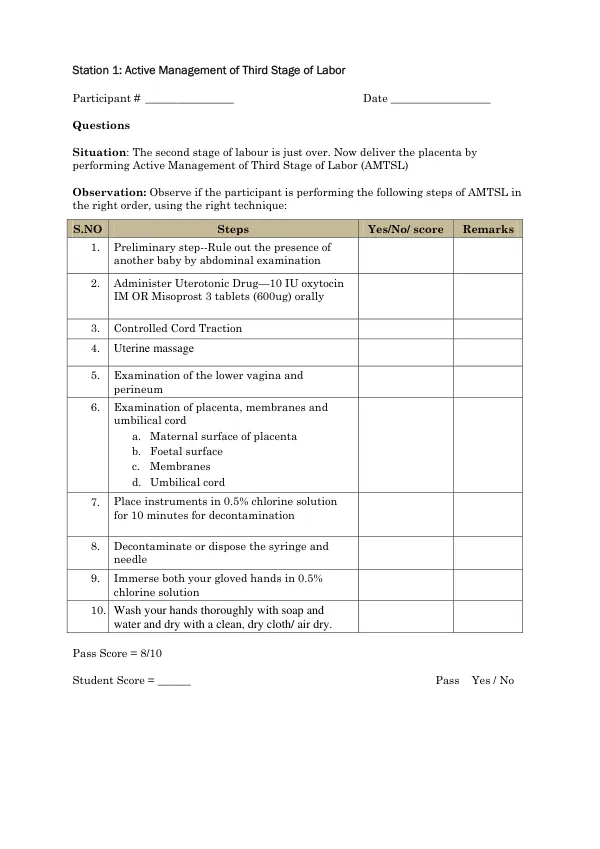
The process involves several key steps, including preliminary examination, administration of uterotonic drugs, controlled cord traction, uterine massage, examination of the lower vagina and perineum, examination of the placenta, membranes, and umbilical cord, and decontamination of instruments. Preliminary examination is the first step in AMTSL, where the healthcare provider checks for the presence of another baby by abdominal examination. This step is essential to ensure that the healthcare provider is aware of any potential complications that may arise during the third stage of labor. Administration of uterotonic drugs is the next step in AMTSL. Uterotonic drugs, such as oxytocin, are used to stimulate uterine contractions and prevent excessive bleeding. The recommended dose of oxytocin is 10 IU, which can be administered intramuscularly or orally. Controlled cord traction is a technique used to deliver the placenta. The healthcare provider gently pulls on the umbilical cord while applying gentle traction to the uterus. This helps to deliver the placenta and prevent excessive bleeding. Uterine massage is another essential step in AMTSL. The healthcare provider applies gentle pressure to the uterus to stimulate contractions and prevent excessive bleeding. This step is particularly important in cases where the placenta is retained or the uterus is not contracting properly. Examination of the lower vagina and perineum is a critical step in AMTSL. The healthcare provider checks for any signs of bleeding, lacerations, or other complications that may require immediate attention. Examination of the placenta, membranes, and umbilical cord is also an essential step in AMTSL. The healthcare provider checks for any signs of retained placental tissue, which can lead to postpartum hemorrhage. Decontamination of instruments is the final step in AMTSL. The healthcare provider immerses the instruments in a 0.5% chlorine solution for 10 minutes to prevent the spread of infection. In summary, AMTSL is a critical step in preventing postpartum hemorrhage. The process involves several key steps, including preliminary examination, administration of uterotonic drugs, controlled cord traction, uterine massage, examination of the lower vagina and perineum, examination of the placenta, membranes, and umbilical cord, and decontamination of instruments. The following steps are essential in AMTSL: 1. Preliminary examination: The healthcare provider checks for the presence of another baby by abdominal examination. 2. Administration of uterotonic drugs: The healthcare provider administers 10 IU of oxytocin to stimulate uterine contractions. 3. Controlled cord traction: The healthcare provider gently pulls on the umbilical cord while applying gentle traction to the uterus. 4. Uterine massage: The healthcare provider applies gentle pressure to the uterus to stimulate contractions and prevent excessive bleeding. 6. Examination of the placenta, membranes, and umbilical cord: The healthcare provider checks for any signs of retained placental tissue. By following these steps, healthcare providers can effectively manage the third stage of labor and prevent postpartum hemorrhage.
Related documents