GOVERNMENT OF INDONESIA
SNCU Quality of Care Index (SQCI) Process Document
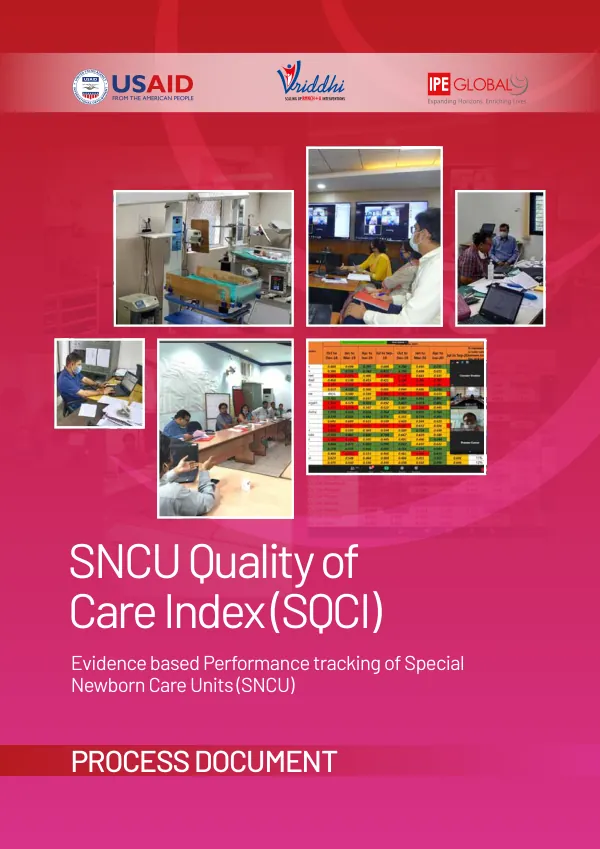
The SNCU Quality of Care Index (SQCI) is a tool designed to track key technical and programmatic areas in Special Newborn Care Units (SNCUs) across India.
2021 · 30 pages
Sign in to readA free account is required to download.
Abstract
The index is a set of 7 composite indicators that monitor mortality outcomes, gaps in clinical practices, and optimal utilization of services in SNCUs. The SQCI was developed to address the need for an actionable information system in SNCUs, as emphasized by the World Health Organization (WHO) and the evaluation report on the Facility Based Newborn Care (FBNC) program in India. The SQCI was first piloted in Odisha in 2015 and was subsequently extended to other targeted states through the USAID-supported Vriddhi project. The tool is designed to be simple, consolidated, and focused, using Microsoft Excel to generate dashboards that track progress and identify areas for improvement. The SQCI is a Government of India (GoI) recommended decision-making tool that makes use of available SNCU online data to generate seven specific indices on key indicators. The indices included in the SQCI are: 1. Low birth weight survival index 2. Optimal bed utilization index 3. Rational admission index 4. Rational use of antibiotic index 5. Inborn birth asphyxia index 6. Low birth weight admission index 7. SNCU quality of care index These indices are color-coded for better understanding and ease of tracking progress. The SQCI also generates a Composite Index, which is a geometric mean of all the 7 indices. The tool is designed to be used by program managers at district, state, and facility levels to conduct focused examinations of SNCU online data and inform implementation and improvement. The SQCI has been well-received in the states where it has been implemented, and with technical support from Vriddhi National and State teams, it has been regularly discussed in state SNCU review meetings and has helped strengthen action planning at state, district, and SNCU levels. The tool has also helped Aspirational Districts (ADs) to strengthen SNCUs in terms of logistics, Human Resource (HR), equipment purchase, and clinical practices. The implementation of the SQCI has led to several key outcomes, including: * Improved mortality outcomes in SNCUs * Enhanced quality of care in SNCUs * Increased utilization of SNCU services * Improved data management and analysis in SNCUs The SQCI has also helped to address some of the key challenges faced by SNCUs, including the lack of actionable information systems, poor capacity to use data, and fragmented data across various platforms. The tool has been instrumental in building the capacity of program managers at district, state, and facility levels to use data for quality improvement. Overall, the SNCU Quality of Care Index (SQCI) is a valuable tool for improving the quality of care in SNCUs across India. Its implementation has led to several key outcomes and has helped to address some of the key challenges faced by SNCUs. The tool is expected to continue to play a critical role in improving the quality of care in SNCUs and reducing neonatal mortality rates in India. The SQCI has been successfully implemented in six project states, including Chhattisgarh, Jharkhand, Uttarakhand, Punjab, Haryana, and Himachal Pradesh. The tool has been well-received by the states and has been regularly discussed in state SNCU review meetings. The SQCI has helped to strengthen action planning at state, district, and SNCU levels and has improved mortality outcomes in SNCUs. The implementation of the SQCI has also led to the development of a comprehensive framework for improving quality of care in SNCUs. The framework includes several key components, including: * Competent, motivated, and empathetic human resource * Essential child and adolescent-friendly physical resources * Individual and facility-level outcomes * Coverage of key practices * Health outcomes * Child and family-centered outcomes * Provision of care * Experience of care The framework provides a comprehensive approach to improving quality of care in SNCUs and has been instrumental in guiding the implementation of the SQCI.