JSI RESEARCH & TRAINING INSTITUTE, INC
Distance and Blended Learning: Part 2
Distance and blended learning have become increasingly important in the delivery of health provider in-service training due to factors such as expanded access to the internet and technology, concerns about taking staff away from their jobs, and the significant cost implications of face-to-face training.
2021 · 38 pages
Sign in to readA free account is required to download.
Abstract
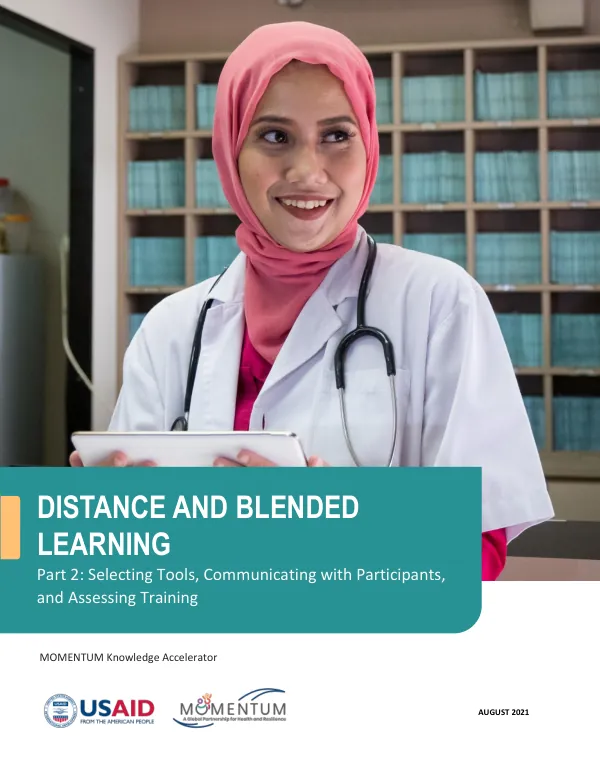
The COVID-19 pandemic accelerated this shift, with health systems around the globe replacing face-to-face training with virtual training. MOMENTUM projects and others can use the guides in this series to plan for virtual training programs. The first guide, Distance and Blended Learning: Part 1: An Overview and Introduction to Assessing Resources, Needs, and Capacities, provides an overview of the definitions, benefits, and challenges of distance learning and blended learning. It also offers recommendations and tools for understanding an organization's training needs and resources, as well as assessing training participants' and trainers' technology access, skills, and comfort levels. This guide, Part 2 in the series, focuses on selecting technology tools to deliver training and communicating with participants before and during training. It provides recommendations and tools to ensure that the technologies selected will meet the needs of the training program, participants, and trainers. The guide helps identify, select, and apply tools and strategies to meet program needs, and offers guidance on using communications strategies to conduct outreach and recruitment, participant onboarding, ongoing support, and feedback. Selecting technology tools for training requires careful consideration of several factors, including the training needs and resources of the program, the technology access, skills, and comfort levels of participants and trainers, and the potential barriers and inequities in access to technology. Criteria for assessing technology tools include their ability to meet the needs of the program, participants, and trainers, as well as their ease of use, cost, and scalability. Communicating with training participants is also crucial in distance and blended learning. This involves outreach and recruitment, participant onboarding, ongoing support, and feedback. Effective communication strategies can help ensure that participants are engaged and motivated throughout the training process. Assessing training is also an essential component of distance and blended learning. This involves formative assessment, which is used to evaluate the effectiveness of the training program and make adjustments as needed, and summative assessment, which is used to evaluate the outcomes of the training program. The guide provides sample summative assessment questions for distance and blended learning training. In conclusion, distance and blended learning offer a range of benefits for health provider in-service training, including increased flexibility, reduced costs, and improved access to training. However, they also present challenges, such as ensuring that participants have access to the necessary technology and that the training is effective. This guide provides recommendations and tools to help MOMENTUM projects and others navigate these challenges and implement effective distance and blended learning programs.