USAID DEC
Agile and Harmonized Assistance for Devolved Institutions (AHADI) Annual Progress Report
Sign inUSAID
Agile and Harmonized Assistance for Devolved Institutions (AHADI) Annual Progress Report
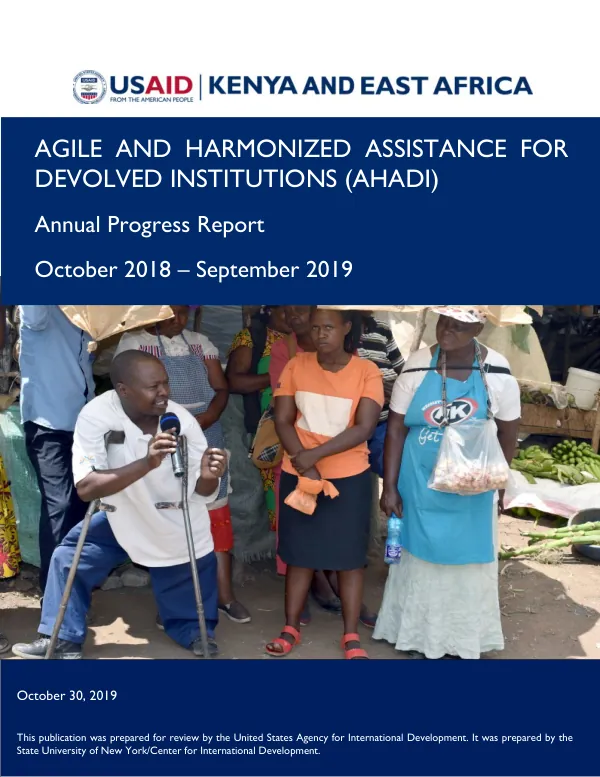
Agile and Harmonized Assistance for Devolved Institutions (AHADI) worked with county executives, county assemblies, and national institutions to build sustainable capacity, improve service delivery, enhance devolution, and increase citizen engagement during fiscal year 2019.
2019 · 129 pages
Sign in to readA free account is required to download.
Abstract
The project focused on consolidating and institutionalizing governance and capacity development improvements started in previous years. Institutionalizing County Government Improvements to Public Expenditure Management was a key objective of AHADI. AHADI-advocated improvements to public expenditure management processes showed signs of being institutionalized. All but one county performed better on this year's County Capacity Assessment (CCA4) as compared to the three previous years, showing an average improvement of 13% from last year. This indicates a positive trend in the management of public funds by county governments. AHADI also worked to increase citizen engagement and participation in governance processes. The project supported county-based civil society organizations (CSOs) to better engage with government and increase citizen voice. This led to a sharp increase in the number of citizens reached with civic education, from 150,000 in Q3 2019 to 250,000 in Q4 2019. This increase in civic education is a significant achievement, as it indicates a growing awareness and engagement of citizens in governance processes. In addition to these achievements, AHADI also worked to address inadequate governance systems and county practices regarding citizen participation. The project provided technical assistance and support to county governments to improve their governance systems and increase citizen participation. This included training and capacity-building programs for county officials and civil society organizations. The AHADI project also focused on supporting the institutions' self-reliance, particularly at the level of national government bodies working on inter-governmental relations. The project reduced technical assistance and conferencing support to these bodies and focused project resources on activities that support the institutions' self-reliance. This approach is in line with the Journey to Self-Reliance (J2SR) policy, which aims to increase the capacity of partner countries to manage their own development. Overall, the AHADI project made significant progress in improving governance and capacity development in county governments and increasing citizen engagement and participation in governance processes. The project's achievements are a testament to its commitment to building sustainable capacity and improving service delivery in Kenya's devolved system of government.