USAID DEC
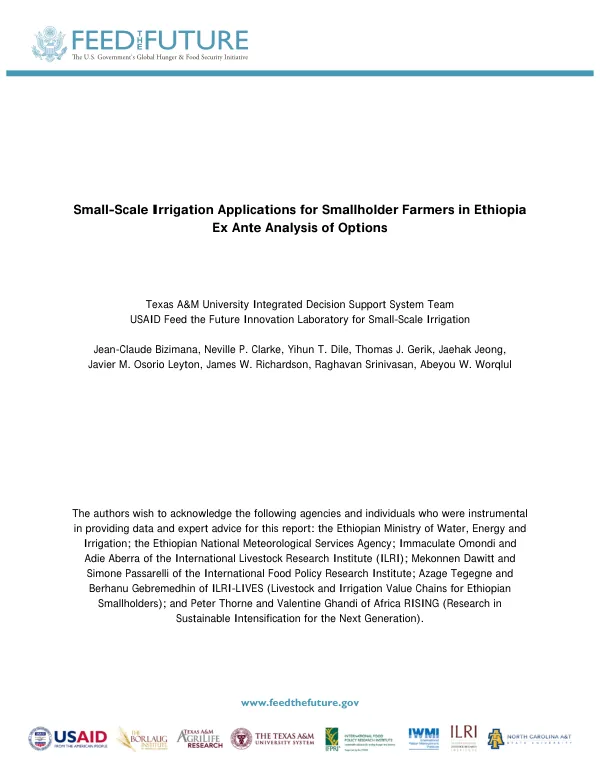
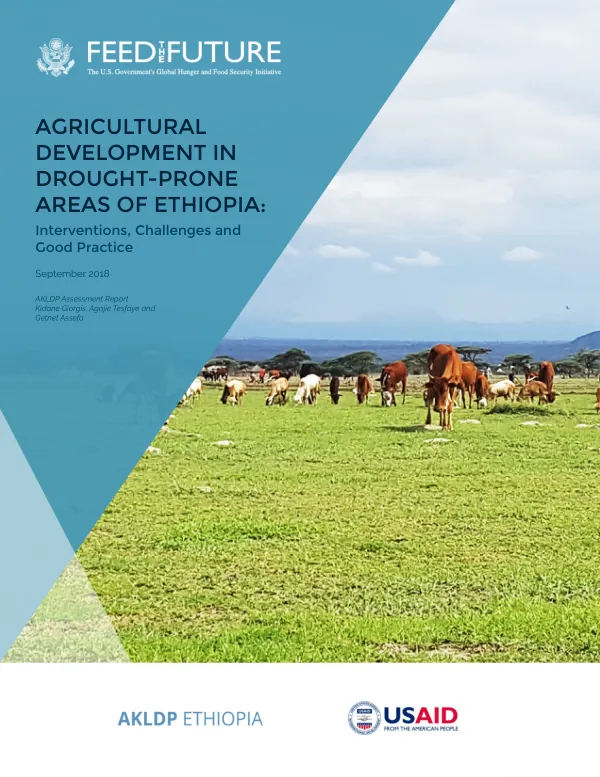
Agricultural Development in Drought-Prone Areas of Ethiopia: Interventions, Challenges and Good Practice
Sign inFEINSTEIN INTERNATIONAL CENTER
Agricultural Development in Drought-Prone Areas of Ethiopia: Interventions, Challenges and Good Practice
The agricultural development initiative in drought-prone areas of Ethiopia began with the aim of understanding the underlying factors hindering development in these geographical domains.
2018 · 50 pages
Sign in to readA free account is required to download.
Abstract
The study's scope was in dryland areas, ranging from highlands to lowlands moisture-stressed areas, in the major agro-ecologies of the drought-prone mixed farming areas of selected representative woredas in Amhara, Tigray, and Oromia regions. The study targeted primary data sources including smallholder farmers, non-governmental organizations, private enterprises, and government organizations. The study employed three standard data collection techniques and approaches, including desk reviews, participatory approaches, and case analysis. Participatory tools used at the qualitative stage included key-informant interviews and focus group discussions. A total of 44 targeted key-informant interviews, 26 focus group discussions, and 16 case analyses were conducted. The study's findings highlighted the importance of addressing the challenges faced by smallholder farmers in drought-prone areas. The results suggested that farmer training programs, infrastructure development, and market linkage facilitation can be effective interventions in improving crop yields and household income. The study also emphasized the need to address the specific constraints faced by women and youth in drylands, including limited access to markets and credit. The study's recommendations included the need to scale up the implementation of farmer training programs, infrastructure development, and market linkage facilitation. The study also suggested the need to address the specific constraints faced by women and youth in drylands, including limited access to markets and credit. The study's findings and recommendations can inform policy and programming efforts aimed at improving agricultural development in drought-prone areas of Ethiopia. The study's methodology involved a combination of desk reviews, participatory approaches, and case analysis. The study's data collection tools and techniques included key-informant interviews, focus group discussions, and direct observations of farming practices. The study's results were analyzed using a combination of quantitative and qualitative methods. The study's findings have implications for agricultural development policy and programming in Ethiopia. The study's results suggest that farmer training programs, infrastructure development, and market linkage facilitation can be effective interventions in improving crop yields and household income. The study also highlights the need to address the specific constraints faced by women and youth in drylands, including limited access to markets and credit. The study's recommendations can inform policy and programming efforts aimed at improving agricultural development in drought-prone areas of Ethiopia. The study's findings and recommendations can also inform the development of strategies and programs aimed at addressing the challenges faced by smallholder farmers in drought-prone areas.