UNIVERSIT6 DE PURDUE
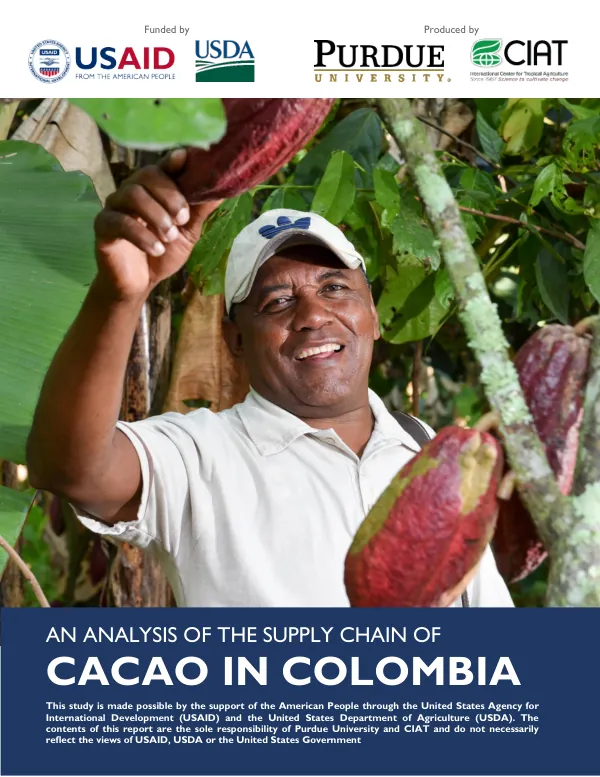
An Analysis of the Supply Chain of Cacao in Colombia
The cacao supply chain in Colombia is a complex system that involves multiple stakeholders, including farmers, traders, processors, and exporters.
2019 · 208 pages
Sign in to readA free account is required to download.
Abstract
The country is a significant producer of cacao, with the majority of its production being exported to international markets. However, the sector faces several challenges, including low productivity, limited access to markets, and a lack of coordination among stakeholders. Cacao production in Colombia is characterized by a high degree of fragmentation, with many small-scale farmers producing low-quality cacao. The country has a diverse range of cacao varieties, with some farmers growing high-quality fine flavor cacao. However, the majority of farmers lack access to technical assistance, training, and market information, which hinders their ability to improve productivity and quality. The post-harvest practices and prices in Colombia are also a major concern. Farmers often sell their cacao at low prices due to a lack of market information and limited access to buyers. This leads to low incomes for farmers and limited investment in the sector. The study highlights the need for improved post-harvest practices, including better drying and fermentation techniques, to increase the quality and value of Colombian cacao. The supply chain of cacao in Colombia is characterized by a lack of coordination and consistency in extension and technical assistance services. This hinders the ability of farmers to access the information and support they need to improve productivity and quality. The study recommends improving coordination and consistency in extension and technical assistance services, as well as increasing innovation in these services by leveraging the peace process and utilizing face-to-face and digital resources. The study also highlights the need to take into account total factor productivity and prepare the sector for production risks. This includes providing business development services, developing livelihood indicators, and setting up a monitoring and evaluation system to evaluate the effectiveness of the cacao sector. In terms of transforming associations into competitive and sustainable rural businesses, the study recommends defining roles and responsibilities of associations, developing and promoting good business models for associations, providing extension and technical assistance to associations, building credit worthiness, and organizing business-to-business roundtables. To strengthen the sector to respond to markets, the study recommends fortifying extension and technical assistance services linking producers to market, leveraging the safety net (national market), searching and transaction costs for multiple market segments, building analytical and research capacity, and increasing market demand for Colombian cacao. Finally, the study highlights the need to improve the institutional architecture of the cacao sector, including clear rules and specialization, strengthen the role and credibility of national and sub-national institutions in the cacao sector, define a focused role for Fedecacao, improve and leverage the Fondo Nacional del Cacao – Fomento, and improve the effectiveness of Finagro in the cacao sector and other financial service providers. Overall, the study provides a comprehensive analysis of the cacao supply chain in Colombia and highlights the need for improved coordination, innovation, and institutional support to increase productivity, sustainability, and competitiveness in the sector.
Related documents