USAID
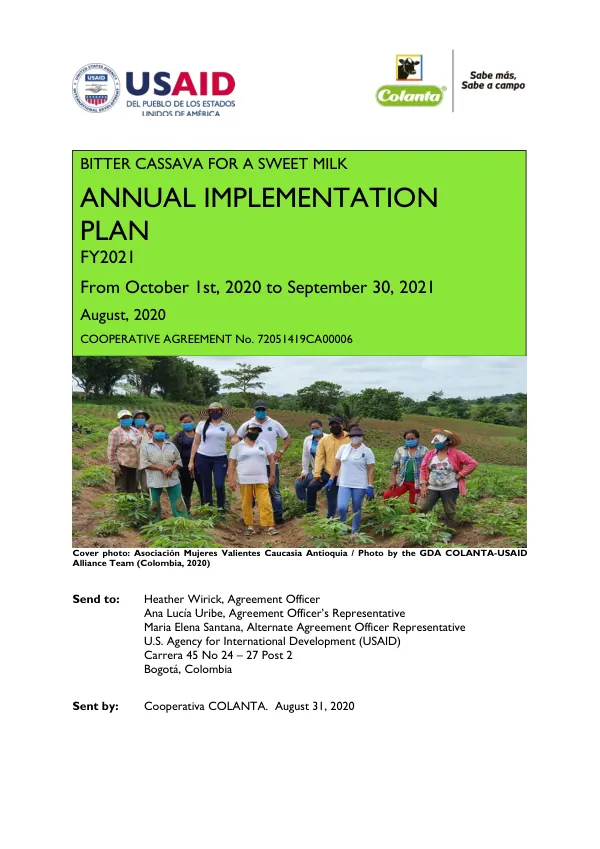
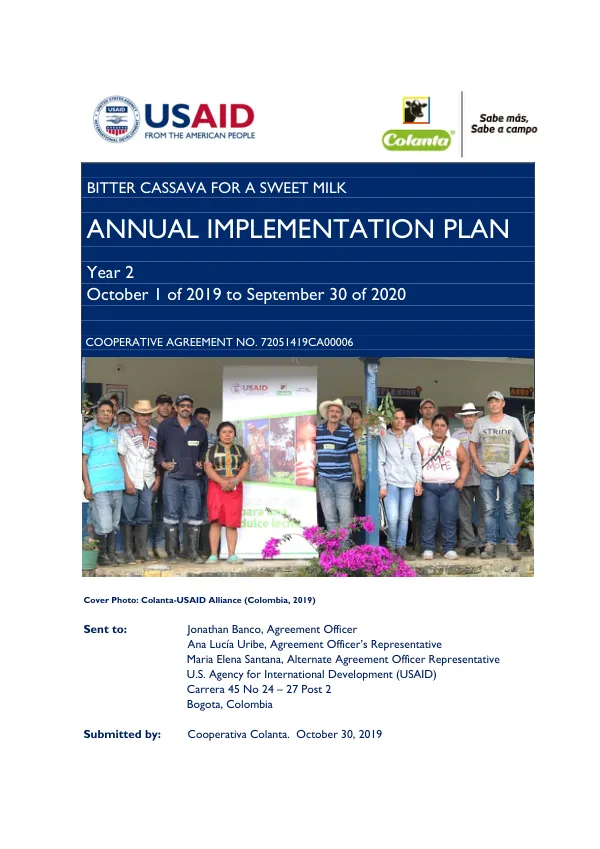
Annual Implementation Plan Bitter Cassava for a Sweet Milk 2020 Year 2
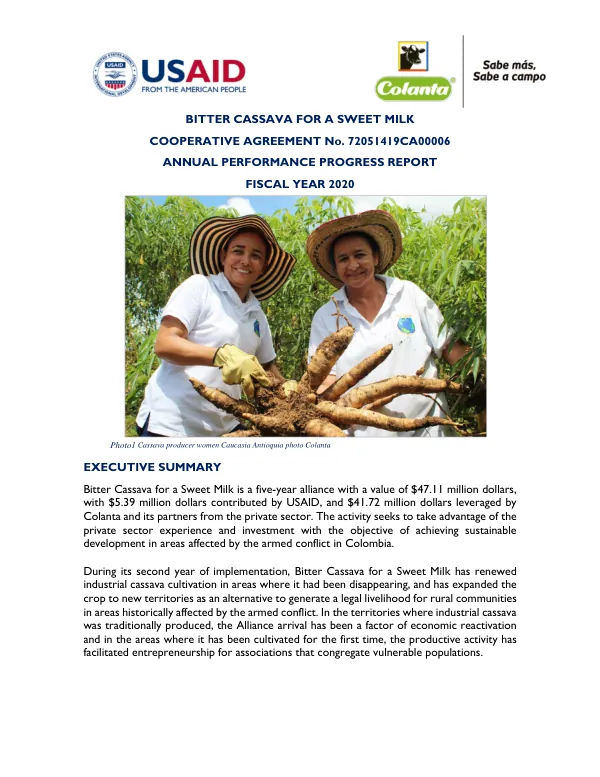
The Bitter Cassava for a Sweet Milk Alliance is a 5-year initiative between USAID/Colanta and Cooperativa Colanta, with a projected duration from February 1, 2019, to January 31, 2024.
2020 · 32 pages
Sign in to readA free account is required to download.
Abstract
The Alliance aims to leverage private sector experience and investment to achieve sustainable economic development in conflict-affected areas, improving the competitiveness of the dairy and agricultural sector. The initiative contributes to the USAID/Colombia Country Development Cooperation Strategy framework by supporting development objective 3: Improved conditions for inclusive rural economic growth. The Alliance works across two main components: increasing the supply of industrial cassava as an input in the production of cattle feed and reducing the cost of milk production and increasing quality standards. The cassava component focuses on implementing efficient production processes, providing technical assistance and training, and building productive infrastructure. The milk component aims to reduce the production cost per liter of milk by 3 percent through technical assistance and technological upgrading. In the first year of operations, the Alliance has made substantial progress in reaching target municipalities. The cassava component has reached 38% of the target municipalities, and the milk component has reached 89% of the target municipalities. A total of 288.8 hectares of cassava have been planted, exceeding the goal for the first year. Additionally, 336 people were trained in different production processes for bitter cassava, Good Agricultural Practices, and environmental management. The Annual Implementation Plan for Year 2 provides details of the key activities that will be developed in both components, as well as various cross-cutting activities. The plan includes the implementation of efficient production processes, provision of technical assistance and training, and building of productive infrastructure for the cassava component. For the milk component, the plan includes the establishment of a baseline measure of the cost of production per liter of milk in different geographic areas and the implementation of pasture renewal services. The Alliance has established a framework for monitoring and evaluation, which includes the tracking of key indicators such as productivity per hectare of fresh cassava, dry bitter cassava processed, and number of technical assistance and training sessions delivered. The Alliance also aims to reduce the production cost per liter of milk and increase quality standards through technical assistance and technological upgrading. The Bitter Cassava for a Sweet Milk Alliance has the potential to contribute to the development of improved living conditions of the beneficiaries in the target municipalities. The initiative's focus on sustainable rural economic development and its emphasis on technical assistance and training make it an important tool for promoting economic growth and reducing poverty in conflict-affected areas. The Alliance's work in the cassava component has shown promising results, with a significant increase in the number of hectares planted and the number of people trained in different production processes. The milk component has also made progress, with the establishment of a baseline measure of the cost of production per liter of milk and the implementation of pasture renewal services. The Annual Implementation Plan for Year 2 provides a clear roadmap for the Alliance's activities and goals for the upcoming year. The plan includes a detailed description of the key activities that will be implemented in both components, as well as various cross-cutting activities. The plan also includes a framework for monitoring and evaluation, which will allow the Alliance to track its progress and make adjustments as needed. Overall, the Bitter Cassava for a Sweet Milk Alliance has the potential to make a significant impact in promoting sustainable economic development in conflict-affected areas. The initiative's focus on technical assistance and training, as well as its emphasis on building productive infrastructure, make it an important tool for promoting economic growth and reducing poverty.