USAID
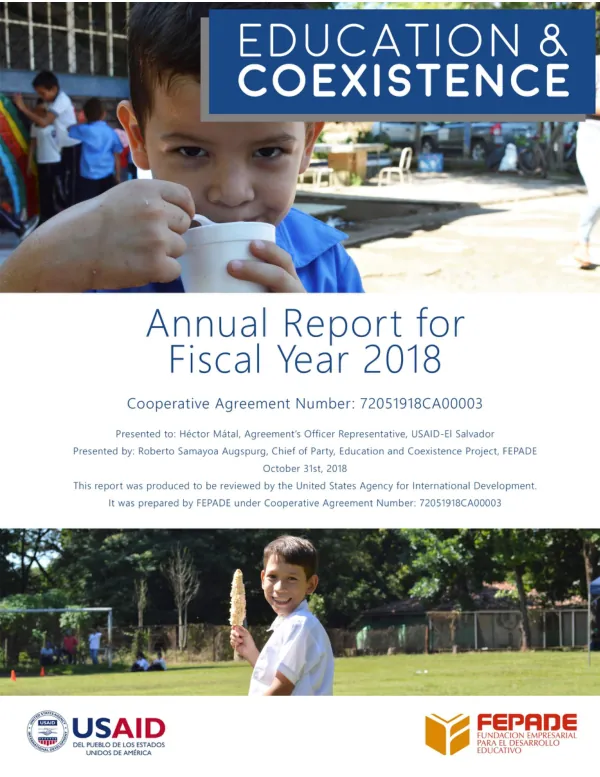
Annual Report FY2018: Education and Coexistence Project
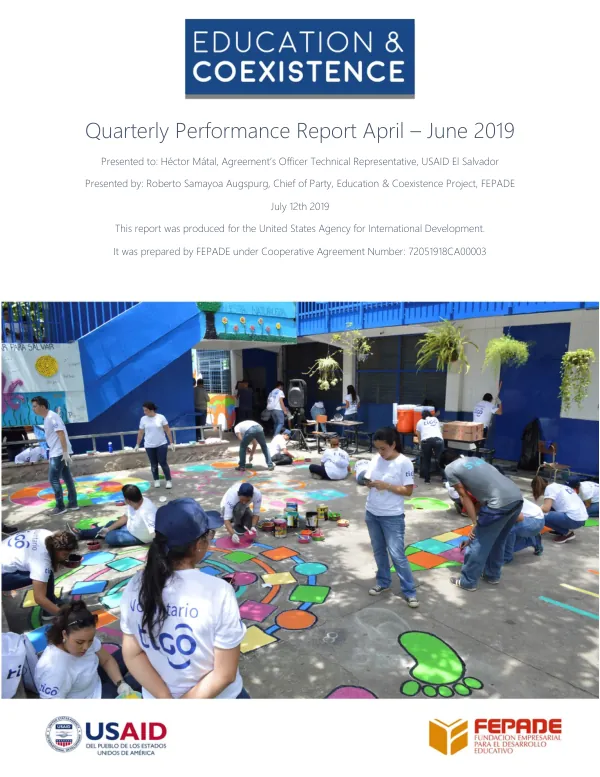
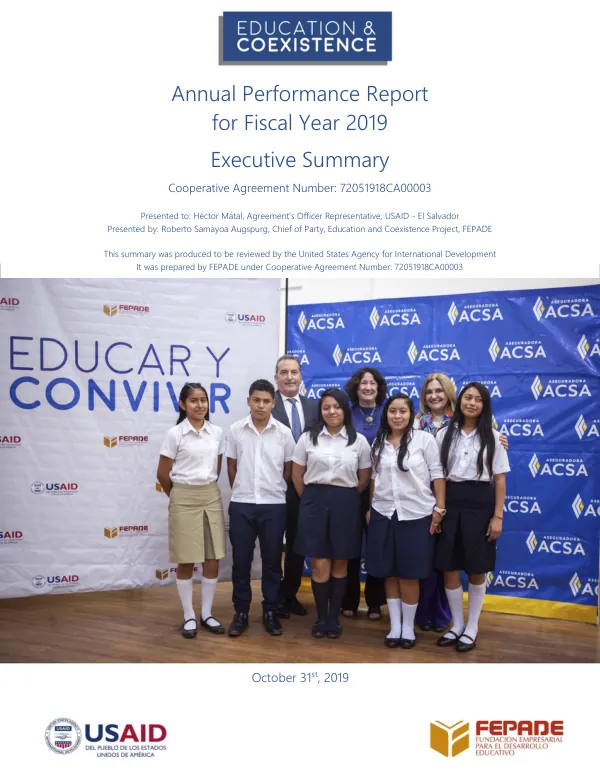
The Education and Coexistence Project is a Global Development Alliance financed by the United States Agency for International Development (USAID) and the private sector, and implemented by Fundación Empresarial para el Desarrollo Educativo (FEPADE).
2018 · 27 pages
Sign in to readA free account is required to download.
Abstract
The project's main purpose is to contribute to social cohesion through the transformation of schools into Comprehensive Centers for Peaceful-coexistence within the community. FEPADE is implementing the project through three operational areas: Education, Social Cohesion, and Alliances. The Education area works directly with public schools participating in the project to provide them with the tools, methodologies, and infrastructure necessary to strengthen their capacity to become Comprehensive Centers for Peaceful-coexistence. The project is focusing the efforts of its Education area on training principals and teachers to build upon their capacity to be significant positive role players in their students' lives. The Social Cohesion area is developing and implementing strategies to strengthen the social fabric of the communities surrounding the schools, by empowering community members and providing them with the skills and knowledge to manage their own community projects successfully. The project also relies on three support areas: the Administrative and Logistics area, the Monitoring, Evaluation and Learning (ME&L) Area, and the Communications Area. The ME&L Area is responsible for developing and implementing the ME&L Plan to measure the impact of the project in the beneficiary education corridors. The Communications Area is responsible for designing and implementing the Communication Strategy to disseminate the Project's objectives, activities, and impact. During fiscal year 2018, the Education and Coexistence team surpassed its established goal of supporting 4 education corridors. Through the consolidation of 5 education corridors and 5 alliances with the private sector, the following interventions have been made possible: Education Corridor Ilopango, Education Corridor Apopa, Education Corridor Usulután, Education Corridor Zaragoza, and Education Corridor Ciudad Arce. Each of these education corridors includes multiple schools and surrounding communities. The education profiles and diagnostics of each of the selected schools that comprise the education corridors have been completed by the Project's Education and Social Cohesion technical staff. Currently, the first 4 education corridors have finished the initial phase of training at the education and community levels. In Corridor Ciudad Arce, the construction phase of two classrooms and a kitchen has started, and in October of the present year, the staff will begin the training process. The commitment of the private sector with the education corridors allowed the Project to surpass its established goal in more than 70%. The established goal for 2018 was to count with USD $## in committed funds; however, through the formalization of five alliances, the Project was able to secure over USD $## in committed funds. This significant increase in private sector commitment has enabled the Project to expand its scope and impact, and to make a more meaningful contribution to social cohesion in the communities where it operates.
Related documents