MERCY CORPS INTERNATIONAL
Annual Results Report – Mercy Corps, DRC
The Kivus Crisis Response for IDPs (KCRI) rapid response program is a humanitarian initiative implemented by Mercy Corps in Eastern Congo, with support from multiple donors, including ECHO and USAID/BHA.
2020 · 12 pages
Sign in to readA free account is required to download.
Abstract
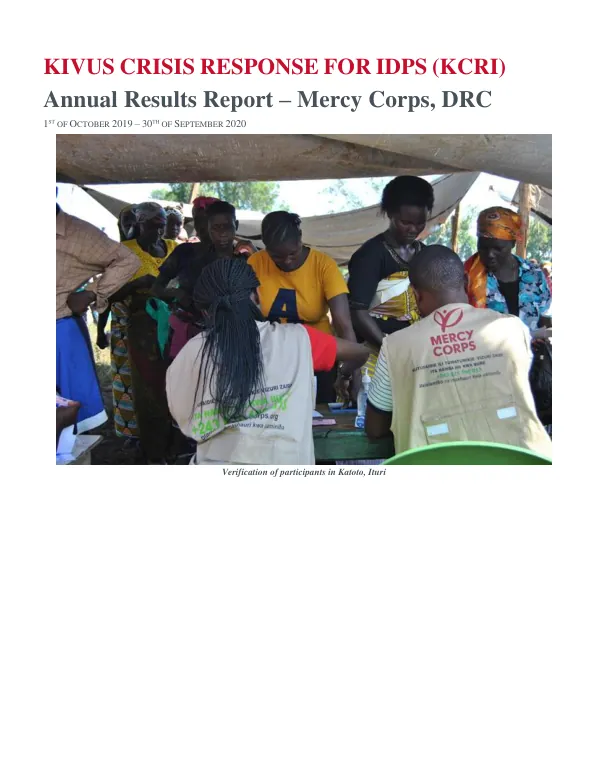
The program aims to meet the pressing needs of communities affected by conflict and natural disasters, particularly internally-displaced people. The assistance is delivered through a rapid response mechanism within 30 to 35 days of notification, depending on the nature of the assistance being delivered. The reporting period covers the second year of implementation, supported by a one-year funded modification of the grant. In the first year (FY19), the program completed 10 interventions with the provision of assistance to 43,638 households (250,999 individuals) totaling $1,998,850 USD (an average of $45.80 USD per household) in food vouchers. However, the implementation of planned interventions in FY20 was greatly impacted by insecurity and access issues and later by COVID-19 restrictions in DRC. As a result, Mercy Corps was only able to carry out one intervention during the reporting year. The intervention, conducted in Katoto (Ituri) in November 2019, assisted 2,804 households (14,599 individuals) and distributed a total of $168,096 (an average of $59.90 USD per household) in food vouchers. The amount given was calculated according to the prices in the area and the household size using the minimum-expenditure basket (MEB) tool. The intervention was conducted in a timely manner, with a team deployed on October 30th to conduct an NFI distribution and organize a food fair from November 20th to November 26th. To minimize risks of aid diversion, Mercy Corps decided to have its own team conduct the registration instead of hiring daily workers from the community. This process was proven extremely successful in terms of the quality of the data collected and the reduction of diversion risks. However, it extended the registration period and required more team members than usual. A total of 2,804 households were assisted, representing 14,599 individuals, including 55% women. The beneficiaries were sensitized on food security and nutrition, and cooking demonstrations on how to prepare healthy meals were organized during the fair. As a pilot intervention, Mercy Corps also organized an active malnutrition screening of children under five during the physical verification at the fair. Over a period of 11 days, a screening booth was set up outside of the traditional activities and was accessible to both participants and non-participants to screen with an MUAC children between 6 and 59 months. The screening was conducted by community health workers, and children identified with Severe Acute Malnutrition (SAM) or Moderate Acute Malnutrition (MAM) cases were referred to local health centers supported by Medair and Caritas for malnutrition care. A total of 1,690 children were screened, and 534 were referred to the local health centers, with 299 referred children (or 56% of the malnourished children identified) presenting themselves to the local health centers following Mercy Corps' screening. Mercy Corps conducts a market analysis before each intervention to establish a price list during the time of the assistance. This serves as a base for a) the calculation of the amount given in vouchers per household and b) establishing the list of prices that will be used during the fair with vendors. For NFI assistance, this analysis would also serve to define the modality used between vouchers and cash. For food assistance, the analysis allowed the team to identify which vendors could participate, prioritizing vendors from the area with sufficient stock. The KCRI program prioritizes the quality of assistance over timing, ensuring that the assistance provided meets the needs of the targeted households. The program's focus on food security and nutrition, as well as its commitment to reducing aid diversion risks, demonstrates its dedication to providing effective humanitarian assistance to those in need.