MERCY CORPS INTERNATIONAL
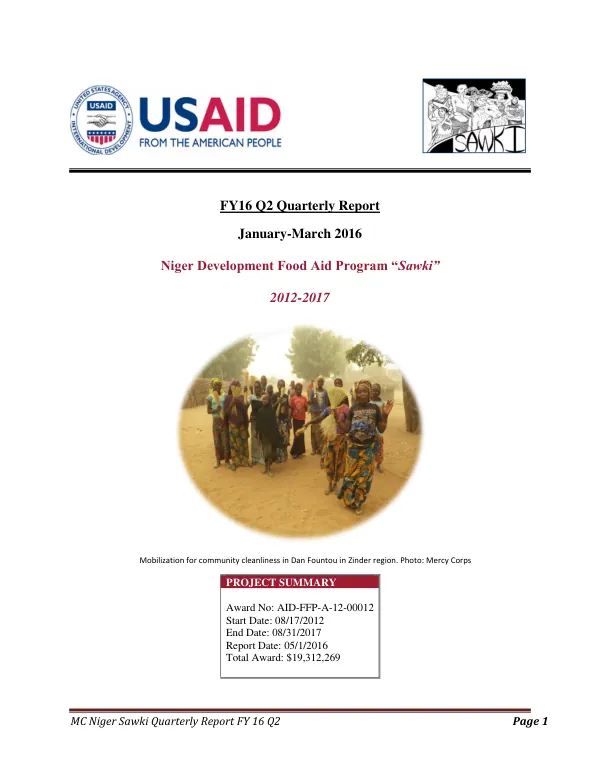
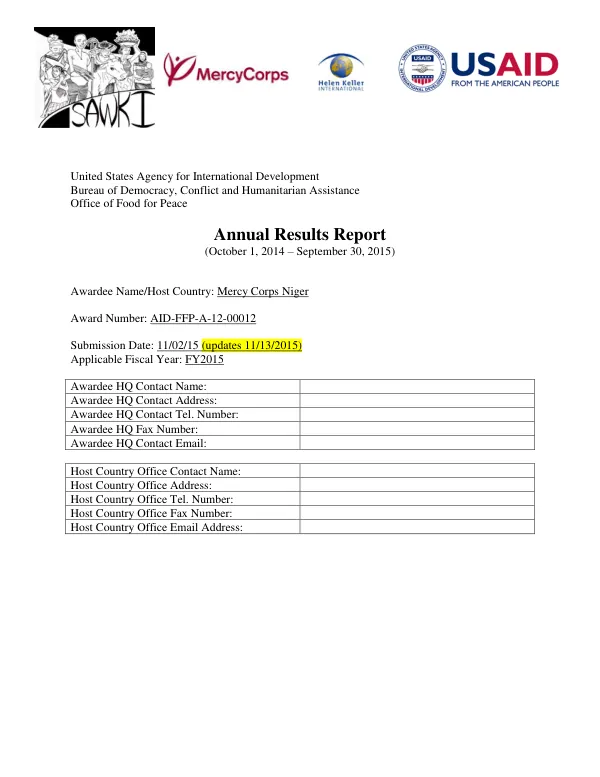
Annual Results Report: Sawki DFAP Program Year 3/FY2015
The Sawki Program, implemented by Mercy Corps Niger, aimed to address food security needs of over 92,000 beneficiaries in Niger.
2015 · 22 pages
Sign in to readA free account is required to download.
Abstract
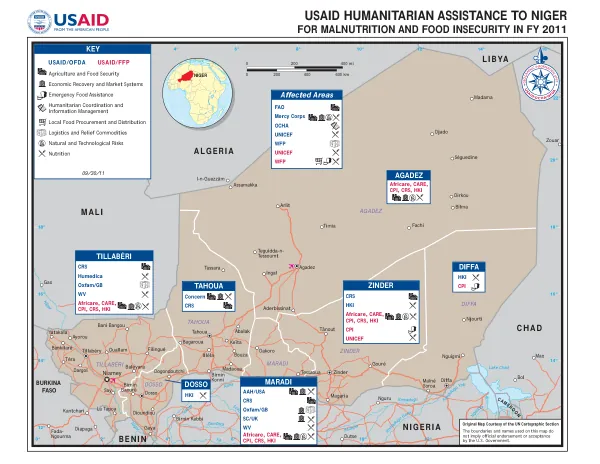
The program, funded by the USAID Office of Food for Peace, operated in 62 villages across three communes in Maradi and five in Zinder. These areas were selected due to chronic food insecurity, high rates of chronic malnutrition, and strong community cohesion. Strategic Objective 1 (SO1) focused on improving health and nutrition. The program shifted from the initial teaching phase to the fieldwork phase, where best practices for essential nutrition actions (ENA) were promoted. Community structures received material support and hands-on training in various sectors. Key activities included the distribution of supplementary food, cooking demonstrations using local foods, and home visits. Additionally, the program improved access to potable water through the rehabilitation of water points and Community Led Total Sanitation (CLTS) activities. Strategic Objective 2 (SO2) aimed to improve the livelihoods of producers, food diversification for families, and income sources. The program expanded and developed sustainable strategies, ensuring a strong exit strategy. Results included the monitoring and capacity building of community structures, consolidation and scaling up of pilot activities, and the development of irrigated crops, food crops, and animal production. The program implemented various interventions to promote community ownership and adoption of best practices. These included the establishment of community granaries to enhance nutrition and increase income. The program also focused on gender approaches, integrating them into all aspects of programming and conducting stand-alone activities to ensure an impact. The Sawki Program's comprehensive intervention strategy showed results in all areas of the program. The program's emphasis on community ownership, design, and dissemination of messages and behavior change communication outreach contributed to the widespread adoption of best practices for essential nutrition actions. The program's focus on gender approaches and the establishment of community granaries also demonstrated a commitment to sustainability and community development. The program's monitoring and evaluation plan included an annual survey to collect data from a sample of beneficiary households. The survey aimed to determine levels of annual indicators, including household consumption of diversified nutritious food, land and livestock productivity, and household incomes. The results of the survey showed encouraging trends, with household consumption of diversified nutritious food increasing and household incomes rising. The program's commodities and operations included the distribution of supplementary food, cooking demonstrations, and home visits. The program also rehabilitated water points and implemented Community Led Total Sanitation (CLTS) activities to improve access to potable water. The program's stakeholders received training and support in field outreach activities to expand the coverage of health services. The program's challenges and lessons learned highlighted the importance of community ownership and adoption of best practices. The program's focus on gender approaches and the establishment of community granaries demonstrated a commitment to sustainability and community development. The program's comprehensive intervention strategy showed results in all areas of the program, contributing to improved health and nutrition, livelihoods, and resilience to shocks. The program's geographic focus was on the 62 villages in Maradi and Zinder, with a total of 92,092 beneficiaries. The program's timeframes were from October 1, 2014, to September 30, 2015, with a focus on scaling up pilot-tested practices and developing sustainable strategies. The program's recommendations included the continued emphasis on community ownership and adoption of best practices, the expansion of the program's coverage of health services, and the establishment of community granaries to enhance nutrition and increase income.
Related documents