USAID DEC
Annual Results Report: Sustainable Agriculture and Production Linked to Improved Nutrition Status, Resilience, and Gender Equity (SAPLING)
Sign inCATHOLIC RELIEF SERVICES ORGANIZATION
Annual Results Report: Sustainable Agriculture and Production Linked to Improved Nutrition Status, Resilience, and Gender Equity (SAPLING)
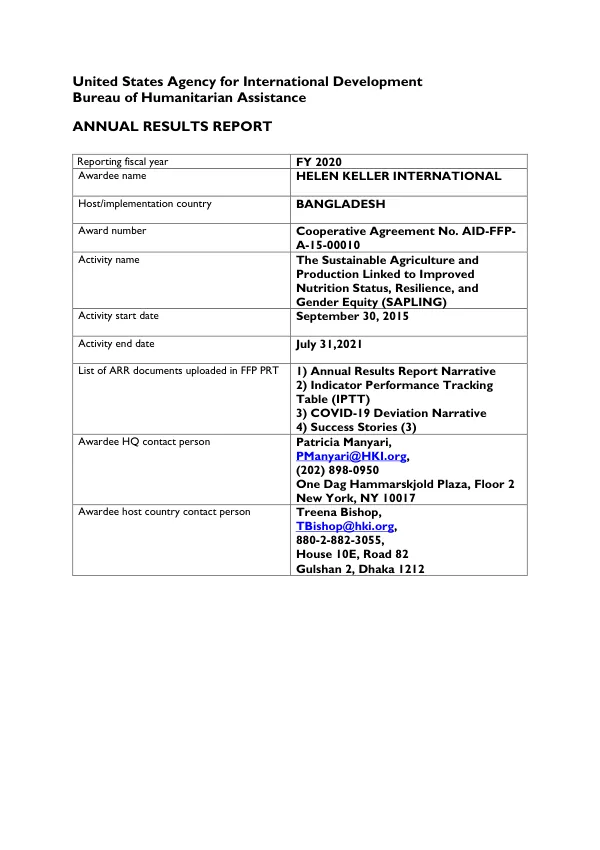
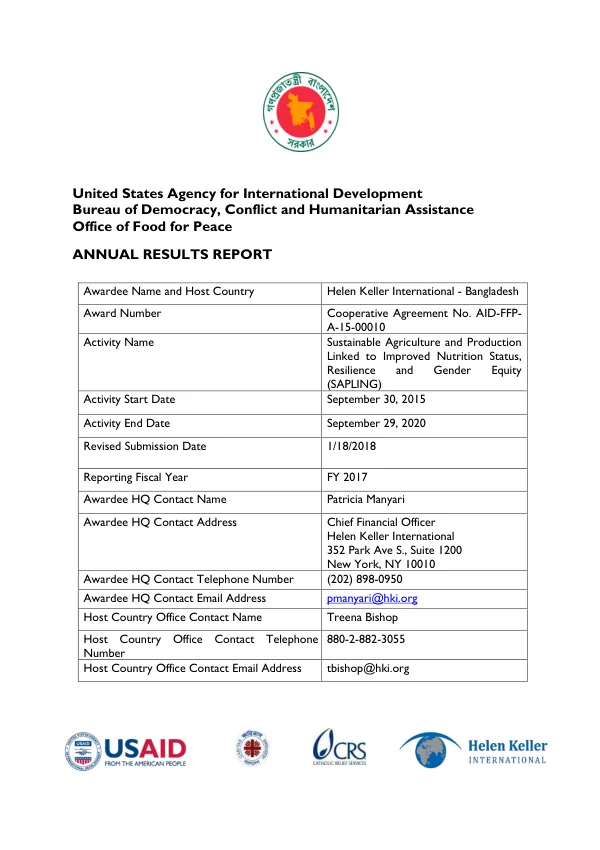
The Sustainable Agriculture and Production Linked to Improved Nutrition Status, Resilience, and Gender Equity (SAPLING) program is a five-year initiative implemented in the Bandarban District of the Chittagong Hill Tracts (CHT) in southeastern Bangladesh.
2016 · 22 pages
Sign in to readA free account is required to download.
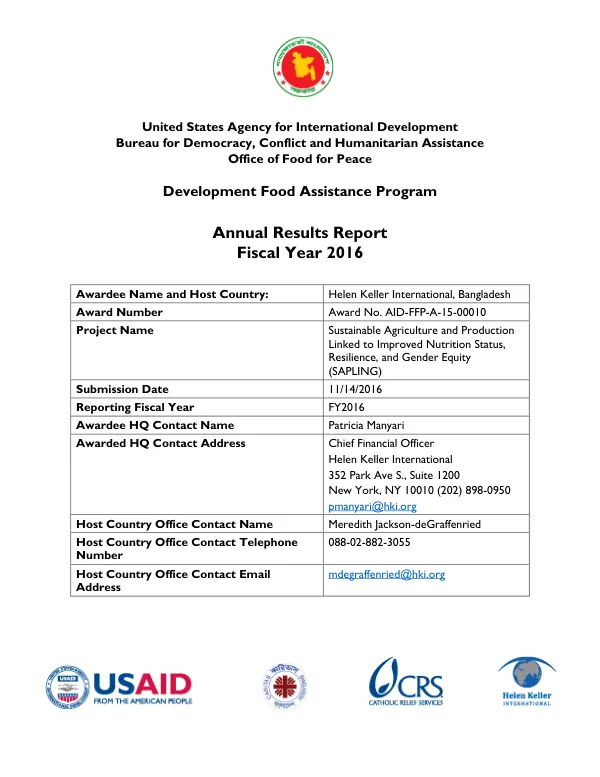
Abstract
The program aims to engage approximately 55,925 households in activities designed to improve gender equitable food security, nutrition, and resilience. SAPLING is a Development Food Assistance Program (DFAP) funded by the United States Agency for International Development (USAID). The program is led by Helen Keller International (HKI) in partnership with Caritas Bangladesh and Catholic Relief Services (CRS). The program's goal is to bring about meaningful and positive changes that will lead to improved food security, nutrition, and resilience among the target population. During the fiscal year 2016, which encompasses the period of October 1, 2015, through September 30, 2016, the SAPLING team focused on project startup activities. These activities included recruiting and on-boarding staff, drafting and negotiating the Host Country Agreement (HCA) with the Ministry of Chittagong Hill Tracts Affairs (MOCHTA), and setting up project offices in Bandarban and the upazilas. The SAPLING team also developed key project documents, including the Initial Environmental Examination (IEE), the FY 2016 Pipeline and Resource Estimate Proposal (PREP), the Monitoring and Evaluation (M&E) Plan, and the Theory of Change (TOC). The team participated in the M&E and SAPLING baseline workshops facilitated by Food for Peace (FFP) and contributed to the finalization of the SAPLING baseline study. The SAPLING team also contributed to the USAID-conducted resilience study and accompanied the consultant on a visit to the World Vision-managed DFAP implementation area in southwestern Bangladesh. This cross-learning visit was arranged to ensure that the CHT was represented in the study. The program's activities during the reporting period focused on project startup, and the report does not provide an analysis of results. However, the report highlights the challenges encountered and the lessons learned during the implementation of the program. The SAPLING team encountered challenges in recruiting and on-boarding staff, negotiating the HCA with MOCHTA, and setting up project offices. Despite these challenges, the SAPLING team made significant progress in developing key project documents and participating in the M&E and SAPLING baseline workshops. The team also contributed to the USAID-conducted resilience study and accompanied the consultant on a visit to the World Vision-managed DFAP implementation area in southwestern Bangladesh. The SAPLING program aims to engage approximately 55,925 households in activities designed to improve gender equitable food security, nutrition, and resilience. The program's goal is to bring about meaningful and positive changes that will lead to improved food security, nutrition, and resilience among the target population. The program's activities during the reporting period focused on project startup, and the report highlights the challenges encountered and the lessons learned during the implementation of the program. The SAPLING team's progress in developing key project documents and participating in the M&E and SAPLING baseline workshops demonstrates the program's commitment to improving food security, nutrition, and resilience among the target population. The program's activities during the reporting period laid the foundation for the implementation of the program's goals and objectives. The SAPLING program's focus on gender equitable food security, nutrition, and resilience is critical to improving the lives of the target population. The program's activities during the reporting period demonstrate the importance of addressing the needs of women and girls in improving food security, nutrition, and resilience. The SAPLING program's commitment to improving food security, nutrition, and resilience among the target population is evident in the program's activities during the reporting period. The program's focus on gender equitable food security, nutrition, and resilience is critical to improving the lives of the target population.
Related documents
Documents in this collection
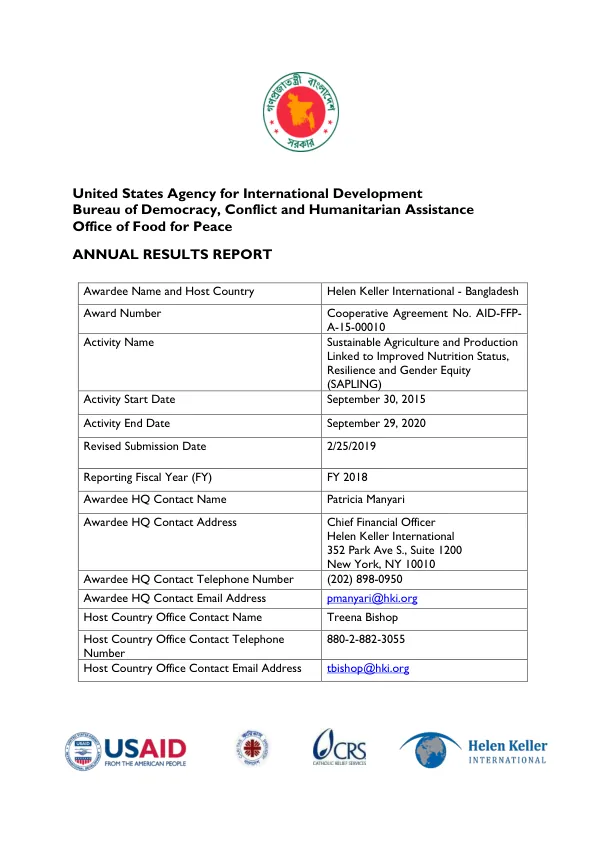 2019
2019USAID DEC
Annual Results Report: Sustainable Agriculture and Production Linked to Improved Nutrition Status, Resilience, and Gender Equity (SAPLING)
Open record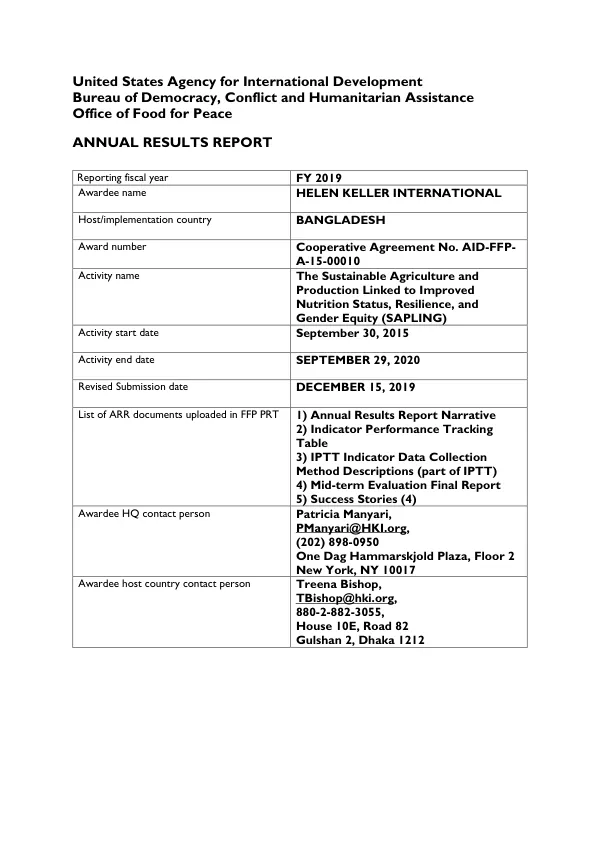 2019
2019USAID DEC