USAID DEC
Annual Results Report: Sustainable Agriculture and Production Linked to Improved Nutrition Status, Resilience and Gender Equity (SAPLING)
Sign inHELLEN KELLER INTERNATIONAL
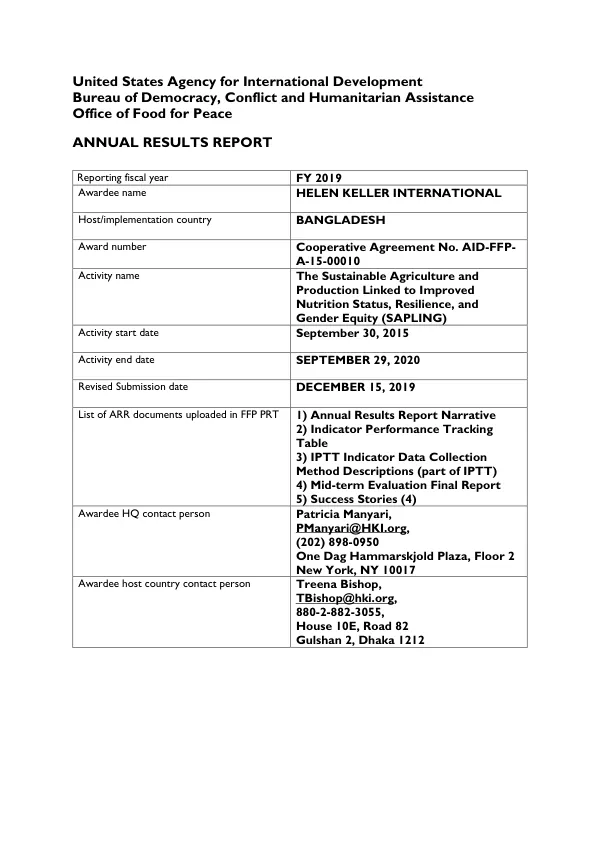
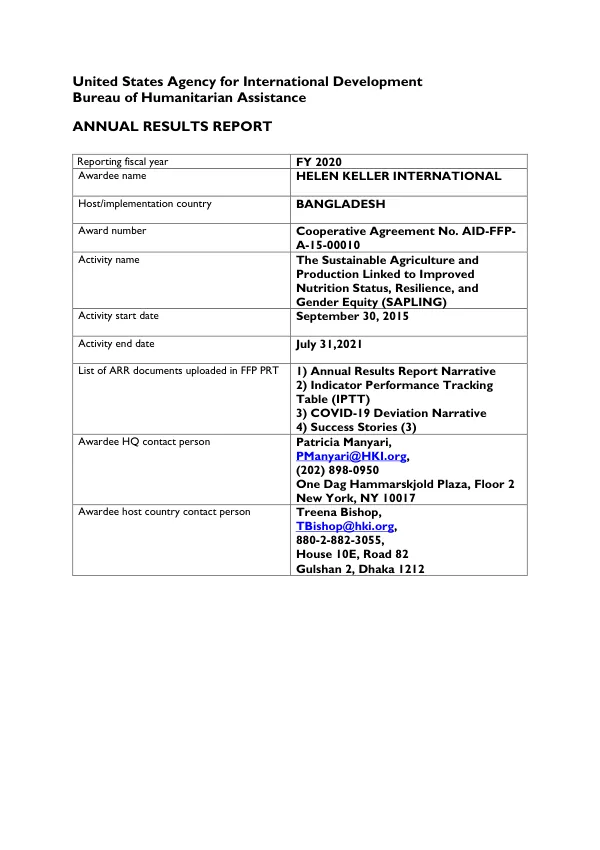
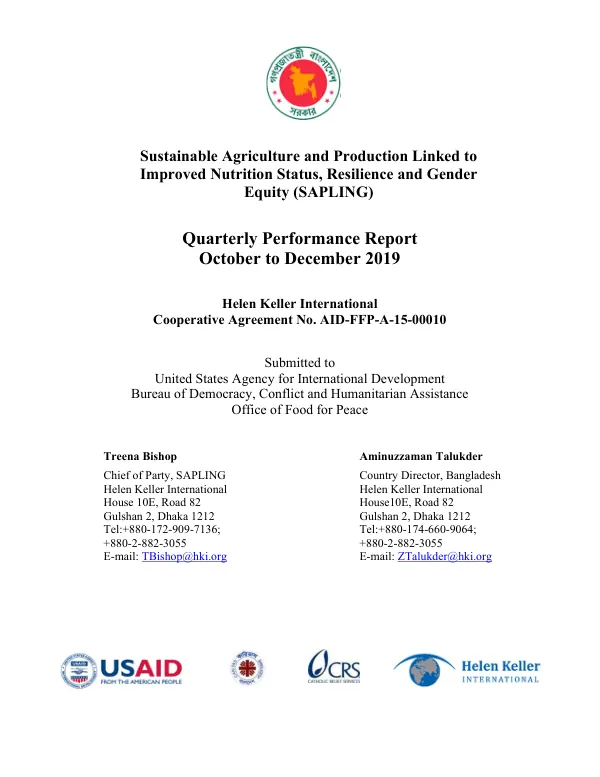
Annual Results Report: Sustainable Agriculture and Production Linked to Improved Nutrition Status, Resilience and Gender Equity (SAPLING)
The Sustainable Agriculture and Production Linked to Improved Nutrition Status, Resilience, and Gender Equity (SAPLING) project was awarded to Helen Keller International/Bangladesh by the United States Agency for International Development (USAID) on September 30, 2015.
2015 · 2 pages
Sign in to readA free account is required to download.
Abstract
The project, a five-year food assistance activity, will be implemented in five sub-districts of Bandarban District in the Chittagong Hill Tracts of southeastern Bangladesh. A total of 55,925 households will directly benefit from the program. The project's primary objective is to improve nutrition status, resilience, and gender equity through sustainable agriculture and production practices. The project will focus on five sub-districts, with a significant emphasis on the Chittagong Hill Tracts region. The region's unique cultural and geographical characteristics pose significant challenges to agricultural development, and the project aims to address these challenges through a comprehensive approach. The project's implementation plan is currently in the design phase, with a Detailed Implementation Plan (DIP) and program design and performance reports to be produced in future Annual Results Reports. The project's planning and design activities are ongoing, with a focus on developing a comprehensive strategy for implementing the project's objectives. The project's geographic focus is on the Chittagong Hill Tracts region of southeastern Bangladesh, with a specific emphasis on five sub-districts. The region's unique cultural and geographical characteristics pose significant challenges to agricultural development, and the project aims to address these challenges through a comprehensive approach. The project's implementation will be carried out in collaboration with local stakeholders, including farmers, community leaders, and government officials. The project's timeframes are outlined in the award agreement, with a five-year implementation period. The project's key milestones and deliverables will be outlined in future Annual Results Reports, which will provide a comprehensive overview of the project's progress and achievements.
Related documents
Documents in this collection
 2016
2016USAID DEC
Annual Results Report: Sustainable Agriculture and Production Linked to Improved Nutrition Status, Resilience, and Gender Equity (SAPLING)
Open record 2019
2019USAID DEC