USAID
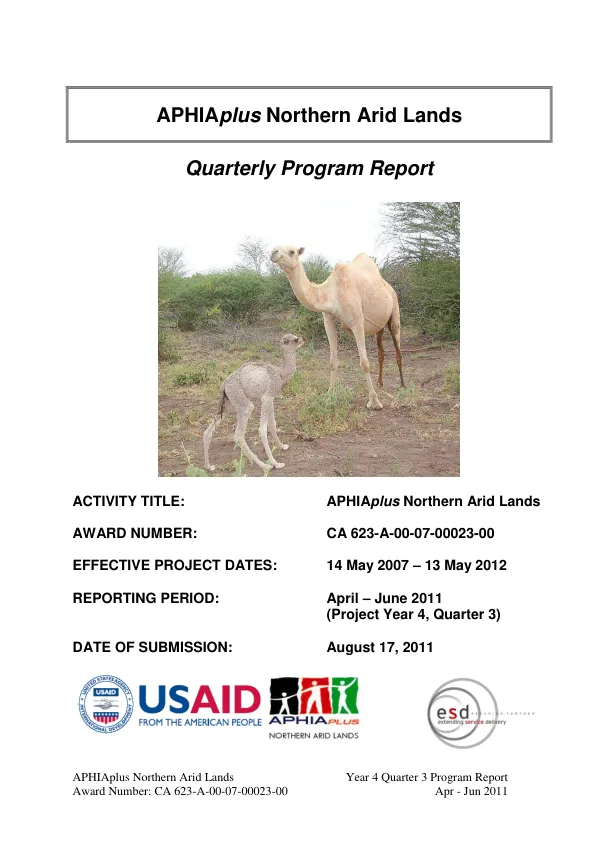
APHIAplus Northern Arid Lands Year 4 Quarter 3 Program Report
The APHIAplus Northern Arid Lands program is a health initiative aimed at improving the well-being of targeted communities and populations in the northern arid lands region.
2011 · 83 pages
Sign in to readA free account is required to download.
Abstract
The program is funded by the United States Agency for International Development (USAID) and is part of the AIDS, Population and Health Integrated Assistance (APHIA) program. The program's primary focus is on addressing the social determinants of health, including economic security, food security, education, and access to safe water and sanitation. To achieve this, the program has implemented various interventions, including economic strengthening programs, food security initiatives, education and life skills programs, and social mobilization for health. In terms of health service delivery, the program has made significant contributions to the prevention and treatment of HIV/AIDS, as well as maternal, newborn, and child health. The program has implemented HIV prevention and counseling services, HIV testing and treatment services, palliative care for TB/HIV patients, and prevention of mother-to-child transmission of HIV. The program has also improved access to maternal health services, including emergency obstetric care, and has increased the use of family planning methods. The program has also strengthened health systems in the region, including the development of community health committees and the training of community health workers. The program has also improved the capacity of health facilities to provide quality services, including the provision of antiretroviral therapy and the management of TB/HIV patients. In terms of monitoring and evaluation, the program has implemented a performance monitoring plan to track progress towards its objectives. The program has also conducted regular assessments of its activities and has made adjustments as needed. The program has also made significant contributions to the environment, including the implementation of a mitigation plan to address specific environmental threats. The program has also reported on its financial activities, including the use of funds and the achievement of financial targets. Overall, the APHIAplus Northern Arid Lands program has made significant contributions to the health and well-being of targeted communities and populations in the northern arid lands region. The program's focus on addressing the social determinants of health and strengthening health systems has improved access to quality health services and has helped to reduce the burden of HIV/AIDS and other health problems in the region. The program's results include a significant increase in the use of quality health services, including HIV prevention and counseling services, HIV testing and treatment services, and maternal health services. The program has also improved access to economic security initiatives, food security, education, and safe water and sanitation. The program has also strengthened health systems, including the development of community health committees and the training of community health workers. The program's geographic focus is on the northern arid lands region, which includes several districts in Kenya. The program's timeframes are from May 2007 to May 2012, with the current report covering the period from April to June 2011. The program's recommendations include continued support for the program's activities, including the strengthening of health systems and the improvement of access to quality health services. The program also recommends continued support for the program's economic strengthening programs and food security initiatives.