CRS
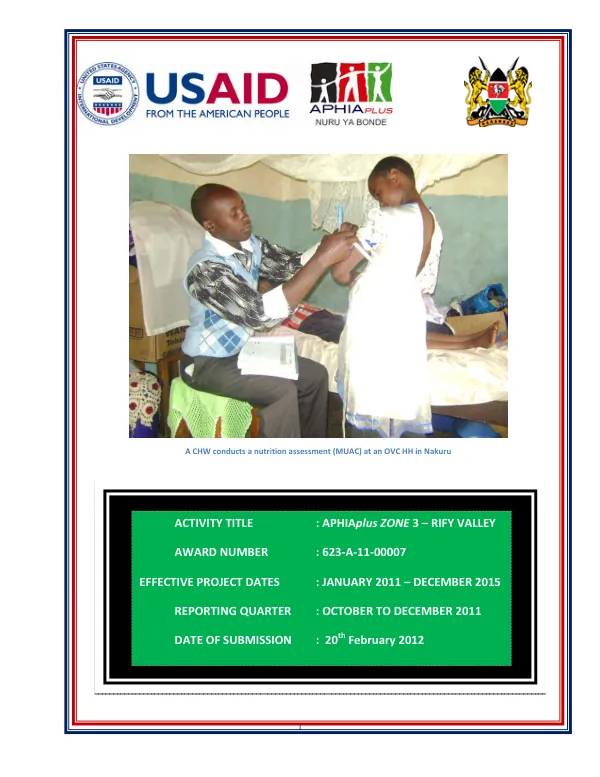
APHIAplus Quarterly Report: October-December 2011
The APHIAplus Nuru ya Bonde program is a five-year initiative aimed at improving health outcomes and impacts through sustainable country-led programs and partnerships.
2012 · 60 pages
Sign in to readA free account is required to download.
Abstract
The program focuses on increasing the use of quality services, products, and information, as well as addressing social determinants of health to enhance the well-being of targeted communities and populations in 11 out of the 14 counties in Rift Valley Province. The program's goal is to achieve significant improvements in health outcomes, particularly in the areas of maternal and child health, HIV/AIDS, tuberculosis, and malaria. To achieve this, the program will implement a range of interventions, including the provision of quality health services, the distribution of essential health commodities, and the promotion of healthy behaviors through behavior change communication. The program will also focus on addressing social determinants of health, including poverty, education, and economic empowerment. This will be achieved through the implementation of economic stimulus programs, the provision of education and skills training, and the promotion of economic empowerment initiatives. The program will be implemented in partnership with local implementing partners, including community-based organizations, civil society organizations, and government agencies. The program will also engage with the private sector to leverage resources and expertise. The program's monitoring and evaluation framework will be based on a set of key performance indicators (KPIs) that will track progress against the program's objectives. The program will also conduct regular assessments to identify areas for improvement and to inform program adjustments. The program's geographic focus is on 11 counties in Rift Valley Province, including Nakuru, Baringo, and Laikipia. The program will target vulnerable populations, including orphans and vulnerable children, people living with HIV/AIDS, and marginalized communities. The program's timeframes are from January 2011 to December 2015, with a reporting quarter of October to December 2011. The program's budget is supported by USAID's funding, with a total award number of 623-A-11-00007. The program's implementation will be led by a project management team, which will be responsible for overseeing the program's implementation, monitoring progress, and making adjustments as needed. The program will also engage with a range of stakeholders, including government agencies, civil society organizations, and community-based organizations. The program's results will be measured against a set of key performance indicators (KPIs), which will track progress against the program's objectives. The program will also conduct regular assessments to identify areas for improvement and to inform program adjustments. The program's contribution to health service delivery will be significant, with a focus on increasing the use of quality health services, products, and information. The program will also address social determinants of health, including poverty, education, and economic empowerment. The program's results will be reported quarterly, with a focus on tracking progress against the program's objectives. The program will also conduct regular assessments to identify areas for improvement and to inform program adjustments. The program's implementation will be led by a project management team, which will be responsible for overseeing the program's implementation, monitoring progress