FOOD FOR THE HUNGRY, INTERNATIONAL
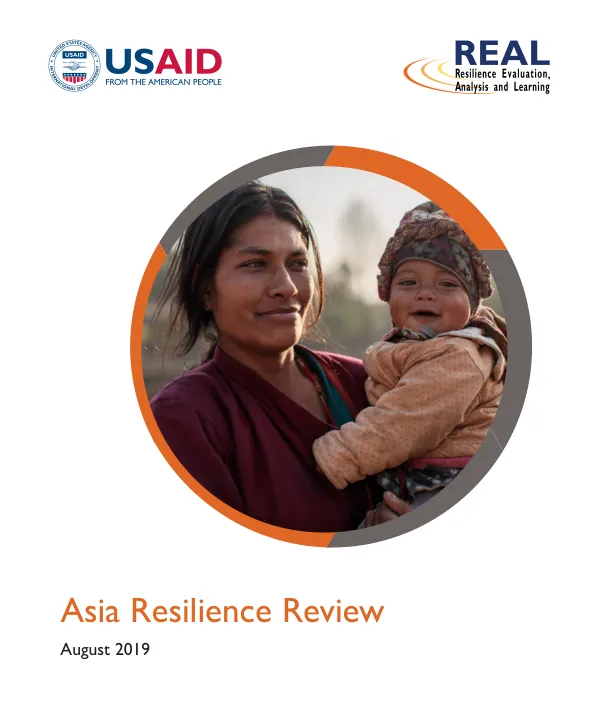
Asia Resilience Review
The Asia Resilience Review was conducted to build on learnings from the Asia Resilience Monitoring, Evaluation and Learning (MEL) workshop held in Bangkok, Thailand in July 2017.
2019 · 42 pages
Sign in to readA free account is required to download.
Abstract
The workshop and this review were supported by the USAID/Center for Resilience through the Resilience Evaluation, Analysis and Learning (REAL) Associate Award. REAL is a consortium-led effort funded by the USAID Center for Resilience, established to respond to growing demand among USAID Missions, host governments, implementing organizations, and other key stakeholders for rigorous, yet practical, monitoring, evaluation, strategic analysis, and capacity building support. Resilience is defined as the ability of individuals, households, communities, and societies to withstand, adapt, and transform in the face of shocks and stresses. Resilience capacities include absorptive capacity, adaptive capacity, and transformative capacity. Social capital is also a critical component of resilience, enabling individuals and communities to access resources, information, and support networks. The Asia context is unique due to its high exposure to environmental and climate-related hazards, such as floods, droughts, and cyclones. Agricultural and marine productivity and livelihoods are also critical concerns, with many communities relying on these sectors for their livelihoods. Urban population growth is another significant challenge, with many cities in Asia experiencing rapid expansion and strain on resources. Migration in Asia is also a significant issue, with many individuals and families moving within and across borders in search of better economic opportunities. Current measurement approaches to resilience in the Asia context include the Resilience Causal Framework, Resilience Conceptual Framework, and Resilience Indicators. Methodologies in use include the STRESS Assessment Methodology, research on resilience to floods in Bangladesh, and research into strengthening household and community resilience in Nepal. Quantitative data analysis and qualitative data analysis are also used to assess resilience, as well as recurrent monitoring systems. Key trends and findings in the Asia region include the importance of resilience capacities, such as absorptive capacity, adaptive capacity, and transformative capacity. Outcomes of resilience efforts include improved livelihoods, increased food security, and enhanced social and economic well-being. However, current challenges to resilience measurement in the Asia context include the need for more robust and nuanced measurement approaches, as well as the need to adjust frameworks to rural versus urban contexts. Ways forward for future investments in resilience measurement and analysis include a focus on value for money, right-sizing resilience measurement models, and adjusting frameworks to rural versus urban contexts. Strengthening resilience in fragile contexts, social and cognitive factors, and gender are also critical considerations. Engaging in a learning agenda is also essential to improve resilience measurement and analysis in the Asia context.