CONSERVATION INTERNATIONAL FOUNDATION
Asia’s Regional Response to Endangered Species Trafficking
The Lower Mekong region's unique ecosystems are threatened by the multi-billion dollar illegal wildlife trade.
2012 · 2 pages
Sign in to readA free account is required to download.
Abstract
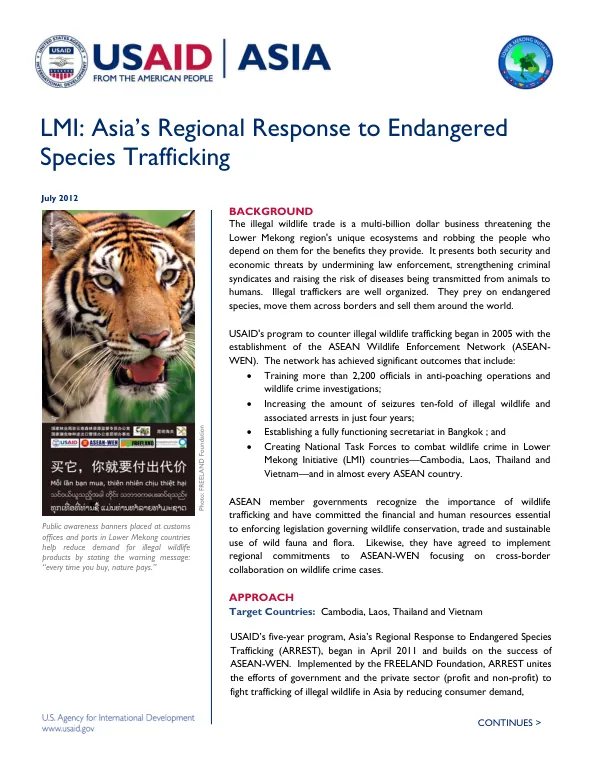
This trade undermines law enforcement, strengthens criminal syndicates, and raises the risk of diseases being transmitted from animals to humans. The Lower Mekong Initiative (LMI) countries, including Cambodia, Laos, Thailand, and Vietnam, are particularly vulnerable to this threat. The ASEAN Wildlife Enforcement Network (ASEAN-WEN) was established in 2005 to counter illegal wildlife trafficking. The network has achieved significant outcomes, including training over 2,200 officials in anti-poaching operations and wildlife crime investigations, increasing seizures of illegal wildlife and associated arrests ten-fold in four years, establishing a fully functioning secretariat in Bangkok, and creating National Task Forces to combat wildlife crime in LMI countries. The LMI countries recognize the importance of wildlife trafficking and have committed financial and human resources to enforcing legislation governing wildlife conservation, trade, and sustainable use of wild fauna and flora. They have also agreed to implement regional commitments to ASEAN-WEN, focusing on cross-border collaboration on wildlife crime cases. The Asia's Regional Response to Endangered Species Trafficking (ARREST) program, implemented by the FREELAND Foundation, began in April 2011 and builds on the success of ASEAN-WEN. ARREST focuses on reducing consumer demand for illegal wildlife products, strengthening law enforcement, and improving regional cooperation. The program targets LMI countries and shares its lessons with China and South Asian counterparts. ARREST uses its extensive media and advertising resources to support awareness campaigns in Vietnam, Laos, Thailand, and other countries to decrease the demand for illegal wildlife products. To date, ARREST messaging campaigns in the Lower Mekong region have reached over half a million individuals through online sources, television, and in airports and border crossings. The program also places wildlife crime on the agenda of major national and regional law enforcement organizations, such as INTERPOL and ASEANAPOL, and supports efforts to improve regional and national courses and materials in areas such as prevention, detection, and prosecution. ARREST works with law enforcement trainers and institutions in the region to improve regional and national courses and materials in the areas of prevention, detection, and prosecution. The program also supports the ASEAN-WEN Secretariat, mentoring staff and sharing new technologies to raise law enforcement awareness. This creates a stronger, more independent, and service-oriented secretariat that connects directly with law enforcement agencies across the Lower Mekong region and in other countries.
Related documents