USAID
Assessing Social Norms to Inform Program Design and Implementation Strategies
Social norms play a crucial role in shaping behaviors and influencing individual actions.
23 pages
Sign in to readA free account is required to download.
Abstract
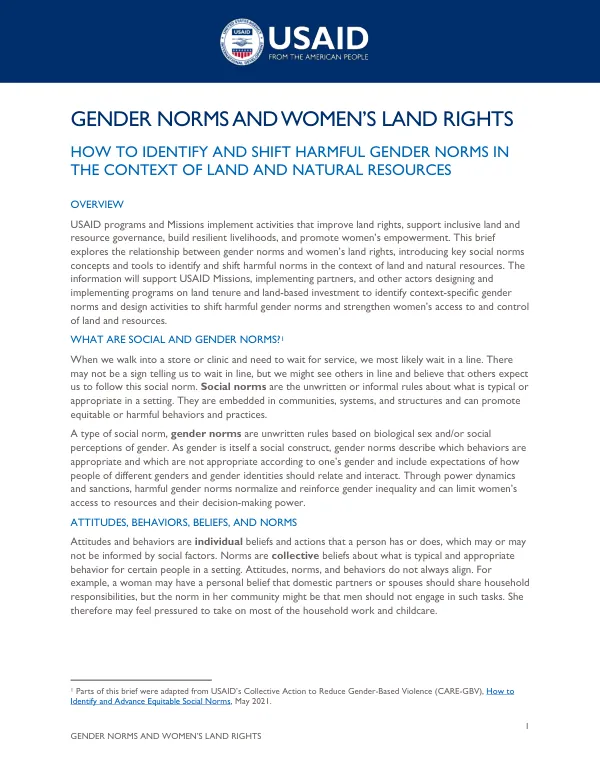
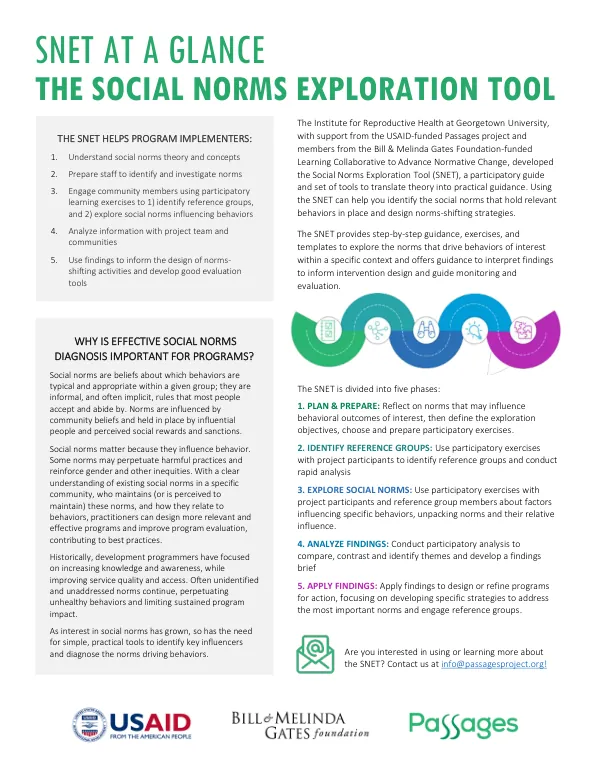
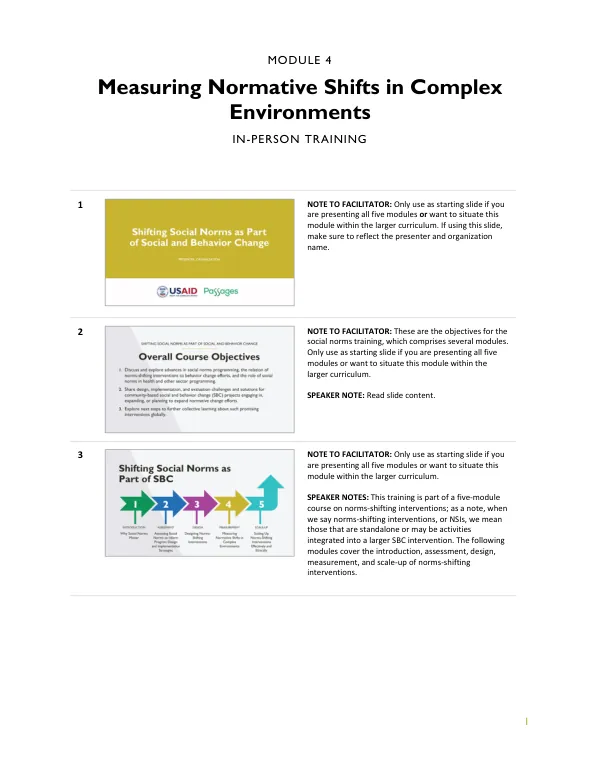
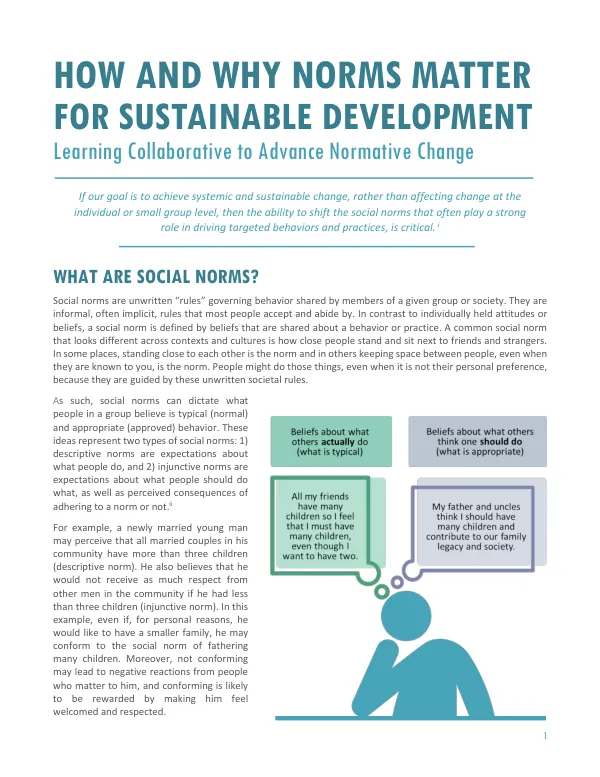
They are often not consciously obeyed, but rather are tacit rules of behavior that are embedded in formal institutions through codification into law and institutional policies. Social norms can be observed in various settings, such as schools and healthcare facilities, where policies and practices reflect societal expectations and values. For instance, some schools may have policies that prohibit unmarried girls who become pregnant from returning to finish their studies, while allowing the boys who got them pregnant to continue their education. This highlights the existence of norms that are institutionalized and influence behavior. Similarly, healthcare settings may require spousal permission for contraceptive services, reflecting societal norms around family planning and reproductive health. Social norms differ from individual attitudes or beliefs, which are personal opinions and values. Norms are what others expect or want individuals to do, creating a sense of what is appropriate behavior. The "others" who influence an individual's behavior form part of their reference group, which can be a community, a village, or a broad religious community. There are two types of social norms: descriptive norms and injunctive norms. Descriptive norms refer to what others do, such as seeing many children washing their hands before eating. Injunctive norms, on the other hand, refer to what is considered appropriate behavior, such as being told by a teacher or parent to wash hands before rejoining a meal. Reference groups play a significant role in enforcing social norms. These groups can exert considerable influence on behavior, particularly when individuals value their approval or disapproval. Understanding the concept of reference groups is essential for assessing social norms and designing effective programs that address behavioral outcomes. A norms assessment is a process of identifying whether a norm exists for a main population within a given reference group as it relates to a behavioral outcome of interest. This process involves understanding the value of norms assessments in informing program design and implementation strategies. By identifying and understanding social norms, programs can be designed to address the underlying factors that influence behavior, leading to more effective outcomes. The importance of norms assessments lies in their ability to provide insights into the underlying factors that influence behavior. By understanding social norms, programs can be designed to address the root causes of behavioral outcomes, rather than just treating the symptoms. This approach can lead to more sustainable and effective outcomes, as programs are tailored to the specific needs and context of the target population. In the context of program design and implementation, norms assessments can help identify the reference groups that influence behavior and the norms that shape individual actions. This information can be used to develop targeted interventions that address the underlying social norms and promote positive behavioral change. By incorporating norms assessments into program design, organizations can increase the effectiveness of their interventions and achieve better outcomes.