GEORGETOWN UNIVERSITY'S INSTITUTE FOR REPRODUCTIVE HEALTH
SNET at a Glance: The Social Norms Exploration Tool
The Social Norms Exploration Tool (SNET) is a participatory guide and set of tools developed by the Institute for Reproductive Health at Georgetown University, with support from the USAID-funded Passages project and members from the Bill & Melinda Gates Foundation-funded Learning Collaborative to Advance Normative Change.
2022 · 1 pages
Sign in to readA free account is required to download.
Abstract
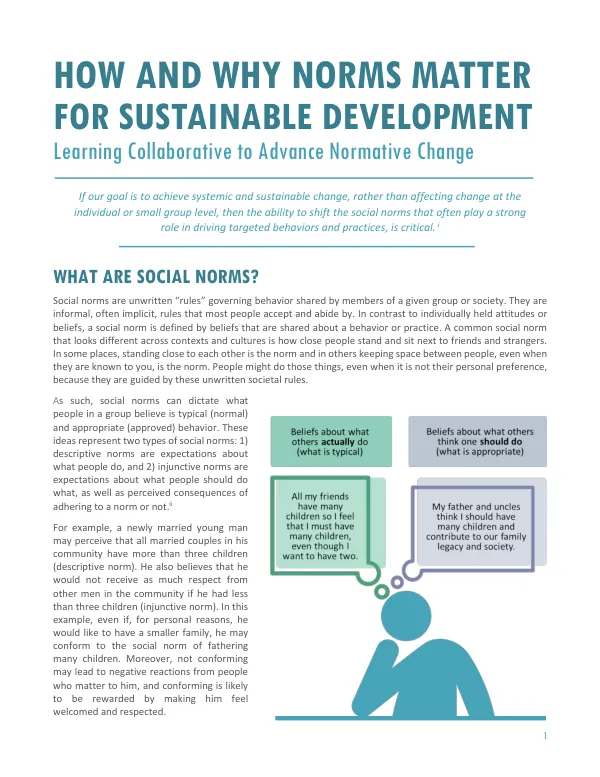
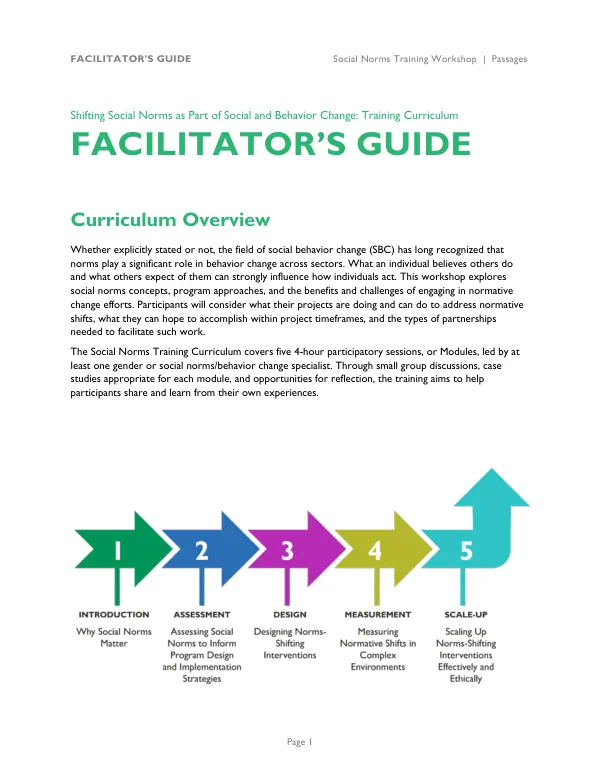
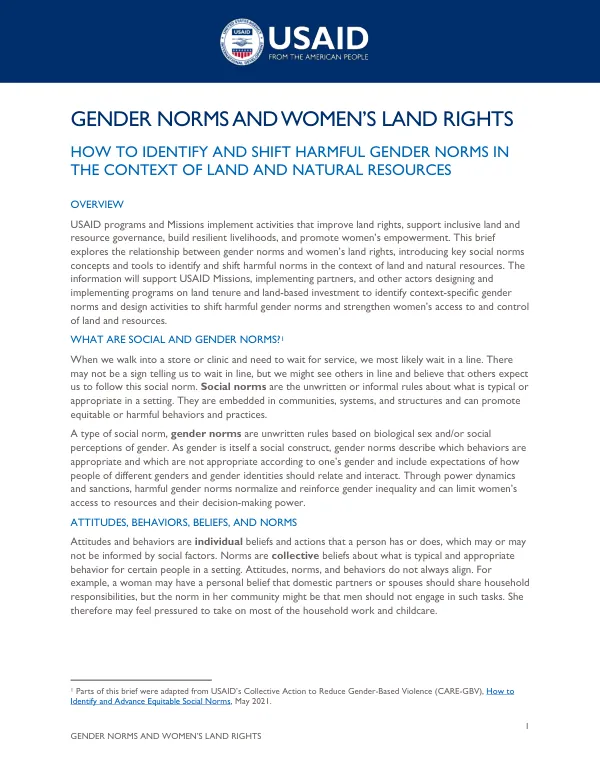
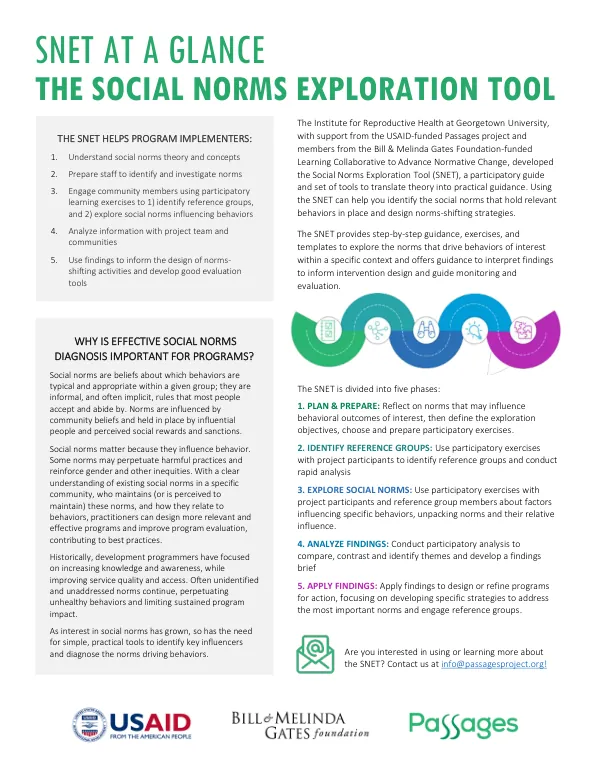
The SNET is designed to help program implementers understand social norms theory and concepts, prepare staff to identify and investigate norms, engage community members in participatory learning exercises, analyze information with project teams and communities, and use findings to inform the design of norms-shifting activities and develop good evaluation tools. Social norms are beliefs about which behaviors are typical and appropriate within a given group, and they are informal, often implicit, rules that most people accept and abide by. Norms are influenced by community beliefs and held in place by influential people and perceived social rewards and sanctions. Social norms matter because they influence behavior, and some norms may perpetuate harmful practices and reinforce gender and other inequities. With a clear understanding of existing social norms in a specific community, practitioners can design more relevant and effective programs and improve program evaluation, contributing to best practices. Historically, development programmers have focused on increasing knowledge and awareness, while improving service quality and access. Often unidentified and unaddressed norms continue, perpetuating unhealthy behaviors and limiting sustained program impact. As interest in social norms has grown, so has the need for simple, practical tools to identify key influencers and diagnose the norms driving behaviors. The SNET provides step-by-step guidance, exercises, and templates to explore the norms that drive behaviors of interest within a specific context and offers guidance to interpret findings to inform intervention design and guide monitoring and evaluation. The SNET is divided into five phases: PLAN & PREPARE, IDENTIFY REFERENCE GROUPS, EXPLORE SOCIAL NORMS, ANALYZE FINDINGS, and APPLY FINDINGS. The PLAN & PREPARE phase involves reflecting on norms that may influence behavioral outcomes of interest, defining the exploration objectives, choosing and preparing participatory exercises. The IDENTIFY REFERENCE GROUPS phase involves using participatory exercises with project participants to identify reference groups and conduct rapid analysis. The EXPLORE SOCIAL NORMS phase involves using participatory exercises with project participants and reference group members about factors influencing specific behaviors, unpacking norms and their relative influence. The ANALYZE FINDINGS phase involves conducting participatory analysis to compare, contrast, and identify themes and develop a findings brief. The APPLY FINDINGS phase involves applying findings to design or refine programs for action, focusing on developing specific strategies to address the most important norms and engage reference groups. The SNET is designed to be a practical tool for program implementers to identify the social norms that hold relevant behaviors in place and design norms-shifting strategies. By using the SNET, practitioners can gain a deeper understanding of the social norms that influence behavior in a specific community and design more effective programs to address these norms.