USAID
Designing Norms-Shifting Interventions
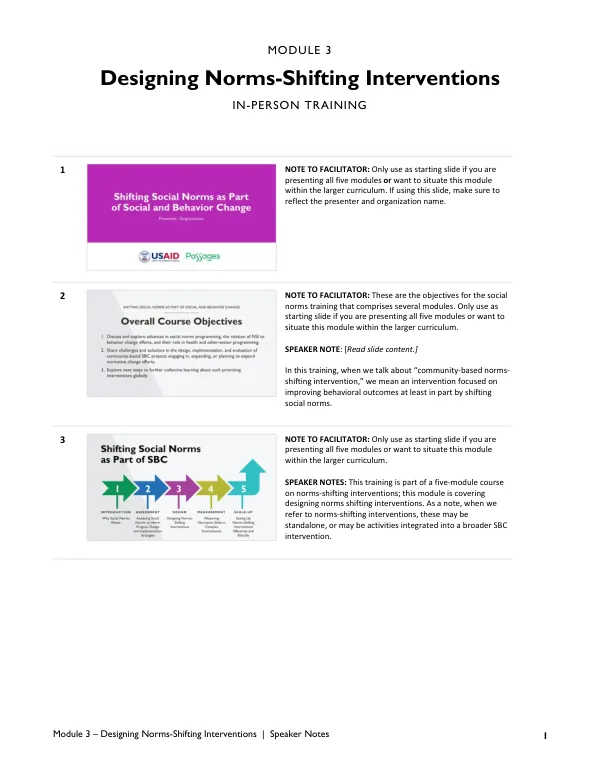
Designing Norms-Shifting Interventions is a critical component of social behavior change (SBC) programs.
34 pages
Sign in to readA free account is required to download.
Abstract
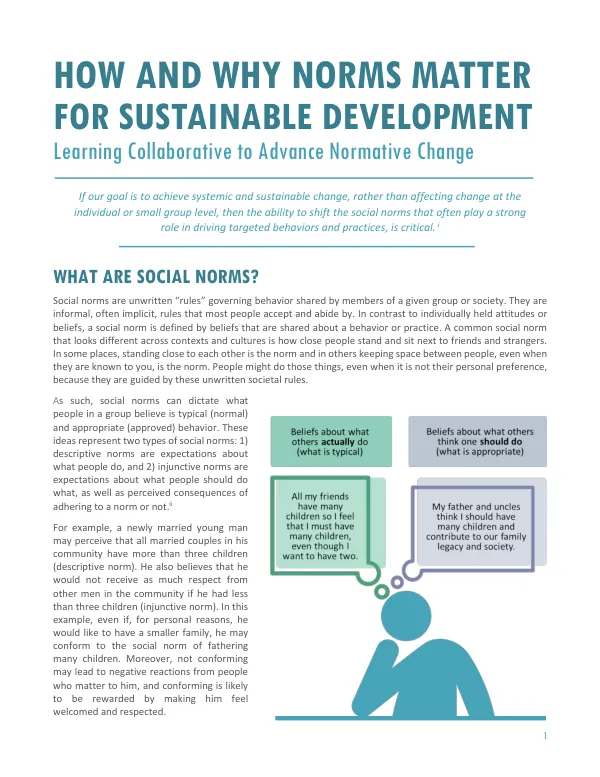
These interventions aim to improve behavioral outcomes by shifting social norms. A norms-shifting intervention is an intervention that focuses on improving behavioral outcomes at least in part by shifting social norms. Social norms are tacit rules of behavior that are not consciously obeyed. They can be embedded in formal institutions by codification in law and policies. Examples of institutionalized norms include school policies that prohibit unmarried girls who become pregnant from continuing their education, while permitting the fathers of the children to continue their studies. Similarly, some healthcare settings require spousal permission for contraceptive services. Social norms are distinct from individual attitudes or beliefs. An individual may believe that family planning is good, but also believe that others believe it is not good. This creates a norm of what is considered appropriate behavior. The "others" form part of an individual's reference group, which is a group of people for whom these behaviors are relevant. Reference groups can exert a considerable influence on behavior, and individuals may be more influenced by the behavior of people they interact with and value the approval of. Social norms can be enforced through various means, including descriptive norms, injunctive norms, and social and gender norms. Descriptive norms refer to what others do, while injunctive norms refer to what is considered appropriate behavior. For example, a child may see many other children washing their hands before eating, which is a descriptive norm. On the other hand, a teacher or parent may instruct the child to wash their hands before rejoining the table, which is an injunctive norm. Social and gender norms can also influence behavior, and individuals may comply with norms to avoid negative sanctions, seek benefits or rewards, or validate their identity as an individual and group member. However, individuals may also resist norms if they have insufficient power to do so, or if they fear negative sanctions or seek benefits or rewards. Designing norms-shifting interventions requires careful consideration of these factors. Interventions may aim to shift social norms by promoting positive behaviors, providing incentives for compliance, or addressing power imbalances. However, they must also be aware of the potential risks and challenges associated with norms change, including the potential for unintended consequences and the need for sustained support and resources. In designing norms-shifting interventions, it is essential to consider the following key concepts: 1. Social norms: Social norms are tacit rules of behavior that are not consciously obeyed. They can be embedded in formal institutions by codification in law and policies. 2. Reference groups: Reference groups are groups of people for whom these behaviors are relevant. Individuals may be more influenced by the behavior of people they interact with and value the approval of. 3. Descriptive and injunctive norms: Descriptive norms refer to what others do, while injunctive norms refer to what is considered appropriate behavior. 4. Social and gender norms: Social and gender norms can influence behavior, and individuals may comply with norms to avoid negative sanctions, seek benefits or rewards, or validate their identity as an individual and group member. 5. Power dynamics: Power imbalances can influence behavior, and individuals may resist norms if they have insufficient power to do so, or if they fear negative sanctions or seek benefits or rewards. By understanding these key concepts, designers can develop effective norms-shifting interventions that promote positive behaviors, address power imbalances, and mitigate the risks and challenges associated with norms change.