USAID
Assessment of Role of Energy Storage Technologies in Deployment of Renewable Energy
India's energy system faces multiple challenges, including constrained transmission and distribution capacity, unmet energy demand, low energy access in rural areas, and a continuing dependence on coal-based generation.
2013 · 6 pages
Sign in to readA free account is required to download.
Abstract
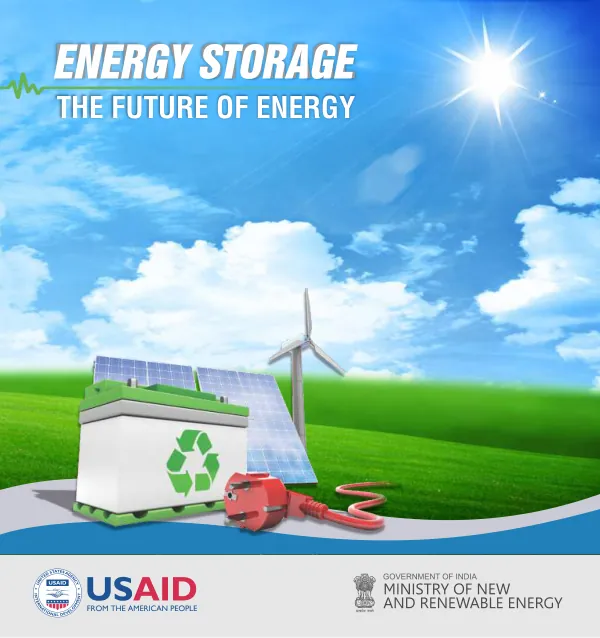
Renewable energy (RE) is a clean and affordable means to address these challenges, but its intermittent nature creates challenges such as grid stability and ensuring power availability when needed. Energy storage technologies provide multiple benefits, including time shifting, grid stabilization, shaving of peak demand, improved generation efficiency, and improved utilization of transmission capacity. They can help make the grid more reliable by absorbing and storing energy and releasing it when required. As such, energy storage technologies are fast evolving as a crucial component of India's energy strategy, following the launch of several Smart Grid and Electric Vehicle initiatives, as well as new programs to promote on-site solar energy and rural micro-grids. The U.S.-India bilateral Partnership to Advance Clean Energy – Deployment Technical Assistance (PACE-D TA) Program identified energy storage as a critical area of focus, necessary to meet India's aggressive RE targets. Under the guidance of the Ministry of New and Renewable Energy (MNRE), the Program developed a report on 'Assessment of Role of Energy Storage Technologies in Deployment of Renewable Energy' in November 2013. This report highlighted the importance of energy storage, its usefulness for integrating large-scale RE, identified a variety of applications, and provided estimates of economic value of energy storage. The Program provided technical assistance to MNRE, including webinars and conferences on energy storage, involving international experts as well as industry players, policy makers, and researchers. A draft energy storage vision and roadmap for energy storage in India was developed and shared with MNRE. MNRE launched an energy storage demonstration program in 2015, with the Program assisting in the preparation of the Expression of Interest (EOI), selection of prospective project proponents, and preparation of model documents for Request for Proposals (RFP), setting technical specifications and Monitoring and Verification (M&V) protocols for energy storage projects. Three public sector undertakings (PSUs) were selected for their distinct applications: Island: Micro-Grids (Diesel, Solar, and Energy Storage) for Island in Andaman, Peak Load Shaving and RE Capacity Firming by Bharat Heavy Electricals Limited (BHEL), and C&I: Bottling Plant - Industrial Entity (Grid, Diesel, Solar, and Energy Storage) by Indian Oil. The Program developed a model M&V framework for these energy storage projects and a model protocol for setting technical specifications for the energy storage systems.