USAID DEC
Association of Antiretroviral Drug Regimen With Viral Suppression in HIV-positive Children on Antiretroviral Therapy in Eswatini
Sign inELIZABETH GLASER PEDIATRIC AIDS FOUNDATION
Association of Antiretroviral Drug Regimen With Viral Suppression in HIV-positive Children on Antiretroviral Therapy in Eswatini
The study aimed to describe the antiretroviral therapy (ART) histories and virologic outcomes of children living with HIV in Eswatini.
2019 · 5 pages
Sign in to readA free account is required to download.
Abstract
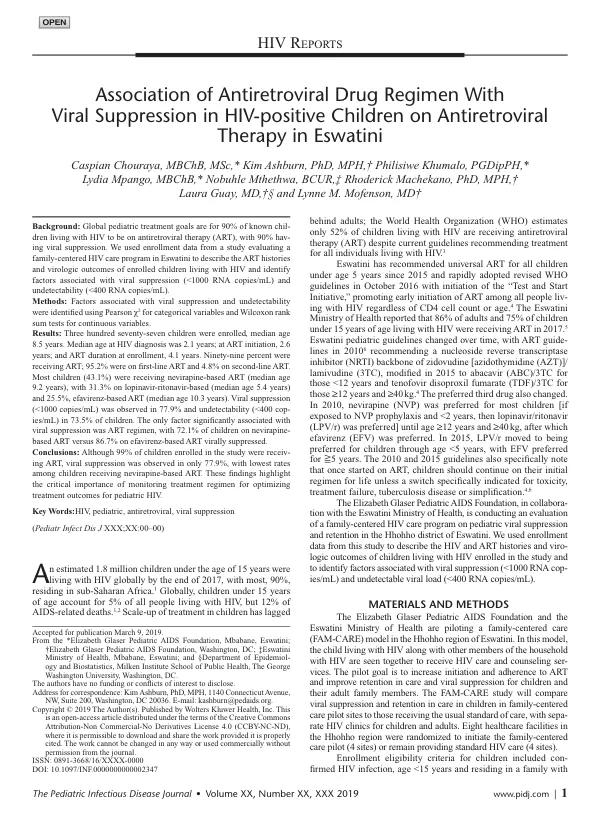
A total of 377 children were enrolled in the study, with a median age of 8.5 years. The majority of children (95.2%) were receiving first-line ART, with 4.8% receiving second-line ART. The most common ART regimen was nevirapine-based, with 43.1% of children receiving this regimen. The study found that viral suppression (<1000 RNA copies/mL) was observed in 77.9% of children, while undetectable viral load (<400 RNA copies/mL) was observed in 73.5% of children. The only factor significantly associated with viral suppression was the ART regimen, with 72.1% of children on nevirapine-based ART and 86.7% on efavirenz-based ART virally suppressed. The study also reported that the median age at HIV diagnosis was 2.1 years, and the median age at ART initiation was 2.6 years. The median time on ART was 4.1 years. The majority of children (90.0%) receiving nevirapine-based ART had a dual NRTI backbone of AZT/3TC, while the remainder had an ABC/3TC backbone. The study highlights the importance of monitoring treatment regimens for optimizing treatment outcomes for pediatric HIV. The findings suggest that while 99% of children enrolled in the study were receiving ART, viral suppression was observed in only 77.9%, with lowest rates among children receiving nevirapine-based ART. The study was conducted in collaboration with the Eswatini Ministry of Health and the Elizabeth Glaser Pediatric AIDS Foundation. The study protocol was reviewed and approved by the Eswatini Ministry of Health National Health Research Review Board and the Population Council Institutional Review Board. The study enrolled 377 children with HIV and their 363 caregivers between September 2017 and October 2018. The study used a family-centered care model, where the child living with HIV and other household members with HIV were seen together to receive HIV care and counseling services. The study aimed to increase initiation and adherence to ART and improve retention in care and viral suppression for children and their adult family members. The study found that the majority of children (95.2%) were receiving first-line ART, with 4.8% receiving second-line ART. The most common ART regimen was nevirapine-based, with 43.1% of children receiving this regimen. The study also reported that the median age at HIV diagnosis was 2.1 years, and the median age at ART initiation was 2.6 years. The median time on ART was 4.1 years.