USAID DEC
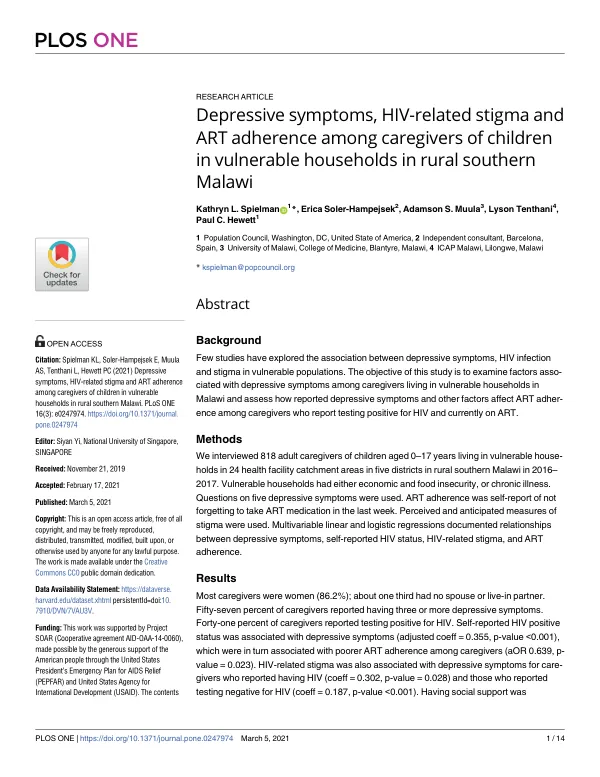
Depressive symptoms, HIV-related stigma and ART adherence among caregivers of children in vulnerable households in rural southern Malawi
Sign inPEPFAR
Depressive symptoms, HIV-related stigma and ART adherence among caregivers of children in vulnerable households in rural southern Malawi
Caregivers of children in vulnerable households in Malawi experience high levels of depressive symptoms.
2021 · 14 pages
Sign in to readA free account is required to download.
Abstract
The prevalence of depressive symptoms among caregivers is associated with self-reported HIV status, HIV-related stigma, and ART adherence. Caregivers who report testing positive for HIV exhibit higher levels of depressive symptoms compared to those who test negative. HIV-related stigma is linked to depressive symptoms in caregivers who report having HIV and those who do not. Caregivers who experience higher levels of HIV-related stigma are more likely to display depressive symptoms. Depressive symptoms among caregivers is associated with poorer ART adherence. Caregivers who report having HIV and experience depressive symptoms are less likely to adhere to ART medication. The relationship between depressive symptoms and ART adherence is significant, indicating that addressing depressive symptoms may be crucial for improving ART adherence among caregivers. Caregivers in vulnerable households in Malawi often experience high levels of stress due to the physical and psychological burden of caring for family members with HIV. The burden of care can be significant, particularly for caregivers who are also living with HIV. Caregivers who experience higher levels of HIV-related stigma are more likely to display depressive symptoms, which can exacerbate the burden of care. The study highlights the importance of addressing depressive symptoms among caregivers in vulnerable households in Malawi. Integrating mental health interventions into HIV care and treatment protocols may be a promising approach to improving ART adherence and overall health outcomes among caregivers. Strong social support networks can also help buffer the negative effects of HIV-related stigma and promote good mental health outcomes among caregivers. The study's findings have implications for the development of interventions to improve caregiver and child wellbeing in Malawi. Addressing depressive symptoms among caregivers may be a critical step towards achieving viral suppression among vulnerable populations living with HIV. The study's results also underscore the need for further research on the relationship between depression and HIV in Malawi, particularly among caregivers of children in vulnerable households. The study was conducted in five rural districts in southern Malawi, where caregivers of children in vulnerable households were recruited to participate in a cross-sectional interview. The study's sample consisted of 818 adult caregivers of children in vulnerable households, who were selected from 24 health facilities in the five districts. The study's data collection took place in December 2016 to April 2017, as part of a larger study aimed at monitoring a USAID-supported program to reduce new HIV infections and alleviate the impact of HIV among at-risk populations.