USAID DEC
Atmospheric and Hydrologic Transport and Transformation of Mercury from Artisanal Gold Mining in the Peruvian Amazon
Sign inUNIVERSITAS DUKE
Atmospheric and Hydrologic Transport and Transformation of Mercury from Artisanal Gold Mining in the Peruvian Amazon
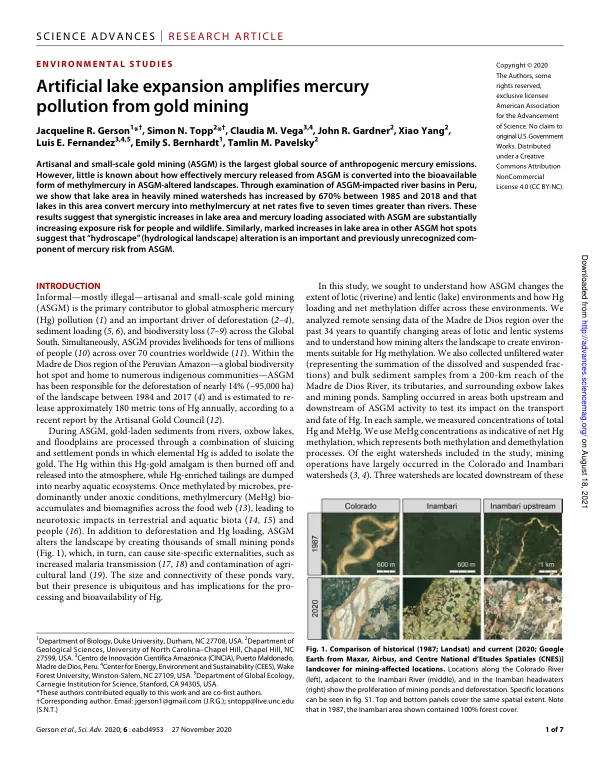
Artisanal and small-scale gold mining (ASGM) is estimated to be the primary anthropogenic source of mercury (Hg) emissions globally.
2020 · 1 pages
Sign in to readA free account is required to download.
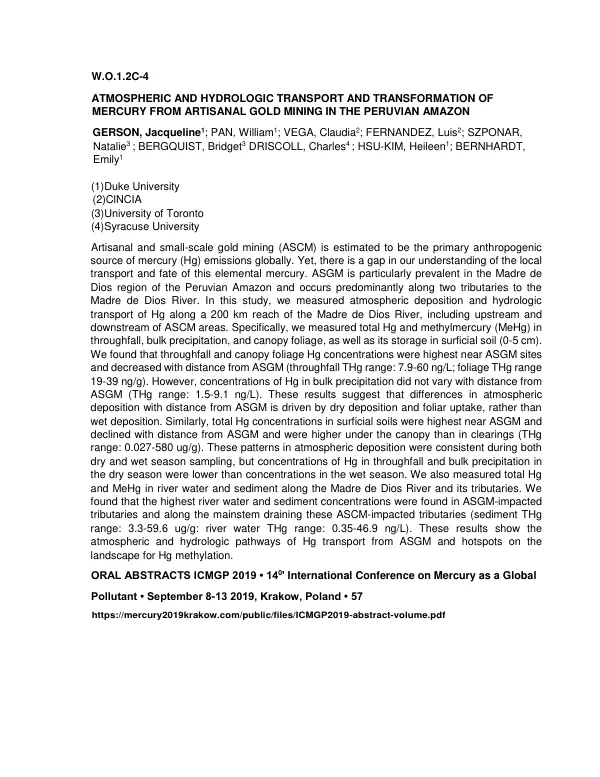
Abstract
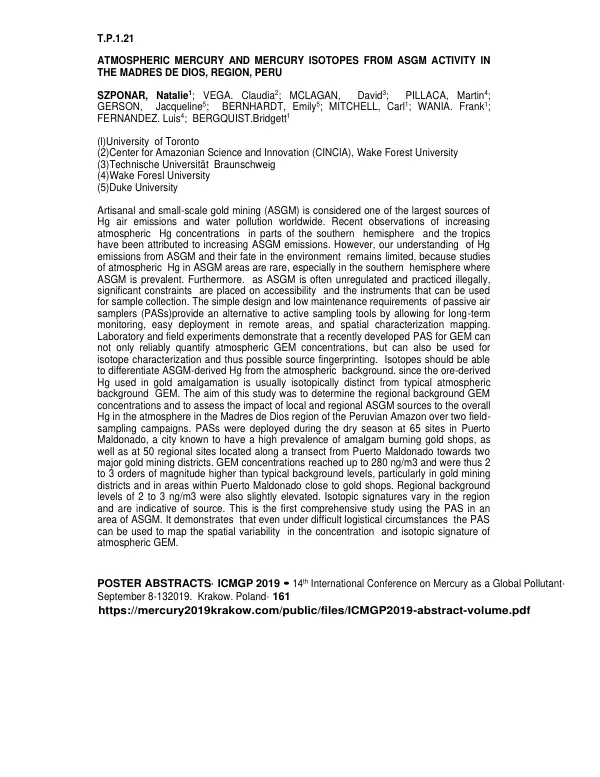
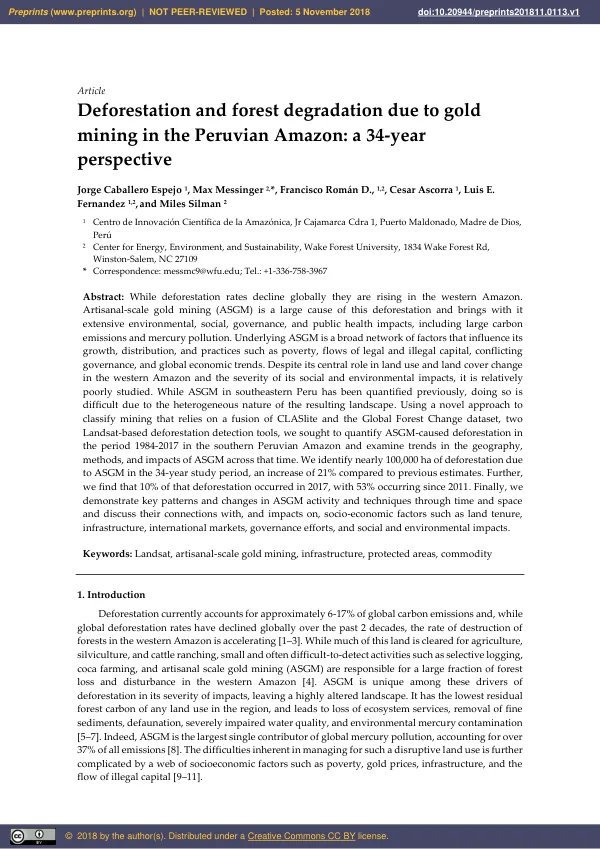
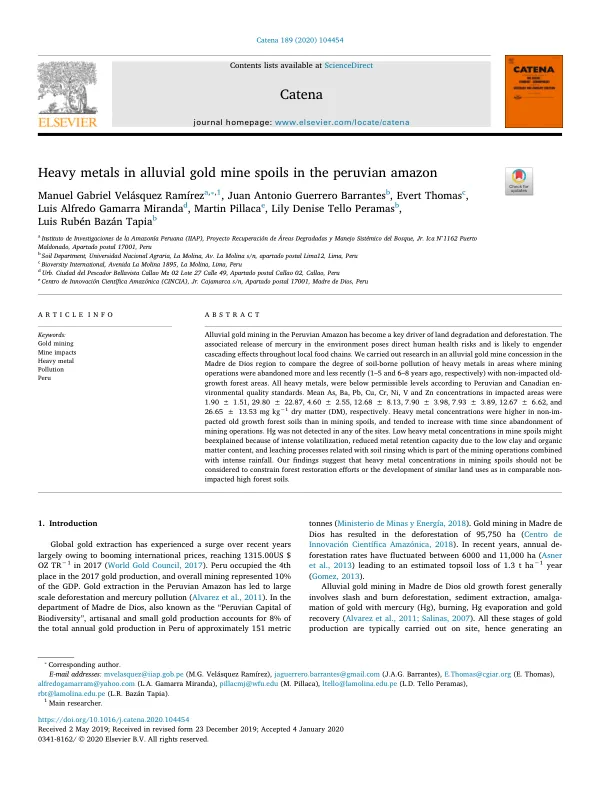
In the Madre de Dios region of the Peruvian Amazon, ASGM is particularly prevalent and occurs predominantly along two tributaries to the Madre de Dios River. This study measured atmospheric deposition and hydrologic transport of Hg along a 200 km reach of the Madre de Dios River, including upstream and downstream of ASCM areas. Measurements of total Hg and methylmercury (MeHg) in throughfall, bulk precipitation, and canopy foliage, as well as its storage in surficial soil (0-5 cm), were conducted. Results showed that throughfall and canopy foliage Hg concentrations were highest near ASGM sites and decreased with distance from ASGM. Throughfall Hg concentrations ranged from 7.9 to 60 ng/L, while foliage Hg concentrations ranged from 19 to 39 ng/g. In contrast, bulk precipitation Hg concentrations did not vary with distance from ASGM, ranging from 1.5 to 9.1 ng/L. These findings suggest that differences in atmospheric deposition with distance from ASGM are driven by dry deposition and foliar uptake, rather than wet deposition. Similarly, total Hg concentrations in surficial soils were highest near ASGM and declined with distance from ASGM, with higher concentrations under the canopy than in clearings. The patterns in atmospheric deposition were consistent during both dry and wet season sampling, but concentrations of Hg in throughfall and bulk precipitation in the dry season were lower than concentrations in the wet season. Measurements of total Hg and MeHg in river water and sediment along the Madre de Dios River and its tributaries were also conducted. Results showed that the highest river water and sediment concentrations were found in ASGM-impacted tributaries and along the mainstem draining these ASCM-impacted tributaries. Sediment Hg concentrations ranged from 3.3 to 59.6 ug/g, while river water Hg concentrations ranged from 0.35 to 46.9 ng/L. These findings demonstrate the atmospheric and hydrologic pathways of Hg transport from ASGM and highlight hotspots on the landscape for Hg methylation.