USAID DEC
Barriers inhibiting effective detection and management of postpartum hemorrhage during facility-based births in Madagascar: findings from a qualitative study using a behavioral science lens
Sign inUSAID-FUNDED MATERNAL AND CHILD HEALTH INTEGRATED PROGRAM
Barriers inhibiting effective detection and management of postpartum hemorrhage during facility-based births in Madagascar: findings from a qualitative study using a behavioral science lens
Postpartum hemorrhage (PPH) is the leading cause of maternal mortality in low-income countries, including Madagascar, where it is the most common direct cause of maternal deaths.
2021 · 9 pages
Sign in to readA free account is required to download.
Abstract
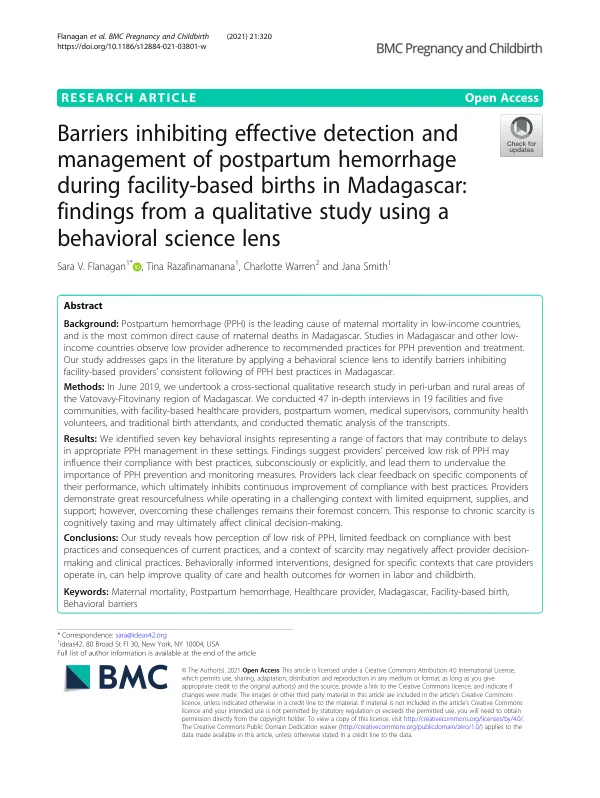
Madagascar's total fertility and maternal mortality rates have remained high, with an average of 5.0 children per woman and 353 deaths per 100,000 live births, respectively. The majority of births in Madagascar take place outside of facilities, but improving rates of institutional delivery suggests that facility-based providers will play an increasingly important role in reducing maternal mortality from PPH. Active management of the third stage of labor (AMTSL), which includes the administration of a uterotonic immediately after birth, is the primary strategy for PPH prevention recommended by the World Health Organization (WHO). Although AMTSL for every birth is national policy in Madagascar, studies have found that steps for correctly performing it may not be followed consistently during deliveries. A 2011 survey of 36 health facilities in Madagascar found that oxytocin was given in 85% of deliveries observed, but it was only given within 1 min of birth in the correct dose and route in 21% of cases. A cross-sectional qualitative research study was conducted in peri-urban and rural areas of the Vatovavy-Fitovinany region of Madagascar to identify behavioral barriers that may inhibit facility-based providers from consistently following best practices for PPH prevention and management during childbirth. The study included 47 in-depth interviews with facility-based healthcare providers, postpartum women, community health volunteers, and traditional birth attendants. The study found that providers' perceived low risk of PPH may influence their compliance with best practices, and that providers lack clear feedback on specific components of their performance, which ultimately inhibits continuous improvement of compliance with best practices. The study also found that providers demonstrate great resourcefulness while operating in a challenging context with limited equipment, supplies, and support, but that overcoming these challenges remains their foremost concern. This response to chronic scarcity is cognitively taxing and may ultimately affect clinical decision-making. The study's findings suggest that behaviorally informed interventions, designed for specific contexts that care providers operate in, can help improve quality of care and health outcomes for women in labor and childbirth. The study's results highlight the importance of addressing the psychological drivers of healthcare provider behavior and the need to develop a more nuanced understanding of provider decision-making and behavior related to obstetric complications. The study's findings can inform the development of innovative solutions to address barriers faced in providing quality care, specific to the challenging circumstances in which providers work. The study's results can also inform the development of behaviorally informed interventions to improve quality of care and health outcomes for women in labor and childbirth in Madagascar.
Related documents