INTERNATIONAL MEDICAL CORPS
Baseline Report: Maternal Infant and Young Child Nutrition in Emergencies
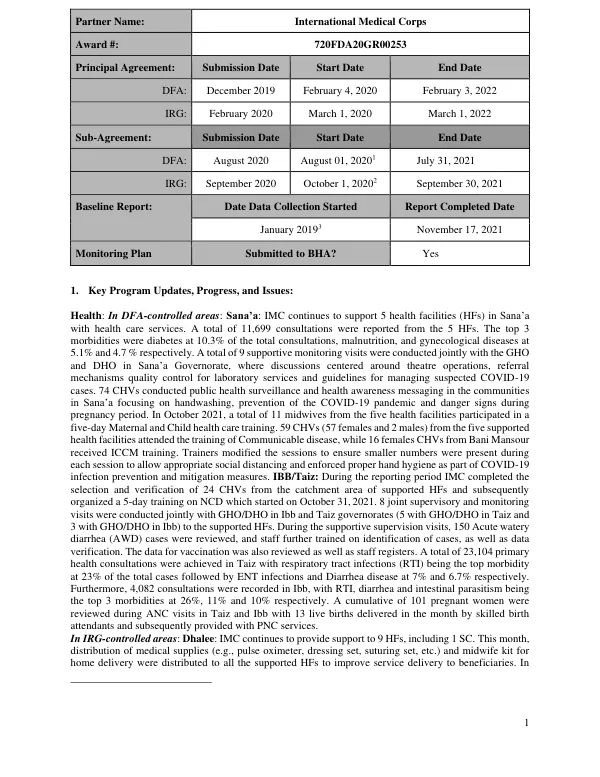
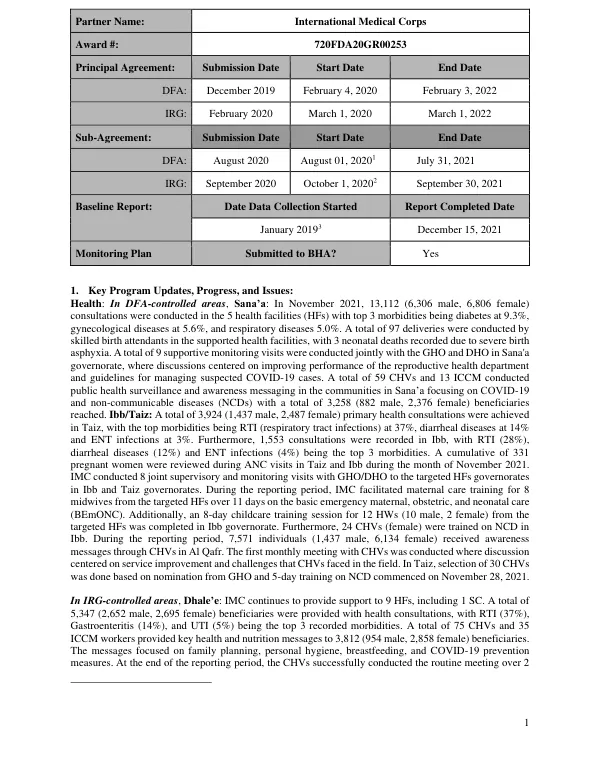
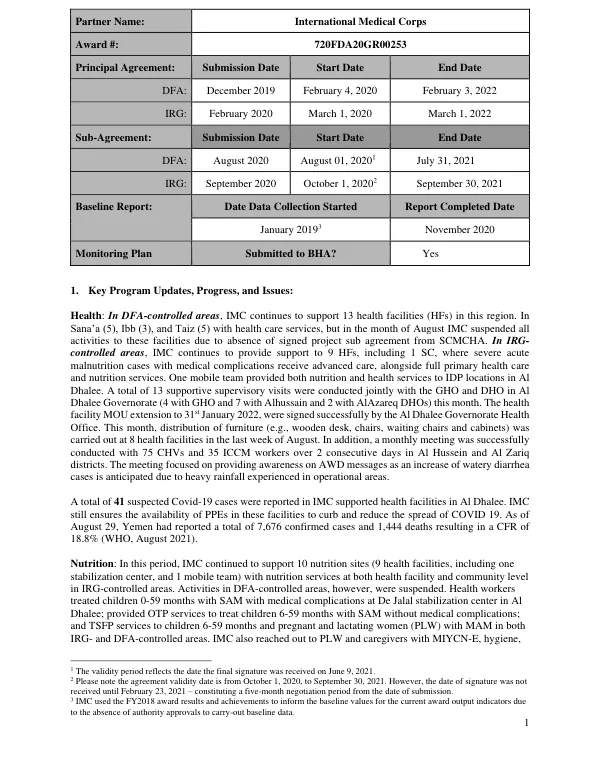
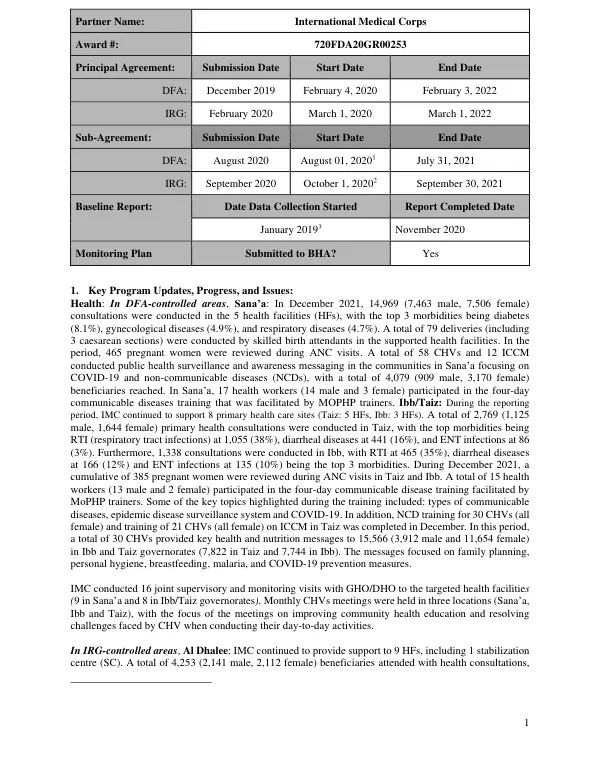
The International Medical Corps (IMC) implemented a health and nutrition program in Yemen, supported by the US Agency for International Development (USAID) under the award number 720FDA20GR00253.
2021 · 11 pages
Sign in to readA free account is required to download.
Abstract
The program aimed to improve access to health services and nutrition for vulnerable populations in conflict-affected areas. In DFA-controlled areas, IMC supported 5 health facilities in Sana'a, providing consultations to 14,969 individuals, with the top morbidities being diabetes, gynecological diseases, and respiratory diseases. A total of 79 deliveries were conducted by skilled birth attendants, and 465 pregnant women were reviewed during ANC visits. Community health volunteers (CHVs) and ICCM workers conducted public health surveillance and awareness messaging, reaching 4,079 beneficiaries. In Ibb/Taiz, IMC supported 8 primary health care sites, conducting 2,769 primary health consultations, with the top morbidities being RTI, diarrheal diseases, and ENT infections. A total of 385 pregnant women were reviewed during ANC visits, and 15 health workers participated in a four-day communicable disease training. CHVs provided key health and nutrition messages to 15,566 beneficiaries, focusing on family planning, personal hygiene, breastfeeding, malaria, and COVID-19 prevention measures. In IRG-controlled areas, Al Dhalee, IMC supported 9 health facilities, including 1 stabilization center, conducting 4,253 health consultations, with the top morbidities being RTI, gastroenteritis, and UTI. CHVs and ICCM workers provided key health and nutrition messages to 3,476 beneficiaries, focusing on family planning, personal hygiene, breastfeeding, and COVID-19 prevention measures. The nutrition program in Yemen focused on acute malnutrition treatment, with IMC supporting 23 nutrition sites in both DFA- and IRG-controlled areas. In DFA-controlled areas, a total of 1,319 children aged 6-59 months and 1,383 pregnant and lactating women were screened for malnutrition, with 51 children recovering from SAM at OTP and 121 children cured in TSFP. In IRG-controlled areas, a total of 2,645 children and pregnant and lactating women were screened for malnutrition, with 29 children newly admitted as SAM for treatment in OTP and 163 children newly admitted for treatment at TSFP. Nutrition commodity shortages were reported in Ibb and Taiz, with some health facilities experiencing insufficient RUTF and RUSF supplies. However, these shortages were expected to be addressed in January 2022. Maternal, infant, and young child nutrition in emergencies was also a focus area, with 2,163 caregivers receiving awareness sessions on nutrition and hygiene messages.
Related documents