USAID DEC
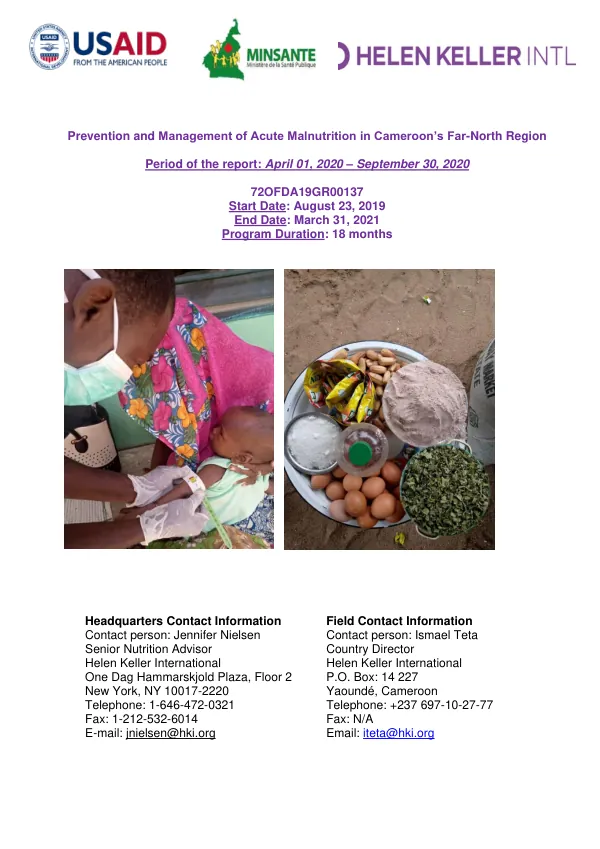
Baseline Report: Prevention and Management of Acute Malnutrition in Cameroon’s Far North Region
Sign inHELLEN KELLER INTERNATIONAL
Baseline Report: Prevention and Management of Acute Malnutrition in Cameroon’s Far North Region
The baseline report for the prevention and management of acute malnutrition in Cameroon's Far North Region was conducted in 2019 using the SMART survey methodology.
2020 · 4 pages
Sign in to readA free account is required to download.
Abstract
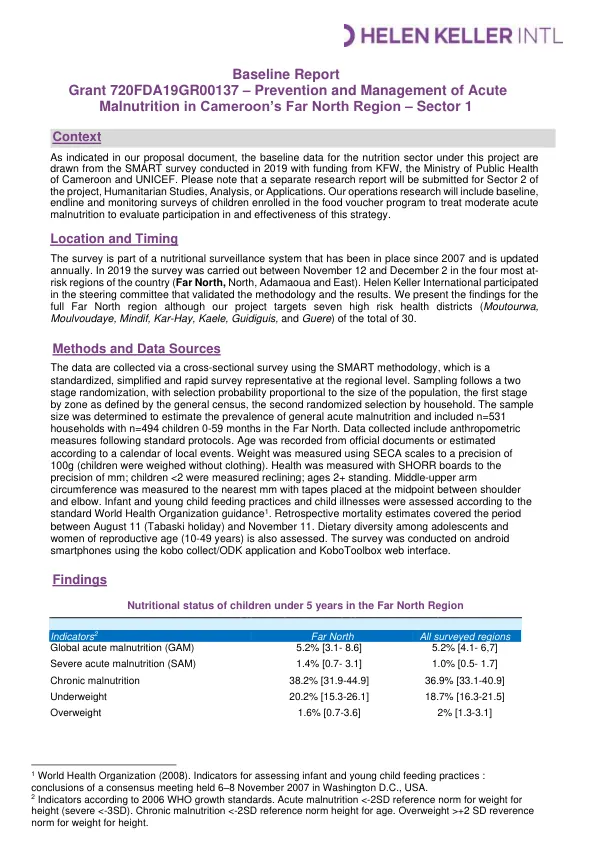
The survey aimed to provide rapid estimates of the prevalence of acute malnutrition and assess infant and young child feeding practices. The data were collected via a cross-sectional survey using a two-stage randomization method, with a sample size of 531 households and 494 children 0-59 months in the Far North Region. The survey revealed that the nutritional status of children under 5 years in the Far North Region is a significant public health concern. The prevalence of global acute malnutrition (GAM) was 5.2%, while severe acute malnutrition (SAM) was 1.4%. Chronic malnutrition was prevalent, with 38.2% of children under 5 years affected. The survey also found high rates of childhood illness, with 25% of children under 5 years suffering from fever and 36% with diarrhea in the two weeks prior to the survey. The project aims to improve infant and young child feeding practices, with targets for exclusive breastfeeding of children 0-5.9 months increasing from 23.1 to 30 percent and minimum dietary diversity among children 6-23 months from 26.7 to 30 percent. The project will also support government health facilities to achieve SPHERE standards in the management of acute malnutrition and test a novel food voucher treatment for the management of moderate acute malnutrition. The performance targets for Sector 1: Nutrition include establishing 64 sites for outpatient care, admitting 3,708 children to MAM voucher treatment, and training 941 healthcare providers and volunteers in the prevention and management of MAM. The project also aims to achieve a recovery rate of >75% among children treated for MAM through food vouchers and nutrition promotion.