USAID DEC
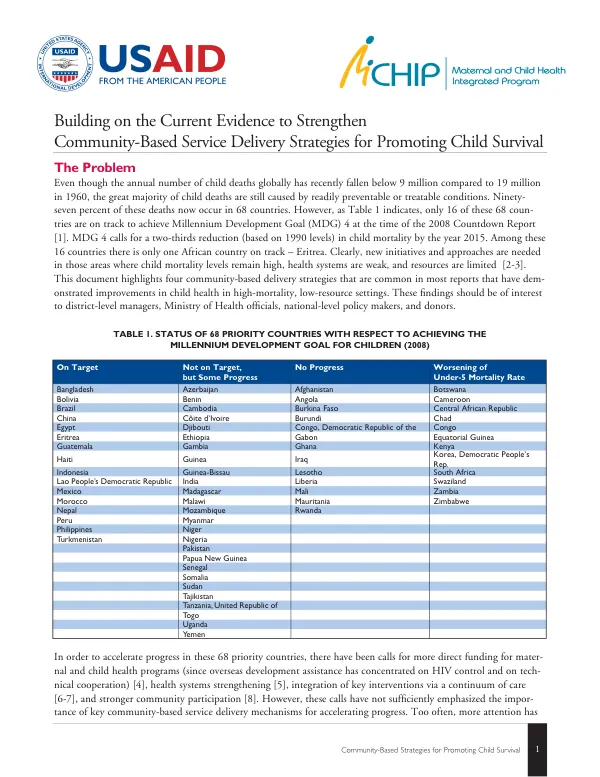
Neglected Tropical Disease Control Program Semi-annual Report October 1, 2009-March 31, 2010
Sign inHELLEN KELLER INTERNATIONAL
Neglected Tropical Disease Control Program Semi-annual Report October 1, 2009-March 31, 2010
The Neglected Tropical Disease Control Program is a global initiative aimed at controlling and eliminating neglected tropical diseases (NTDs) in developing countries.
2010 · 31 pages
Sign in to readA free account is required to download.
Abstract
The program is implemented by RTI International in partnership with various stakeholders, including governments, non-governmental organizations, and international agencies. Country work plans were finalized for all countries during the first quarter, except Togo and Cameroon, which were completed in the second quarter of the year. The program initiated subcontract agreements with new partners to undertake specific technical work, including the development of a training package targeting national NTD control management teams and the provision of technical assistance to develop and manage the mass drug administration (MDA) Planning and Outcome Resource database. To better meet the needs of individual country program work plans, the Program established a technical assistance indefinite quantity contract (IQC) mechanism, allowing the NTD Control Program to issue IQC partners with task orders to provide rapid and strategic technical assistance to grantees and government programs in areas such as information, education, and communication (IEC), advocacy, post-MDA survey data analysis, post-elimination exit strategy, and mapping and survey activities for one or more of the five NTDs. The program has successfully delivered approximately 255 million treatments to 59 million people in 8 countries, including Burkina Faso, Ghana, Haiti, Mali, Niger, Sierra Leone, South Sudan, and Uganda. Integrated NTD programs in Year 4 are ongoing in twelve countries, with six country programs conducting MDAs in the first half of Year 4, resulting in a total of 33 million treatments delivered and 17 million persons treated. The grants management team worked with HDI Inc. and Helen Keller International staff to secure full grant agreements, work plans, and budgets to conduct NTD Control program activities in Togo and Cameroon. The team also negotiated a close-out of the centrally funded grant agreement with Malaria Consortium in South Sudan and opened a new agreement with field buy-in funding. The Technical Advisory Group (TAG) provided valuable technical guidance to the program, with two meetings held during the reporting period. The meetings, Integrated Mapping of NTDs and Assessment and Treatment of NTDs in Non-rural settings in Africa, provided cost-efficiencies through cost-sharing of travel and meeting expenses. The program has assumed responsibility for the Document Dissemination program component and has hired a Program Manager for Materials Development and Communications. Several articles were published in peer-review journals, and several key presentations were made to highlight program achievements. Key best practices and lessons learned include the use of the Funding Gap Analysis Tool, which quantifies government in-kind resources committed to NTD control, standardizes cost categories across country programs, and provides a basis for rational planning and resource allocation. A model start-up strategy for NTD control programs has been developed, which includes the following components: (1) a comprehensive needs assessment, (2) a detailed work plan, (3) a budget, (4) a plan for monitoring and evaluation, and (5) a plan for sustainability. The strategy also emphasizes the importance of building partnerships and engaging local communities in NTD control efforts. The program has made significant progress in controlling and eliminating NTDs in developing countries, with a focus on integrated NTD control programs, mass drug administration, and technical assistance. The program's efforts have resulted in the delivery of approximately 255 million treatments to 59 million people in 8 countries, with ongoing programs in twelve countries. The program's success is attributed to its partnerships with various stakeholders, including governments, non-governmental organizations, and international agencies, as well as its use of effective planning and resource allocation tools, such as the Funding Gap Analysis Tool.