MIYAMOTO INTERNATIONAL, INC.
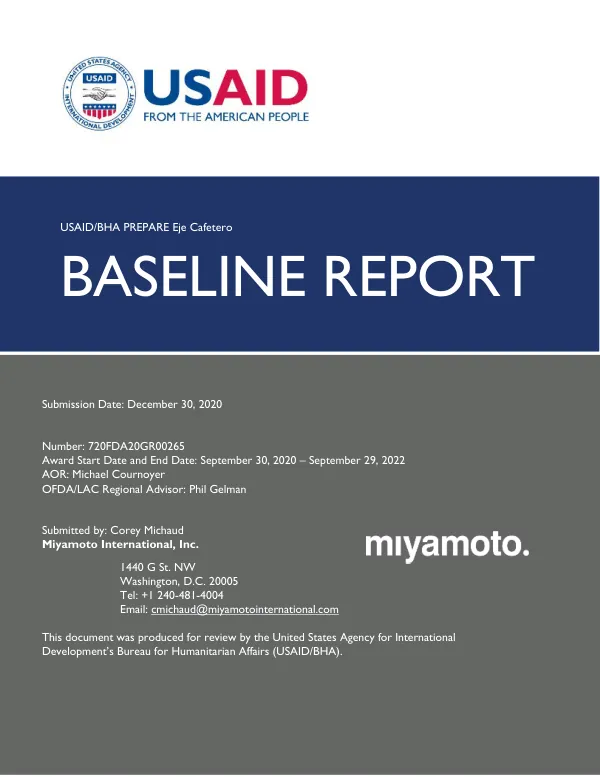
Baseline Report: USAID/BHA PREPARE Eje Cafetero
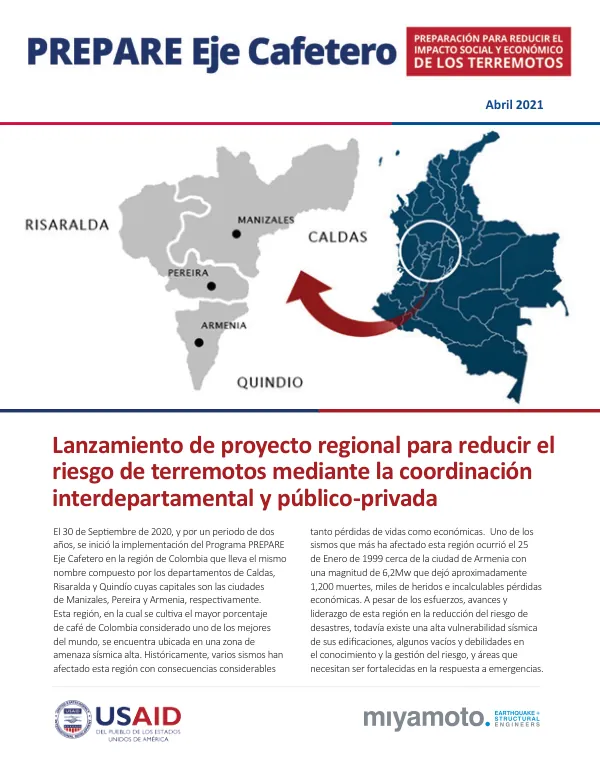
The PREPARE Eje Cafetero Program is a two-year initiative funded by the Bureau for Humanitarian Assistance (BHA) of the United States Agency for International Development (USAID).
2020 · 81 pages
Sign in to readA free account is required to download.
Abstract
The program aims to strengthen the regional risk management and response capacity of departmental and municipal governments and the private sector in the Eje Cafetero region. The program is designed to fulfill four main objectives: enhance the availability and coverage of seismic exposure, vulnerability, and risk data for risk management policy and planning; strengthen the capacity of disaster authorities to understand and apply seismic risk data for improved policy, planning, and implementation outcomes; strengthen the capacity of municipal agencies, USAR, and other first responders to plan and implement effective response operations; and strengthen regional cooperation in risk management and response through joint planning, information, and resource sharing. The program is being implemented in the departments of Caldas and Quindío, with a focus on the municipalities of Pereira, Armenia, and Manizales. The program's methodology involves conducting a baseline assessment of the current risk management and response capacity of the region, as well as identifying gaps and areas for improvement. The assessment includes a review of existing policies, plans, and procedures, as well as interviews with key stakeholders, including government officials, emergency responders, and private sector representatives. The baseline report highlights the importance of disaster risk management in the Eje Cafetero region, which is prone to earthquakes, landslides, and floods. The report notes that the region's risk management capacity is limited by a lack of data, inadequate infrastructure, and insufficient training and resources for emergency responders. The report also identifies opportunities for improvement, including the development of a regional risk management plan, the establishment of a disaster risk management unit, and the provision of training and equipment for emergency responders. The program's implementation is being led by Miyamoto International, Inc., in partnership with local government agencies, emergency responders, and private sector organizations. The program's budget is approximately $720,000, and it is expected to be completed by September 2022. The PREPARE Eje Cafetero Program has the potential to make a significant impact on the disaster risk management capacity of the Eje Cafetero region. By strengthening the availability and coverage of seismic exposure, vulnerability, and risk data, the program can help to inform policy and planning decisions and improve the effectiveness of emergency response operations. Additionally, by strengthening the capacity of municipal agencies, USAR, and other first responders, the program can help to reduce the risk of injury and loss of life during disasters. The program's success will depend on the effective implementation of its four main objectives, as well as the engagement and participation of local stakeholders. The program's baseline report provides a comprehensive overview of the current risk management and response capacity of the region, as well as opportunities for improvement. The report serves as a foundation for the program's implementation and will inform the development of a regional risk management plan, the establishment of a disaster risk management unit, and the provision of training and equipment for emergency responders. The program's implementation is being led by Miyamoto International, Inc., in partnership with local government agencies, emergency responders, and private sector organizations. The program's budget is approximately $720,000, and it is expected to be completed by September 2022. The program's success will depend on the effective implementation of its four main objectives, as well as the engagement and participation of local stakeholders. The PREPARE Eje Cafetero Program has identified several key areas for improvement, including the development of a regional risk management plan, the establishment of a disaster risk management unit, and the provision of training and equipment for emergency responders. The program's baseline report provides a comprehensive overview of the current risk management and response capacity of the region, as well as opportunities for improvement. The report serves as a foundation for the program's implementation and will inform the development of a regional risk management plan, the establishment of a disaster risk management unit, and the provision of training and equipment for emergency responders.