USAID
Reparación Colectiva ENG
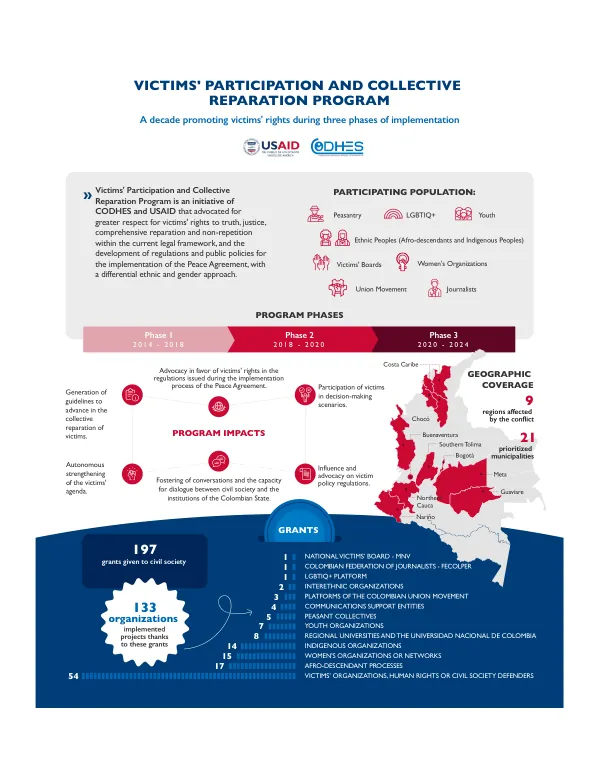
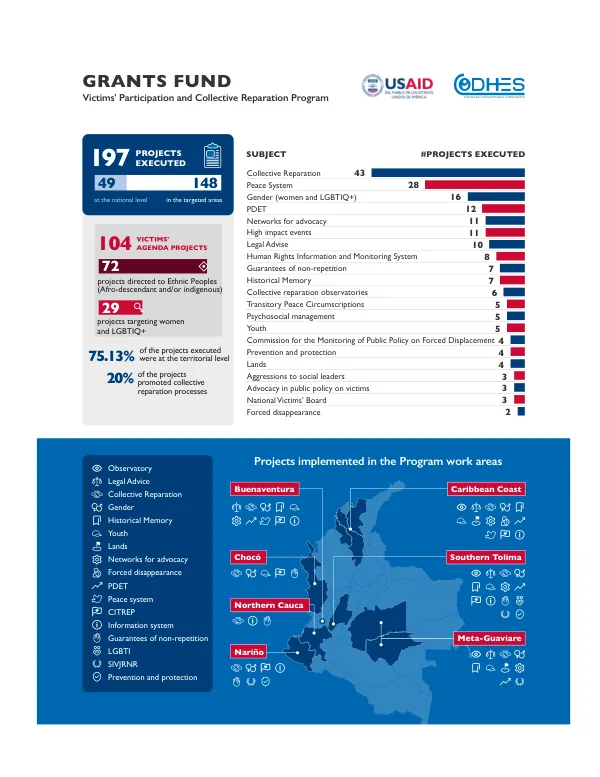
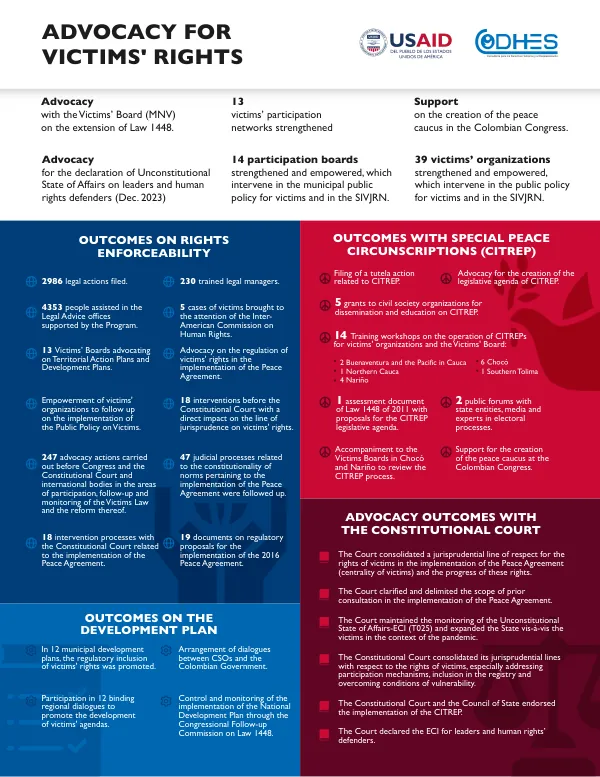
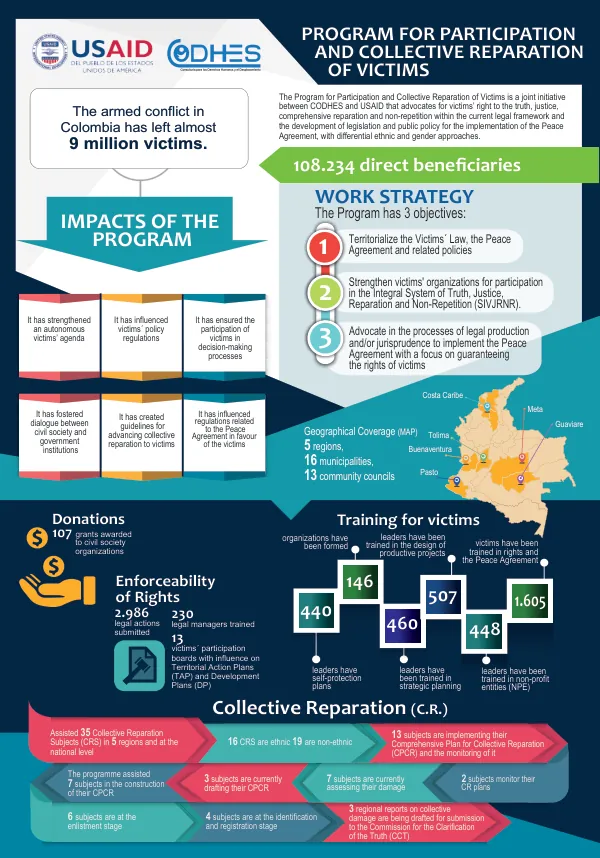
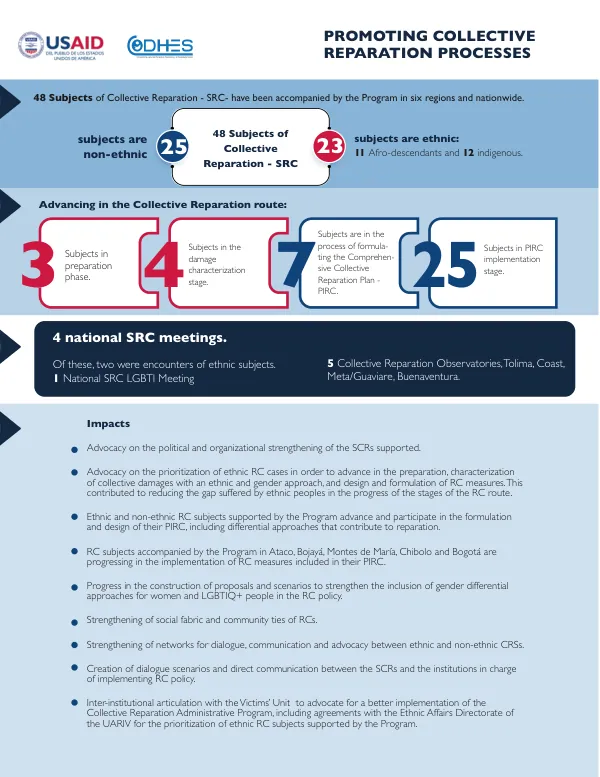
The Program for Collective Reparation has been actively supporting 48 Subjects of Collective Reparation (SRC) in six regions and nationwide.
1 pages
Sign in to readA free account is required to download.
Abstract
These subjects are in various stages of the reparative process, with 25 in the preparation phase, 23 in the damage characterization stage, and 25 in the process of formulating the Comprehensive Collective Reparation Plan (PIRC). Additionally, 25 subjects are in the implementation stage of their PIRC. The subjects being supported by the Program are comprised of 11 Afro-descendants and 12 indigenous individuals, representing ethnic groups. Furthermore, there have been four national SRC meetings, including two encounters of ethnic subjects and one national SRC LGBTI meeting. The Program has also established five Collective Reparation Observatories in Tolima, Coast, Meta/Guaviare, Buenaventura, and other regions. Advocacy efforts by the Program have contributed to the strengthening of the SCRs and the prioritization of ethnic RC cases. This has led to a reduction in the gap suffered by ethnic peoples in the progress of the stages of the RC route. The Program has also supported ethnic and non-ethnic RC subjects in advancing and participating in the formulation and design of their PIRC, including differential approaches that contribute to reparation. The Program has made significant progress in various areas, including the implementation of RC measures in Ataco, Bojayá, Montes de María, Chibolo, and Bogotá. Additionally, the Program has strengthened social fabric and community ties of RCs, as well as networks for dialogue, communication, and advocacy between ethnic and non-ethnic CRSs. The Program has also created dialogue scenarios and direct communication between the SCRs and the institutions in charge of implementing RC policy. Inter-institutional articulation has been established with the Victims' Unit to advocate for a better implementation of the Collective Reparation Administrative Program. Agreements have been reached with the Ethnic Affairs Directorate of the UARIV for the prioritization of ethnic RC subjects supported by the Program. The Program's efforts have contributed to the creation of proposals and scenarios to strengthen the inclusion of gender differential approaches for women and LGBTIQ+ people in the RC policy.