USAID
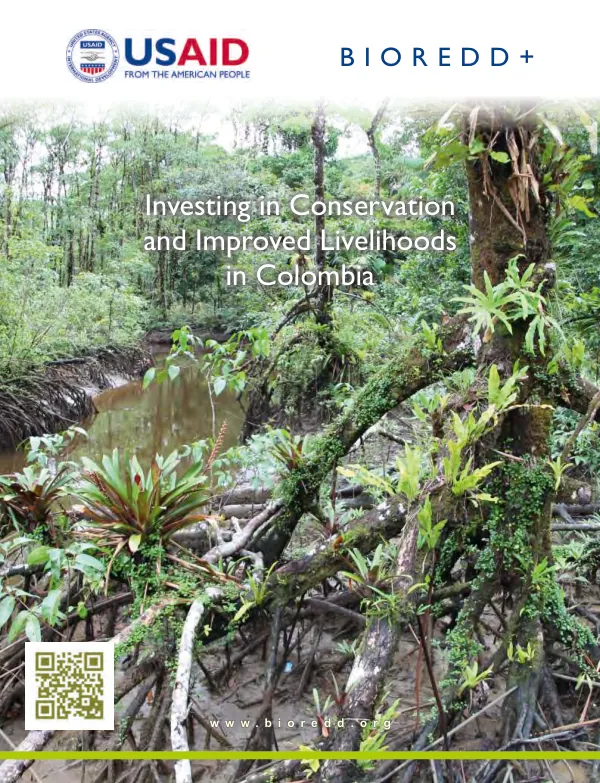
Investing in Conservation and Improved Livelihoods in Colombia
The Colombian Pacific region is characterized by a variety of ecosystems, transitioning from coastal estuaries, mangroves, and wetlands to upland humid tropical forest, cloud forest, and highland paramo.
2014 · 16 pages
Sign in to readA free account is required to download.
Abstract
The region is home to 9,000 species of vascular plants, 200 mammals, 600 birds, 100 reptiles, and 120 amphibians, many of which are endemic to Colombia. The Chocó Biogeographic Region, where the USAID/BIOREDD+ Program is operating, is one of the world's 10 "biodiversity hotspots." The Afro-Colombian and indigenous communities in the Pacific region have traditions and livelihoods that reflect a long and profound interaction with their natural environment. Through centuries of experimentation and learning, they have accumulated a wealth of knowledge and developed strategies to meet their physical, cultural, and spiritual needs. However, expanding populations and increased interaction with broader Colombian society have exerted additional pressure on the region's fragile resource base, leading to a search for more sustainable development paths. The USAID/BIOREDD+ Program is designed to strengthen Colombian capacity to mitigate and adapt to climate change, protect biodiversity, and support the development of remote, impoverished communities. The program is developing a portfolio of 8 REDD+ projects in the Colombian Pacific, covering over 700,000 hectares. These projects are located in four geographic nodes and are being developed jointly with 20 Afro-Colombian Councils and Indigenous Cabildos. The projects aim to tackle forest degradation and deforestation, which arise largely from selective, illegal logging and the conversion of forests to agriculture and livestock. The REDD+ projects being developed by the USAID/BIOREDD+ Program are designed to empower local communities to support biodiversity conservation and forest protection commitments. Through investments in alternative economic development options, as well as forest protection and governance activities, local communities are being empowered to take ownership of their natural resources and manage them sustainably. The program is supporting a broad process of awareness-raising, information sharing, and consultation to ensure that communities understand the potential benefits and rewards, as well as responsibilities and risks, that can flow from REDD+ projects. The Colombian Pacific is largely occupied and owned by ethnic Afro-Colombian and indigenous communities, organized in collective territories, with land titles and property rights recognized and protected by Colombian constitutional law. This is an enormous advantage when compared to other countries in the region and beyond. The USAID/BIOREDD+ Program is supporting a process of free prior informed consent (FPIC) with Afro-Colombian and indigenous communities, which meets the criteria for REDD+ projects. The program is also supporting the development of value-chains for agroforestry crops, artisanal fishing, and ecotourism, which are expected to improve livelihoods and contribute to the conservation and restoration of ancestral forests.