USAID DEC
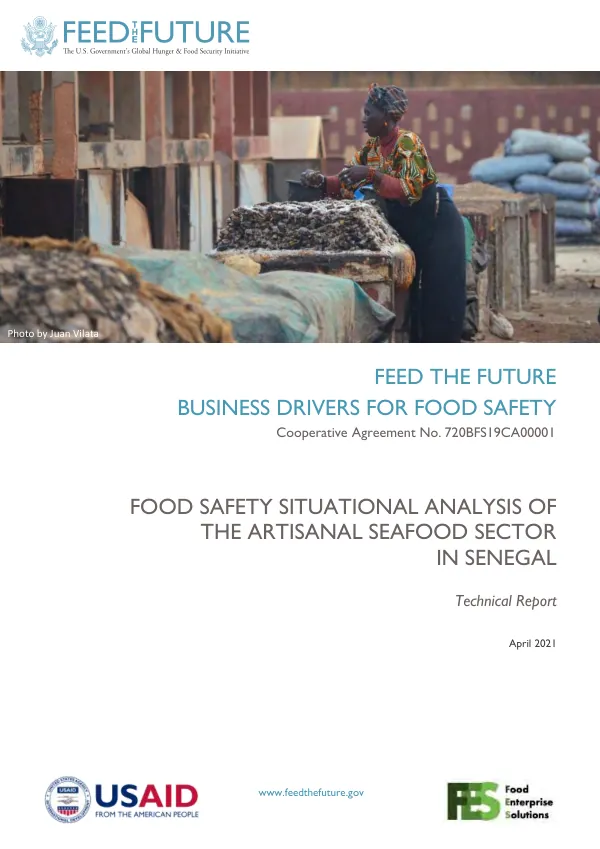
Business Drivers for Food Safety Technical Learning Note: Fish Smokers and Polycyclic Aromatic Hydrocarbon (PAH) Risks in Senegal
Sign inFOOD AND AGRICULTURAL ORGANIZATION
Business Drivers for Food Safety Technical Learning Note: Fish Smokers and Polycyclic Aromatic Hydrocarbon (PAH) Risks in Senegal
Smoked fish is a widely traded and consumed product in West Africa, with Senegal being a significant producer and exporter.
2021 · 16 pages
Sign in to readA free account is required to download.

Abstract
Traditional smoking techniques used by women's groups in Senegal produce high levels of polycyclic aromatic hydrocarbons (PAHs), which are recognized as carcinogenic when consumed. Modern smoking ovens, such as the Thiaroye model by FAO and the Ahotor oven model by the University of Rhode Island, have been developed to reduce PAH levels in smoked fish, but these improved methods have not been widely adopted in many regions. The Business Drivers for Food Safety (BD4FS) project, implemented by Food Enterprise Solutions (FES) and funded by USAID, is engaging food businesses in Feed the Future countries to improve post-harvest processing, handling, and transport practices for safer foods. In the Spring of 2020, BD4FS conducted a Food Safety Situational Analysis (FSSA) of the artisanal seafood sector in Senegal, which confirmed that traditional smoking of fish remains a common practice. To further investigate, BD4FS completed a desk review of the health risks associated with consuming smoked products, the different types of smokers, and the levels of PAHs produced by each smoker, as well as costs and financing options for adopting modern smokers. Smoking is a common process throughout Africa, with approximately 70-80% of fish that supplies domestic markets being smoked. The process of smoking foods for curing encompasses two steps: reducing the moisture of the product to slow down enzyme and bacterial action, and infusing antimicrobial compounds such as phenols to further slow down enzymes and bacteria. However, smoking may pose risks to the consumer's health, as it produces chemicals such as acetic acids, aldehydes, and PAHs, which are deposited on the product. PAHs are a group of compounds that consist of two or more aromatic rings and are naturally occurring, but their presence has been greatly exacerbated by anthropogenic activities such as pyrolysis and the incomplete combustion of organic materials. The Agency for Toxic Substances and Disease Registry (ATSDR) has identified 17 PAHs that are suspected to be more harmful to human health, including acenaphthene, acenaphthylene, anthracene, and benzo[a]pyrene. The formation of PAHs within food products is influenced by numerous different factors, including fat content, fuel type, smoking method, smoke generation process, and design of the smoker. Research has been conducted on the synthesis of PAHs and how to prevent it, with studies separated into three categories: pre-processing, processing, and post-processing. Pre-processing research has focused on utilizing techniques such as marinating with different herbs, spices, sauces, and oils to prevent or reduce the formation of PAHs in the product. Post-processing research has focused on manipulating variables such as temperature, airflow, and distance between food and the heat source to reduce PAH levels.
Related documents