USAID
Financial Landscape Analysis for Senegal
The agricultural sector in Senegal contributes 15 to 16% to the country's GDP and employs approximately 70% of the rural population.
2021 · 16 pages
Sign in to readA free account is required to download.
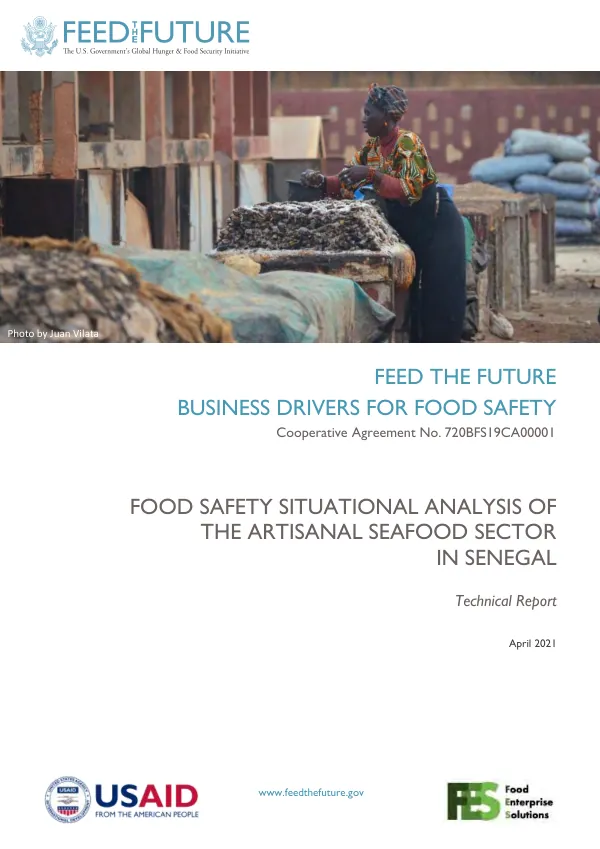
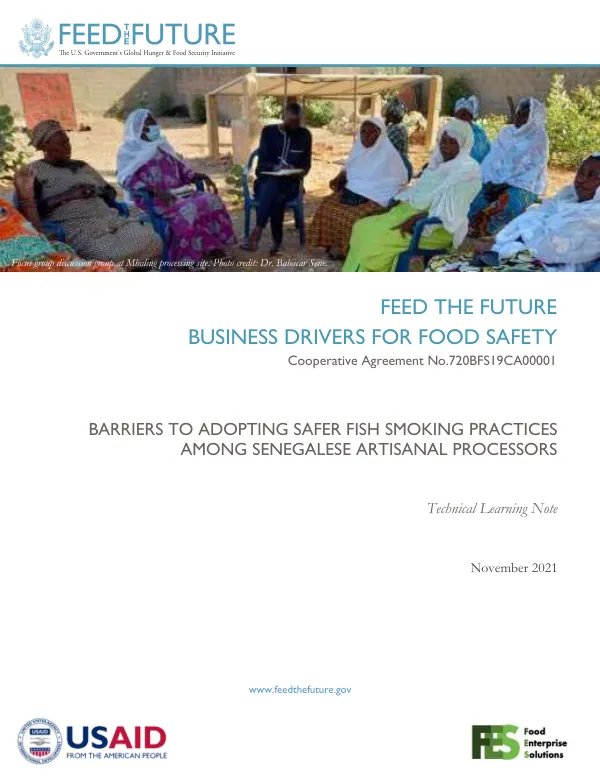
Abstract
Perishable foods in the seafood, livestock, and agricultural product sectors are a significant source of food and income for the Senegalese population, particularly for rural populations and disadvantaged populations in cities. The sector's private agrobusiness is still small, with around 5% of GDP in 2015 and almost a third of total national industrial added value. Constraints to private sector development in this area include limited access to arable land and irrigation facilities, difficult access to finance, compounded by inadequate agricultural insurance mechanisms, and weak links between smallholder farmers and commercial buyers. Senegal can also improve the quality of basic services offered to exporters. Despite these constraints and the small size of agribusiness, the sector is growing, and growing food businesses (GFBs) need investment/financing to improve food safety practices. The Feed the Future Business Drivers for Food Safety (BD4FS) project, funded by USAID and implemented by Food Enterprise Solutions (FES), aims to provide technical assistance and capacity building to GFBs for them to become drivers of food safety. Recognizing the financing challenges for GFBs, BD4FS initiated a Financial Landscape Analysis (FLA) in Senegal to map its financial landscape in relation to GFBs working in the perishable food value chains, particularly the processing subsector. The FLA aimed to map out the financial services available and relevant to small- and medium-sized food businesses in Senegal. The study's specific objectives were to map the current configuration of the financial system, particularly the processing sub-sector, by identifying the main actors and institutions, current terms and conditions of financing, and regulatory environment concerning financing for these businesses. The study also aimed to identify the most relevant types of financial and non-financial services and institutions, assess the adequacy of the system for meeting sector and sub-sector needs, and provide recommendations for investment solutions, training, and capacity building services for GFBs to be "investible." The study employed a qualitative assessment approach, which involved conducting a literature review, analyzing the financial system, and participating in relevant meetings in relation to the selected value chains and the subject of the study. The study was limited to the regions of Dakar and Thies due to the COVID pandemic and the time required to carry out the surveys. The project team conducted an analysis of the financial landscape, including the current configuration of the financial system, the main actors and institutions, and the regulatory environment concerning financing for GFBs. The study identified the main players and institutions in the financial system, including banks, microfinance institutions, crowdfunding platforms, and capital investment firms. The study also identified the current financing modalities, including loans, grants, and equity investments. The study found that the regulatory environment concerning financing for GFBs is complex and often restrictive, with limited access to arable land and irrigation facilities, difficult access to finance, and inadequate agricultural insurance mechanisms. The study provided recommendations for investment solutions, training, and capacity building services for GFBs to be "investible." The recommendations included the development of a financial inclusion strategy for GFBs, the establishment of a credit guarantee scheme, and the provision of training and capacity building services to GFBs on financial management and food safety practices. The study also recommended the establishment of a business incubator for GFBs and the provision of access to finance for women and youth entrepreneurs. The study's findings and recommendations have the potential to improve the financial landscape for GFBs in Senegal, increase access to finance for women and youth entrepreneurs, and promote the growth of the private agrobusiness sector. The study's findings and recommendations can also inform policy and program interventions aimed at improving the financial inclusion of GFBs in Senegal and promoting the growth of the private agrobusiness sector.