USAID DEC
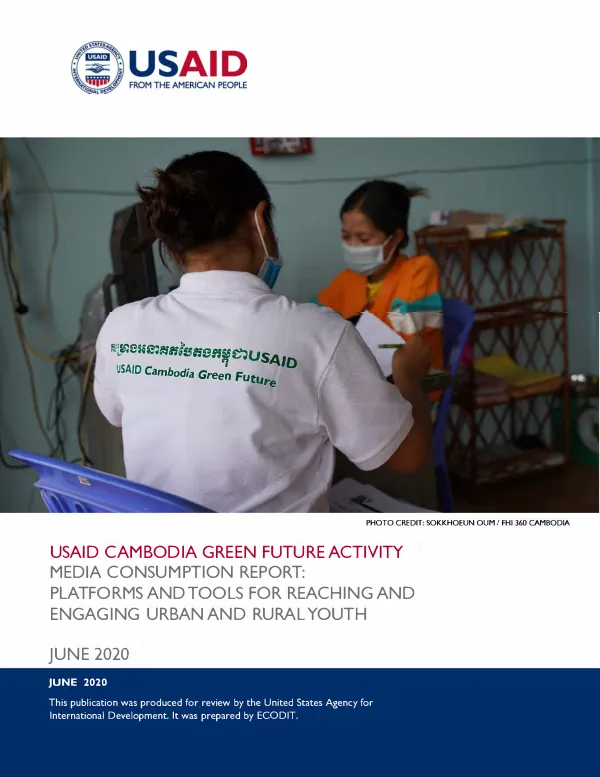
Cambodia Green Future Media Consumption Report: Platforms and Tools for Reaching and Engaging Urban and Rural Youth
Sign inECODIT, INC.
Cambodia Green Future Media Consumption Report: Platforms and Tools for Reaching and Engaging Urban and Rural Youth
The Cambodia Green Future Activity Media Consumption Report, published in June 2020, provides an overview of media consumption from the perspectives of selected media practitioners in Cambodia.
2020 · 29 pages
Sign in to readA free account is required to download.
Abstract
The report highlights key communication tools, products, materials, and platforms used to reach target audiences. It maps trends across traditional and digital media platforms, describing how Cambodian media practitioners use different media platforms to inform their target audiences. The report also examines how various media platforms, tools, and ideas can be used to engage Cambodian citizens, particularly youth, on environment-related topics. The report's findings reveal that digital platforms, especially Facebook, have become increasingly popular in recent years. According to the Media Mapping Report, in 2019, key digital media usage was as follows: 87% of the general population used mobile phones, 63% used the internet, and 55% used social media. Facebook was the most widely used social media platform, with 44% of the population using it. The report identifies relevant Facebook influencers on environmental topics, including Conservation International, World Wildlife Fund, and Young Eco Ambassador. It also highlights relevant environmental NGOs' Facebook pages, such as the Cambodia Broadcasting Service and the Cambodia Television Network. The report further examines the most relevant social media channels, including Facebook, Instagram, Twitter, and YouTube, as well as traditional media channels, such as TV, radio, and print materials. The report's additional findings include relevant tools and channels for engaging youth in environmental protection efforts, opportunities to engage youth in environmental protection efforts, challenges to engaging youth in environmental protection efforts, and gender considerations. The report concludes by providing recommendations for engaging Cambodian citizens, particularly youth, on environment-related topics. The report's methodology involved conducting interviews with selected media practitioners in Cambodia, as well as analyzing data from the Media Mapping Report. The report's scope and focus are on understanding media consumption patterns and trends in Cambodia, particularly among youth, and identifying opportunities to engage them in environmental protection efforts. The report's key findings and recommendations are intended to inform the development of effective communication strategies and programs that can engage Cambodian citizens, particularly youth, on environment-related topics. The report's findings and recommendations can also be used to inform the development of policies and programs that promote environmental protection and sustainability in Cambodia.