USAID DEC
Caracterización y autodiagnóstico productivo de resguardos indígenas Coreguajes, Makaguajes y Uitotos, para la formulación de proyectos productivos
Sign inAMAZON CONSERVATION TEAM
Caracterización y autodiagnóstico productivo de resguardos indígenas Coreguajes, Makaguajes y Uitotos, para la formulación de proyectos productivos
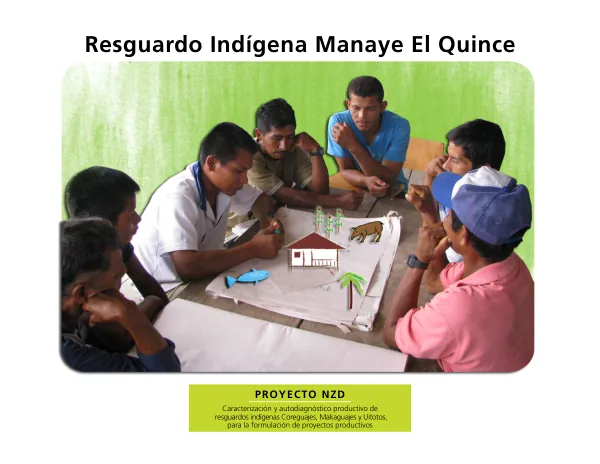
The Resguardo Indígena Manaye El Quince is a community located in the municipality of Solano, Caquetá, Colombia.
2014 · 31 pages
Sign in to readA free account is required to download.
Abstract
The community is situated 15 kilometers from the municipal capital and can be accessed by either a 1.5-hour boat ride or a 3-4 hour hike. The resguardo covers an area of approximately 1,256 hectares, featuring natural mountain terrain, rastrojos, small pastures, traditional indigenous crops, and some areas with technical management. The community is organized into an Asamblea, which is the highest authority, comprising all registered members. The Asamblea makes decisions with the participation of individuals over 14 years old. The Gobernador represents the community before state institutions and NGOs, while the Cacique is the traditional authority responsible for organizing cultural activities and promoting the indigenous language and art. The community is also divided into various committees, including health, work, education, sports, environment, and women's affairs. The resguardo is affiliated with regional and international organizations, including ASCAINCA, COICA, and OPIAC. ASCAINCA represents the interests of five Uitoto resguardos, including Manaye El Quince, at the municipal, departmental, and national levels. COICA is a confederation that defends the common interests of Amazonian communities, comprising organizations from Colombia, Brazil, Peru, and Ecuador. The community's education system has two components: the first is directed by the Ministry of Education, with plans and curricula designed by professionals, while the second is traditional education, led by elderly community members, parents, and indigenous teachers. This traditional education is integrated with the community's educational plan and the institutional educational plan, allowing indigenous students to acquire knowledge and skills relevant to their community. The community has a population of 148 individuals, consisting of 26 families, with 10 families participating in the NZD project. The community's main challenges include deforestation, limited access to markets, and soil degradation. To address these issues, the community is working on developing a plan of management for each resguardo and designing alternative productive activities that can help reduce deforestation. The NZD project aims to reduce and prevent deforestation in the Amazonian Andes, improving the quality of life of the local population. The project involves the participation of local communities, Amazon Conservation Team (ACT), and The Natural Conservancy (TNC). The project's mission is to work towards reducing and preventing deforestation in demonstration areas in the Amazonian Andes, while its vision is to establish a replicable and functional management model for reducing and preventing deforestation based on strategic alliances, scientific knowledge, and ancestral wisdom. The community has identified several areas for improvement, including the need for better access to markets, improved agricultural practices, and increased economic opportunities. The community is working on developing a plan to address these challenges and improve their quality of life. The project's results will be presented in a future report, detailing the community's progress and achievements.
Related documents
Documents in this collection
 2014
2014USAID DEC
Caracterización y autodiagnóstico productivo de resguardos indígenas Coreguajes, Makaguajes y Uitotos, para la formulación de proyectos productivos
Open record 2014
2014USAID DEC