TETRA TECH
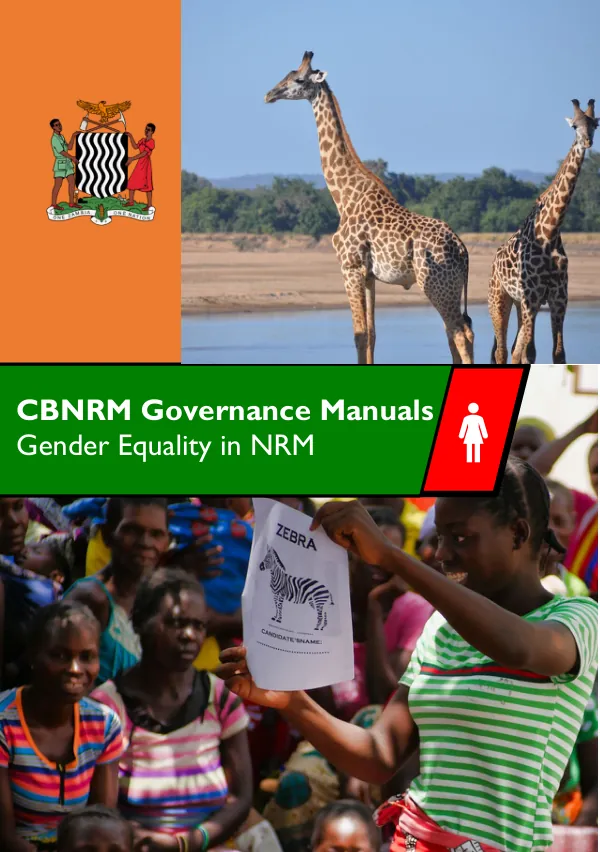
CBNRM Governance Manuals: Gender Equality in Natural Resource Management 2023
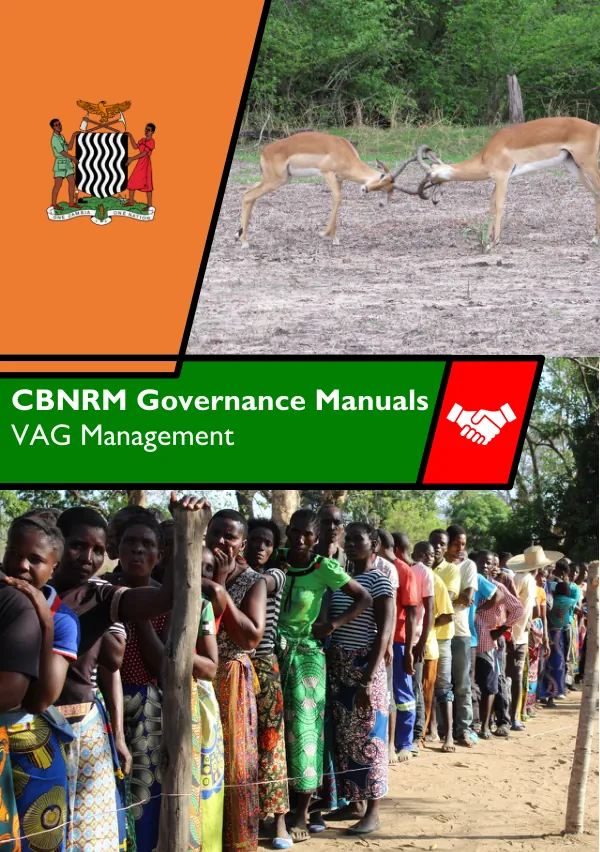
Community-Based Natural Resource Management (CBNRM) Governance Manuals outline the importance of gender equality in NRM.
2023 · 23 pages
Sign in to readA free account is required to download.
Abstract
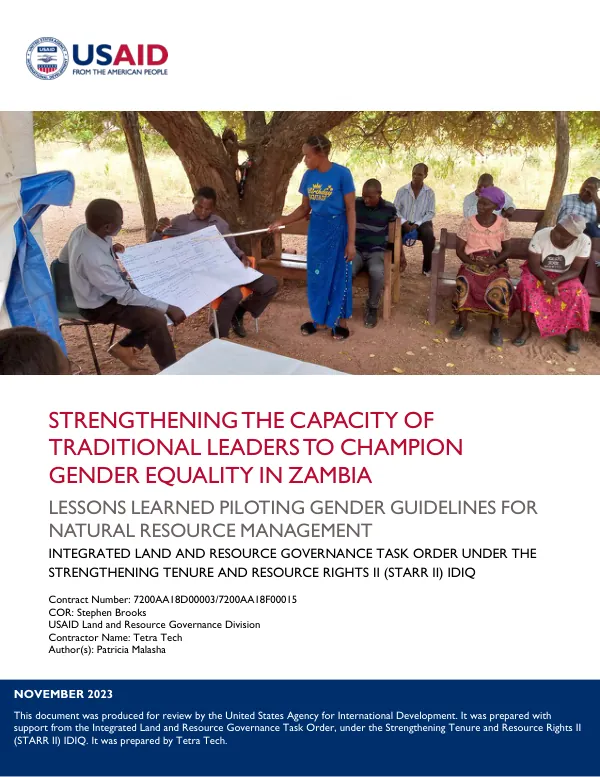
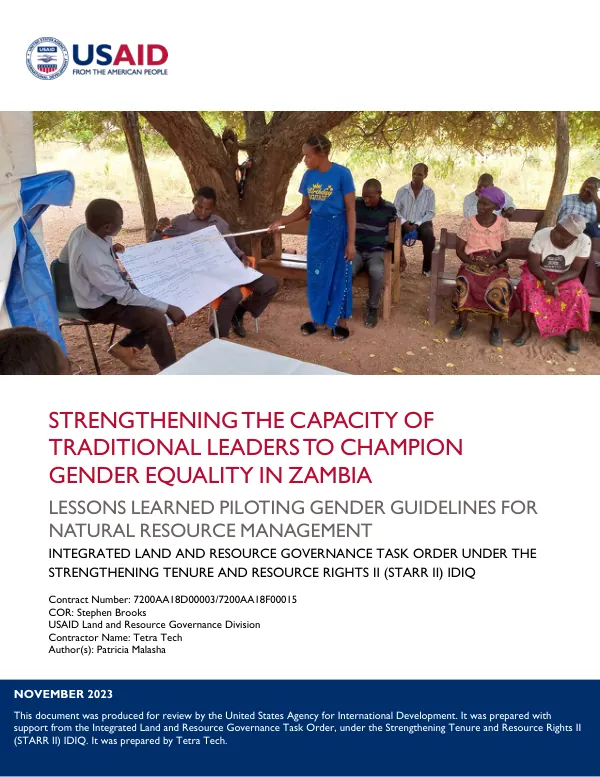
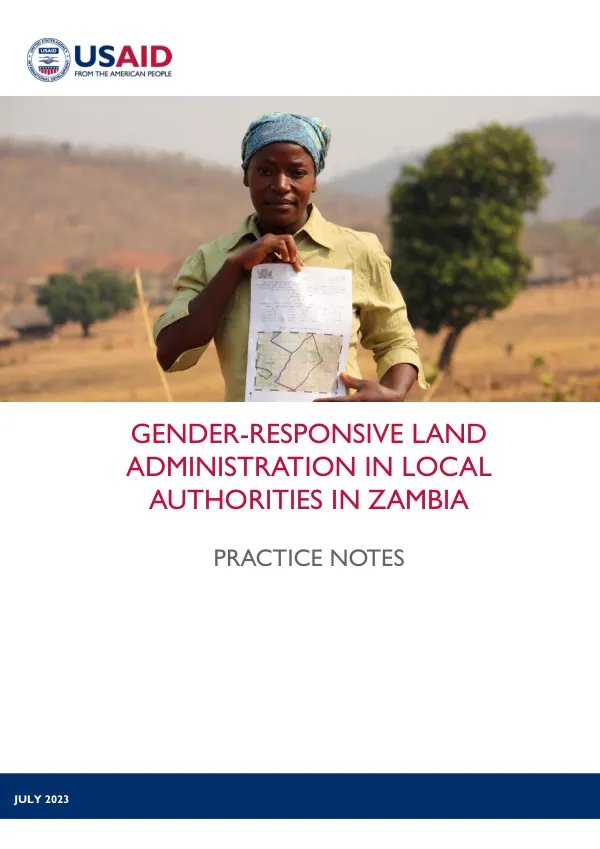
The manuals were developed with support from the United States Agency for International Development (USAID), the Zambian Department of National Parks and Wildlife (DNPW), and the Zambia Community Resources Board Association (ZCRBA) for the Government of the Republic of Zambia (GRZ). The materials were developed based on discussions with local partners, including Conservation Lower Zambezi (CLZ), Conservation South Luangwa (CSL), World Wild Funds for Nature (WWF), and others. Historically, there is a gender gap in terms of women participating in NRM in Zambia. The sector is largely male-dominated, and women's engagement in these spaces can lead to multiple forms of gender-based violence (GBV). Women and marginalized groups face many barriers to participation in NRM, including lack of support from family members, household responsibilities, and social and cultural beliefs that prevent participation. Women's representation is important because they have unique perspectives to bring to NRM that are different from men's perspectives. Including women in community governance structures, such as Community Resources Boards (CRBs), is the right thing and the smart thing to do. Representation of women alone is not enough; women must meaningfully participate, and their voices in decision-making must be heard and considered. Evidence shows that equitable and inclusive natural resource governance and enforcement can lead to improved conservation and socioeconomic outcomes. When women effectively participate, their inputs into resource use and conservation bring unique concerns, perspectives, and knowledge into discussions, leading to improved management of natural resources. It also increases the chance for sustainable livelihoods, improved food security, and increased income for women and their households. The manuals provide approaches for community governance structures to ensure that resource governance includes everyone and all can fairly benefit from wildlife resources. The approaches include promoting gender equality champions, raising awareness and mobilizing women to participate, setting targets, strengthening women's skills, and addressing gender-based violence. The Zambia Wildlife Act No. 14 of 2015 and National Parks and Wildlife Policy of 2018 both commit government to ensuring equitable and effective participation of local communities and traditional leaders in wildlife management. The policy recognizes both gender mainstreaming in wildlife conservation and creating equal opportunities and conditions for women, men, and youth to participate and benefit equally from natural resources. The manuals were piloted in six Community Resources Boards (CRBs): Shezongo CRB, Musungwa CRB, Kabulwebulwe CRB, Malama CRB, Nsefu CRB, and Kakumbi CRB. The publication is made possible by the support of the American People through the United States Agency for International Development (USAID).
Related documents