USAID DEC
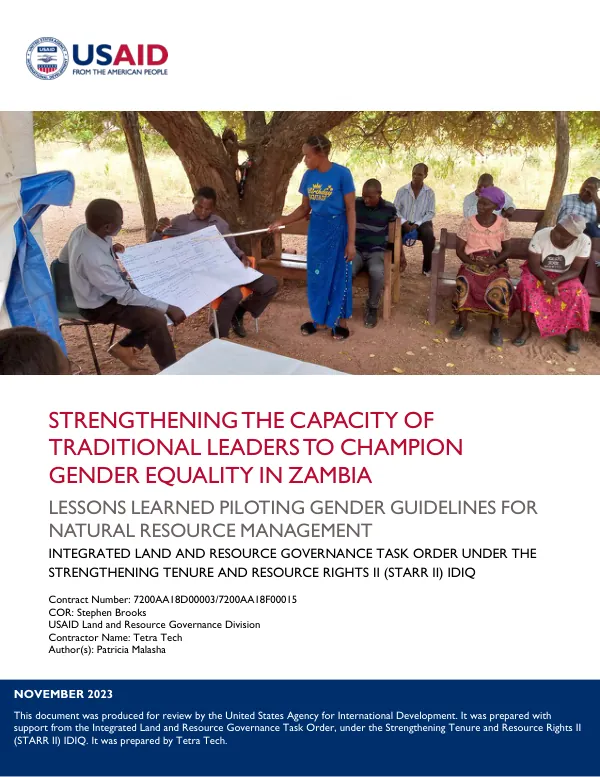
Strengthening the Capacity of Traditional Leaders to Champion Gender Equality in Zambia: Lessons Learned from Piloting Gender Guidelines for Natural Resource Management
Sign inTETRA TECH
Strengthening the Capacity of Traditional Leaders to Champion Gender Equality in Zambia: Lessons Learned from Piloting Gender Guidelines for Natural Resource Management
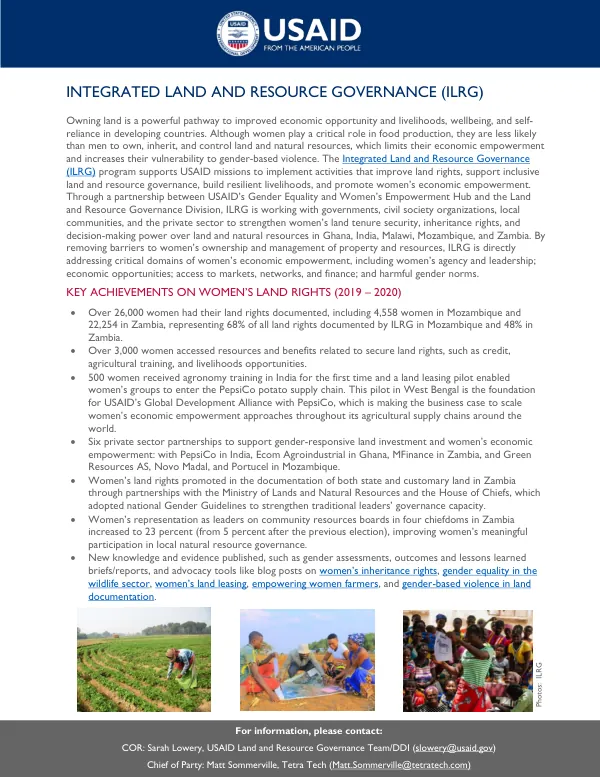
In Zambia, the capacity of traditional leaders to champion gender equality is being strengthened through the Integrated Land and Resource Governance (ILRG) program.
2023 · 25 pages
Sign in to readA free account is required to download.
Abstract
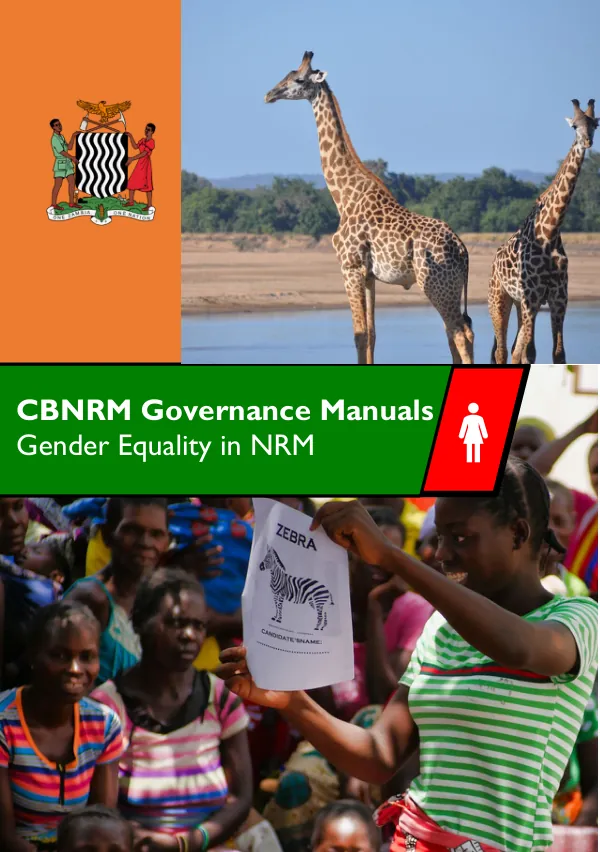
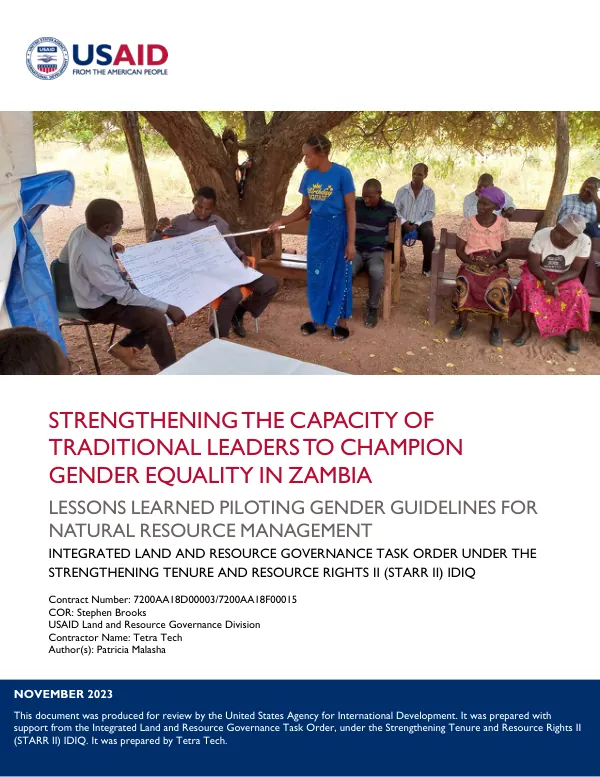
Between 2019 and 2023, the ILRG program provided technical and financial support to the House of Chiefs (HoC) in Zambia to increase the capacity of traditional leaders in championing gender equality and promoting inclusive development in chiefdom administration. The intervention aimed to enhance the capacity of traditional leaders to play an effective role in shifting harmful gender norms related to women's land rights, and participation in land governance and natural resource management. The development of the Gender Guidelines for Traditional Leaders in Management of Natural Resources in the Chiefdoms was an initiative of a selection of the Chiefs/Chieftainess in the HoC who desired to find a solution to the pressing gender equality issues in their chiefdom administration. The initiative was led by a team of six traditional leaders that formed the Gender Committee at the HoC in 2020 with the aim of developing a resource to aid gender integration in natural resource management and chiefdom administration. A consultative process identified various entry points, including sectors, themes, and cross-cutting issues. The Gender Guidelines provide general direction for integrating gender equality into resource management and a set of practical measures that can be adapted and contextualized based on customs and traditional systems in each chiefdom. Once implemented, the Gender Guidelines were expected to increase the contributions of traditional leaders to the promotion of gender equality and inclusive development in Zambia. The Guidelines were launched in 2021 and subsequently disseminated to all 288 chiefs across the country. ILRG piloted and monitored the implementation of the Gender Guidelines in two Chiefdoms. The ILRG program's efforts to strengthen the capacity of traditional leaders to champion gender equality in Zambia have shown promising results. The implementation of the Gender Guidelines in the two Chiefdoms has led to increased adoption of sustainable agriculture practices, improved food security, and higher household incomes. The program's success highlights the importance of engaging traditional leaders in promoting gender equality and inclusive development in Zambia.
Related documents