ACTED
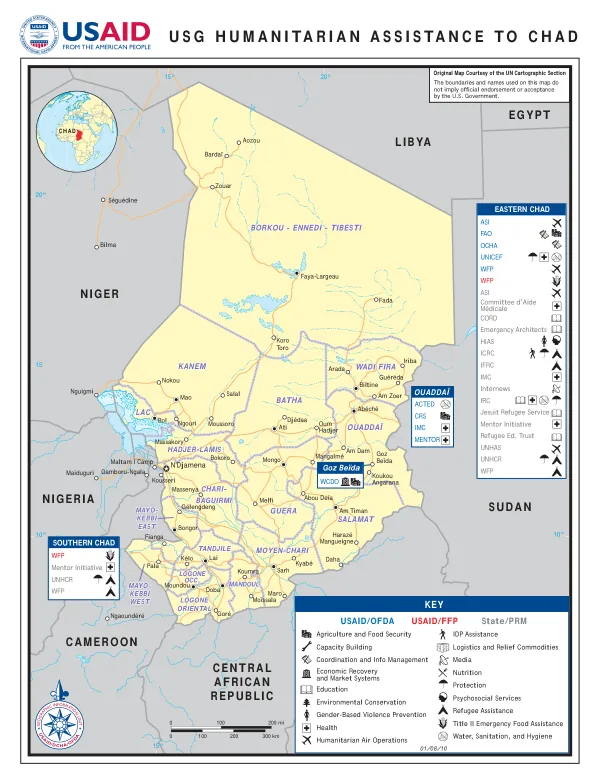
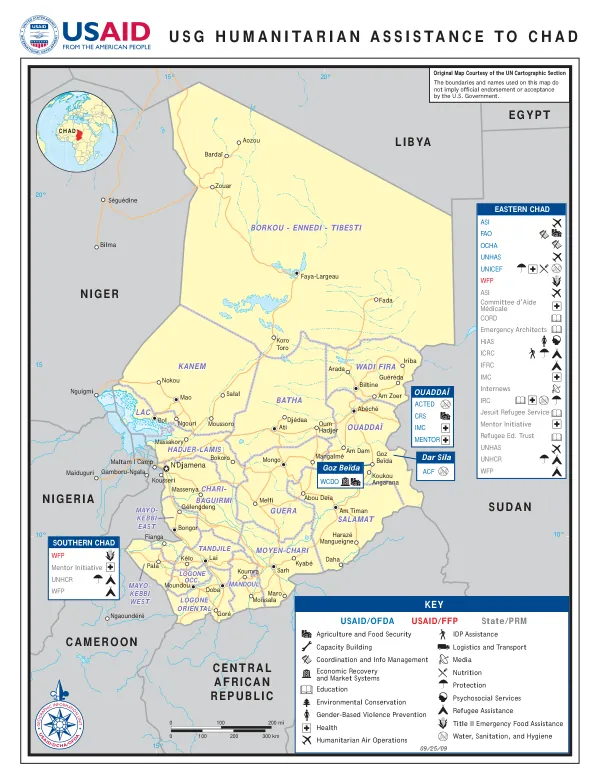
Chad Program Map 09/25/09
The humanitarian situation in Eastern Chad is characterized by a large internally displaced persons (IDP) population and a significant refugee population.
2009 · 2 pages
Sign in to readA free account is required to download.
Abstract
According to the United Nations Office for the Coordination of Humanitarian Affairs (OCHA), there are approximately 50,000 IDPs in the region, with 25,000 residing in camps and 25,000 living in places of origin. The refugee population in Eastern Chad is also substantial, with around 5,000 individuals. The IDP population in Eastern Chad is primarily concentrated in the following camps: Am Timan, Bongor, Sarh, Kyabé, and Moundou. These camps are located in the Ouaddaï, Batha, and Salamat regions, which are among the most affected areas in the country. The IDPs in these camps are primarily from the Sudanese region of Darfur, where conflict has led to widespread displacement. The humanitarian response in Eastern Chad is led by the United Nations High Commissioner for Refugees (UNHCR) and the United Nations Office for the Coordination of Humanitarian Affairs (OCHA). The response includes provision of food, shelter, water, sanitation, and hygiene (WASH) services, as well as protection and psychosocial support to IDPs and refugees. The response is also supported by various non-governmental organizations (NGOs), including the International Rescue Committee (IRC), the Jesuit Refugee Service (JRS), and the Médecins Sans Frontières (MSF). The humanitarian situation in Eastern Chad is further complicated by the presence of armed groups, including the Lord's Resistance Army (LRA) and the Janjaweed militia. These groups have been responsible for attacks on IDP camps and humanitarian personnel, leading to a significant increase in insecurity in the region. The humanitarian response in Eastern Chad is also affected by the lack of access to certain areas, particularly in the Ouaddaï and Batha regions. This has limited the ability of humanitarian organizations to provide assistance to IDPs and refugees in these areas. The humanitarian situation in Eastern Chad is expected to continue to be a major concern in the coming months, with the onset of the rainy season likely to exacerbate the situation. The humanitarian response will need to be scaled up to meet the needs of IDPs and refugees, particularly in areas where access is limited. The humanitarian response in Eastern Chad is supported by the United States Government (USG) through the United States Agency for International Development (USAID). The USG has provided significant funding to support the humanitarian response in Eastern Chad, including funding for food assistance, shelter, and WASH services. The humanitarian situation in Eastern Chad is a complex and challenging issue, requiring a coordinated and sustained response from the international community. The humanitarian response will need to be scaled up to meet the needs of IDPs and refugees, particularly in areas where access is limited.
Related documents